Written by Nolo Hub Pai, Pai’s top social and experience-based hostel
Last checked September 2026
tl;dr
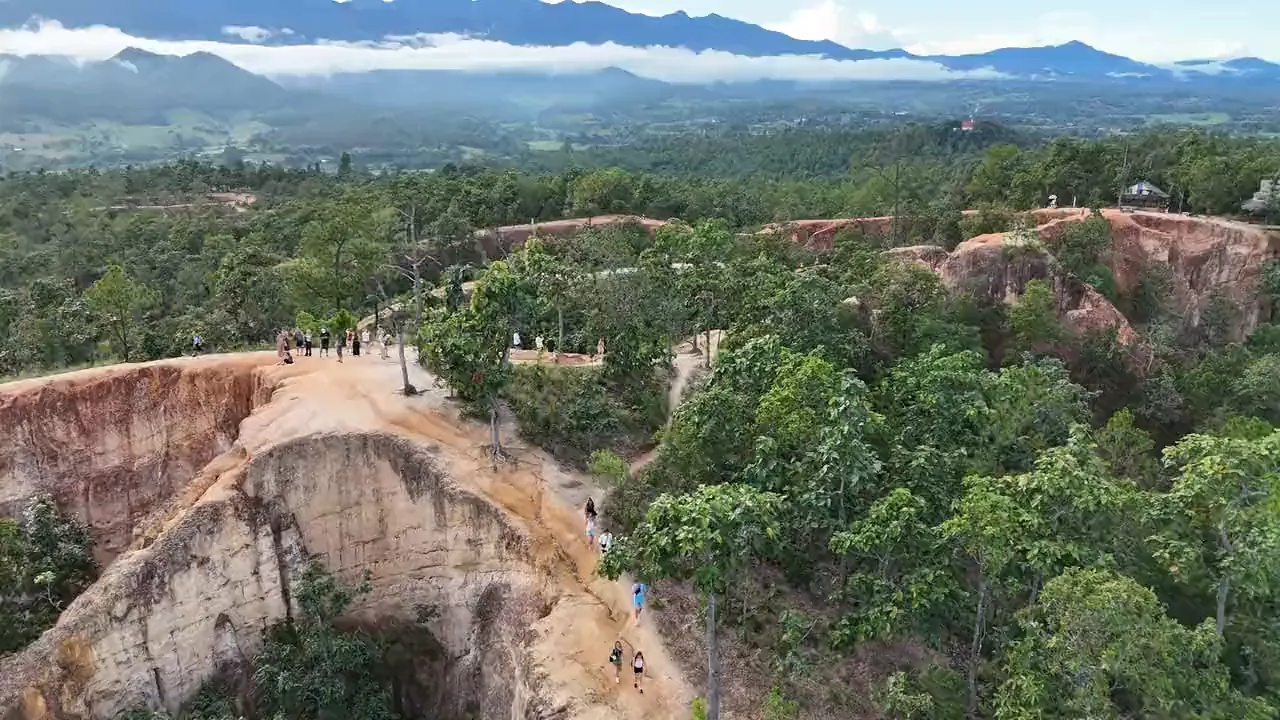
Pai Canyon, locally called Kong Lan, is one of Pai's most famous sights, a large red earth canyon nestled in the middle of the valley that offers 360 degree views. Despite it being a famous spot for sunset, try to go while there is still plenty of daylight so you can see what makes the place remarkable before the evening light takes over. You can take it all in from the first viewpoint at the top of the initial entry stairs or adventure along the ridges farther out if you are comfortable with heights and exposed paths.
Also known as: Kong Lan · Kong Lan Canyon · กองแลน · หน้าผาดินเมืองปาย
- Where
- about 7–8 km from central Pai on Highway 1095, towards Chiang Mai
- From Nolo Hub
- 7.3 km
- Entry
- free
- From the car park
- a short uphill walk to the first viewpoint
- Facilities
- small stalls and toilets near the entrance; nothing out on the ridges
- Sunset
- check the time, and arrive about 45 minutes before it
- Edges
- they can overhang with nothing beneath them, even where they look solid
- Shoes
- with some grip; the red dust can also stain clothes
- Map
- Google Maps · Apple Maps

Getting there
Pai Canyon is about 7–8 kilometres from central Pai on Highway 1095, heading towards Chiang Mai and Mae Malai. There is parking near the entrance, followed by a short uphill walk to the main viewpoint. Entry is free.
You may find small food and drink stalls and toilets around the entrance, but their hours can vary. There are no facilities once you head out onto the ridges.
You do not need to plan a long hike to visit. If you only want the main view, a short stop is enough. Give yourself longer if you want to explore the paths and watch the light change across the valley.
Walking the ridges
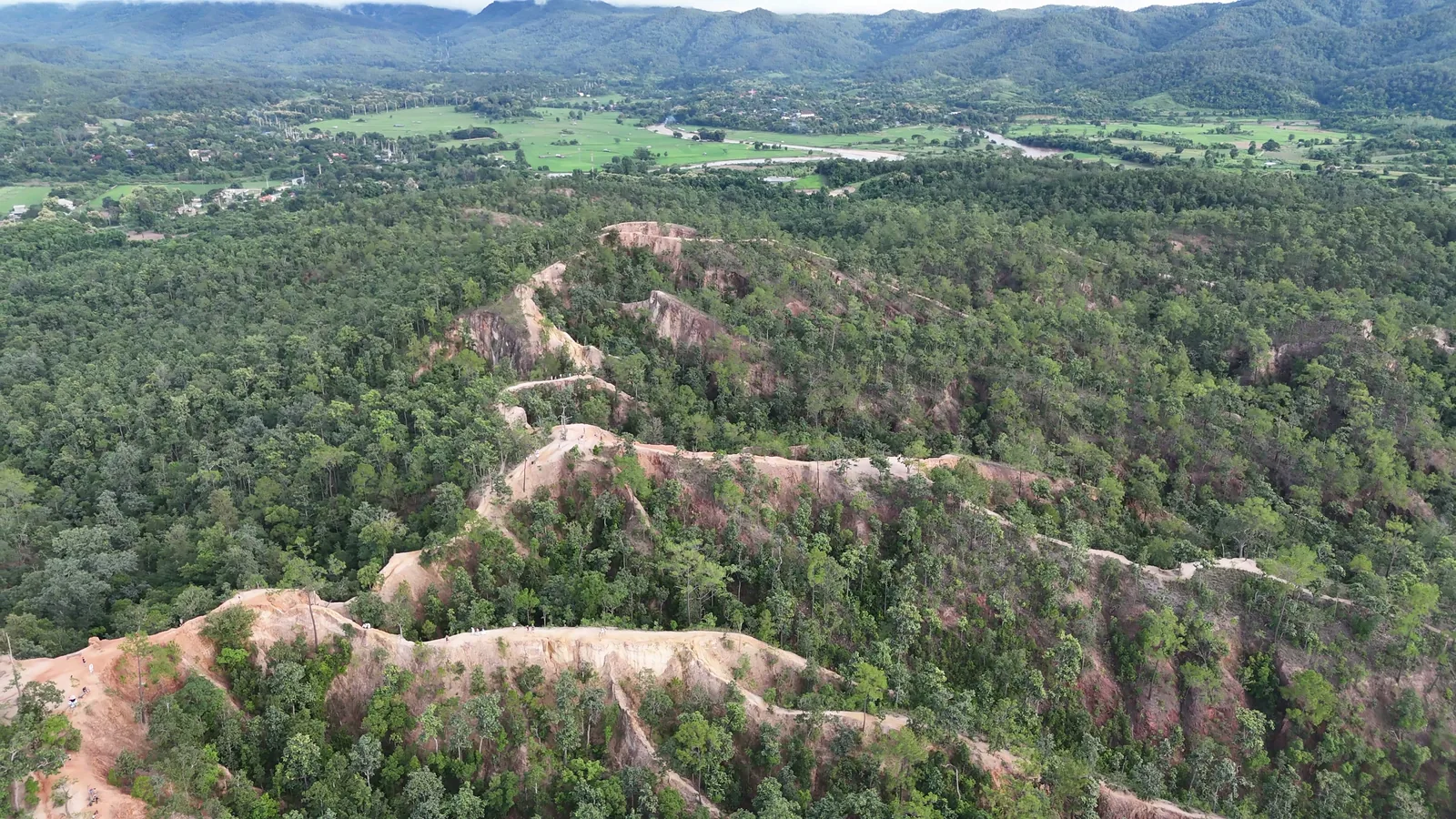
The first viewpoint gives you a clear look at the gullies and the strips of earth left standing between them. Beyond it, paths run along the tops of those ridges. Some are broad and easy to walk; others narrow considerably, with steep drops on either side. There are no continuous guardrails.
Choose how far to go based on the ground and your comfort with heights. You do not have to walk the narrowest sections to appreciate Pai Canyon—the main viewpoint already shows you why people come. If you do continue, pay attention to where you put your feet rather than following someone else simply because they went first.
The surface can be slippery in different ways. Loose dust moves underfoot when it is dry; after rain, the exposed earth can be slick and less secure. Shoes with some grip are a better choice than smooth-soled flip-flops. Keep back from edges that look cracked or crumbly.
Edges that look solid can be just as bad. Rain washes out the sand layers between the clay ones and leaves lips of ground with nothing underneath them, and there is no way to tell from standing on one.
The red in the dust is iron, and it can stain your clothes.
How did it get like this?
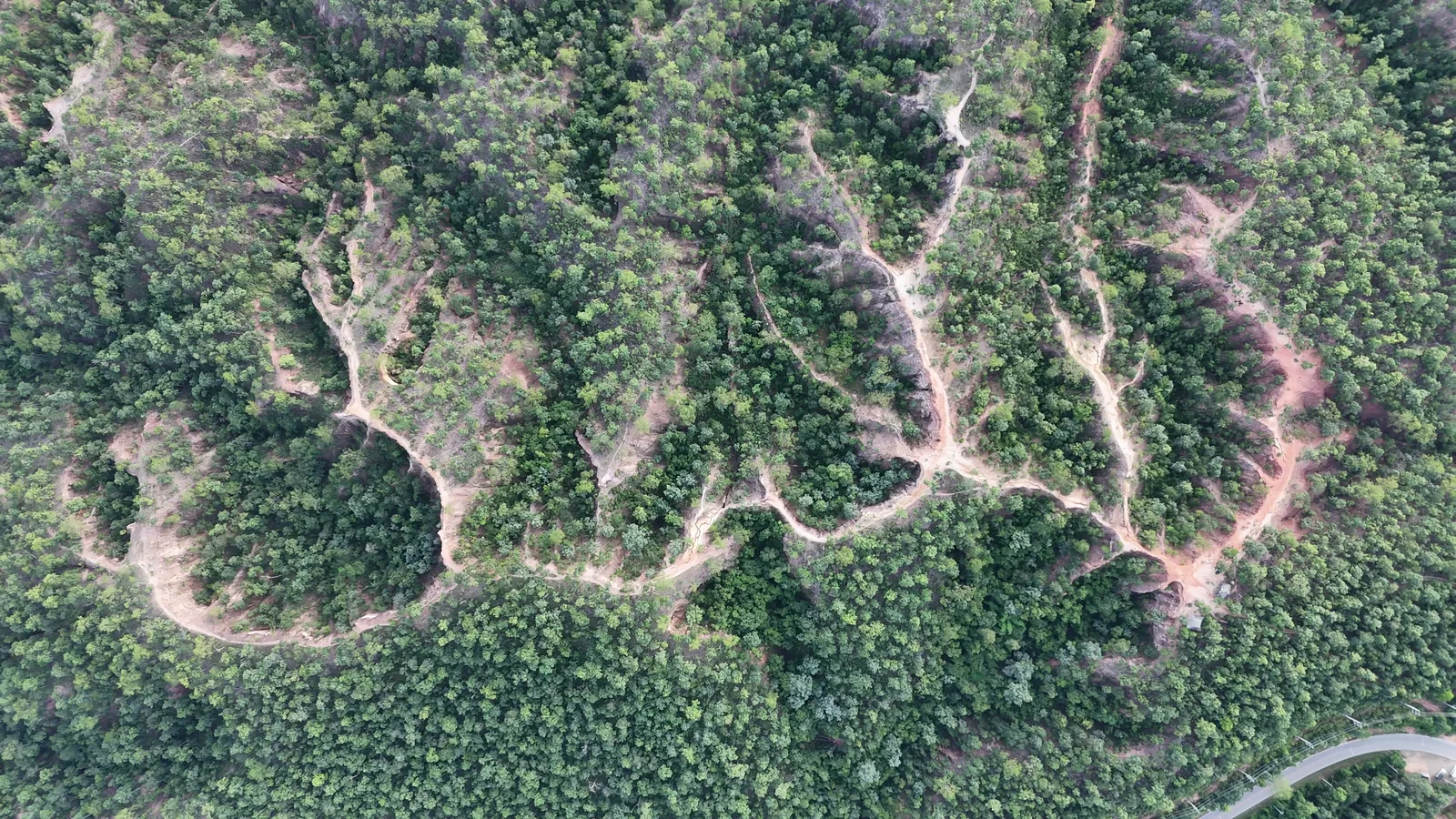
The ridges look almost like solid rock from a distance, but Kong Lan is made largely of gravel, sand and other sediment that never hardened into a single mass of stone. Over countless rainy seasons, water has cut channels through that material and carried it downhill. The gullies have grown deeper while the ground between them has remained as narrow ridges.
The Thai name says as much. Officially it is หน้าผาดินเมืองปาย, the earth cliffs of Pai: Thai calls loose earth ดิน (din) and keeps หิน (hin) for rock, and the name uses din.
It is a slow process, not the result of one dramatic storm, and it has not stopped. Each wet season continues to change the exposed ground. That is part of what makes Kong Lan so striking—and why its edges deserve more respect than an ordinary rocky viewpoint.
Pai Municipality explains the local name through Northern Thai words for a route or path and a monitor lizard. It is an apt image for the thin trails winding across the ridges. “Pai Canyon” is the name most visitors know, but Kong Lan tells you more about what it feels like to walk there.
Sunset or morning?
Sunset is the classic time to visit. The lower sun brings out the reds and oranges in the exposed earth, while the mountains darken across the valley. It is also the busiest time, so arrive well before sunset if you want to explore rather than head straight to a crowded viewpoint.
Check the sunset time for the day and aim to arrive about 45 minutes before it. The sun drops behind the western ridge 15 to 25 minutes before official sunset, and the best colour comes 10 to 20 minutes after that. People leave after each of those moments, so in high season there can be queues at the narrow sections.
Leave yourself time to get off the ridges while you can still see the ground clearly. The narrow paths are much harder to judge once the light has gone.
Morning is a good alternative if you want to see the shapes of the ridges without making sunset the whole point of the trip. On some days, mist sits in the lower valley; on others, you simply get softer light and cooler walking conditions. Midday offers less shade on the exposed paths, and haze can sometimes obscure the distant mountain view.
Pai Canyon is worth visiting for sunset, but it is not only a sunset viewpoint. Come early enough to walk up, look around and take in just how unexpectedly strange this corner of Pai is.