Written by Nolo Hub Pai, Pai’s top social and experience-based hostel
Last checked September 2026
tl;dr
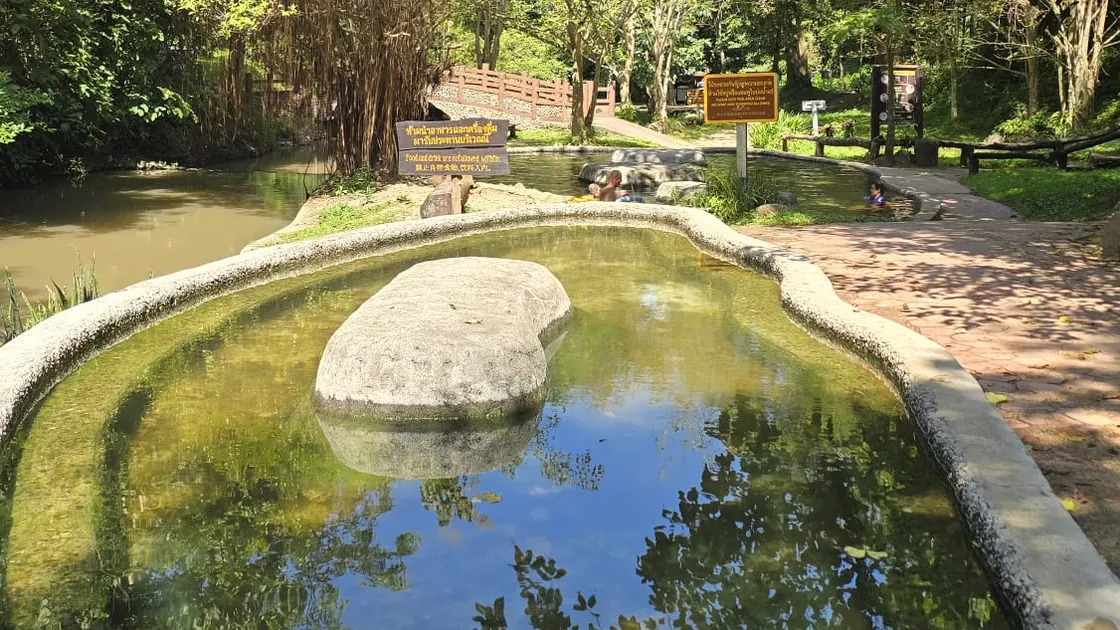
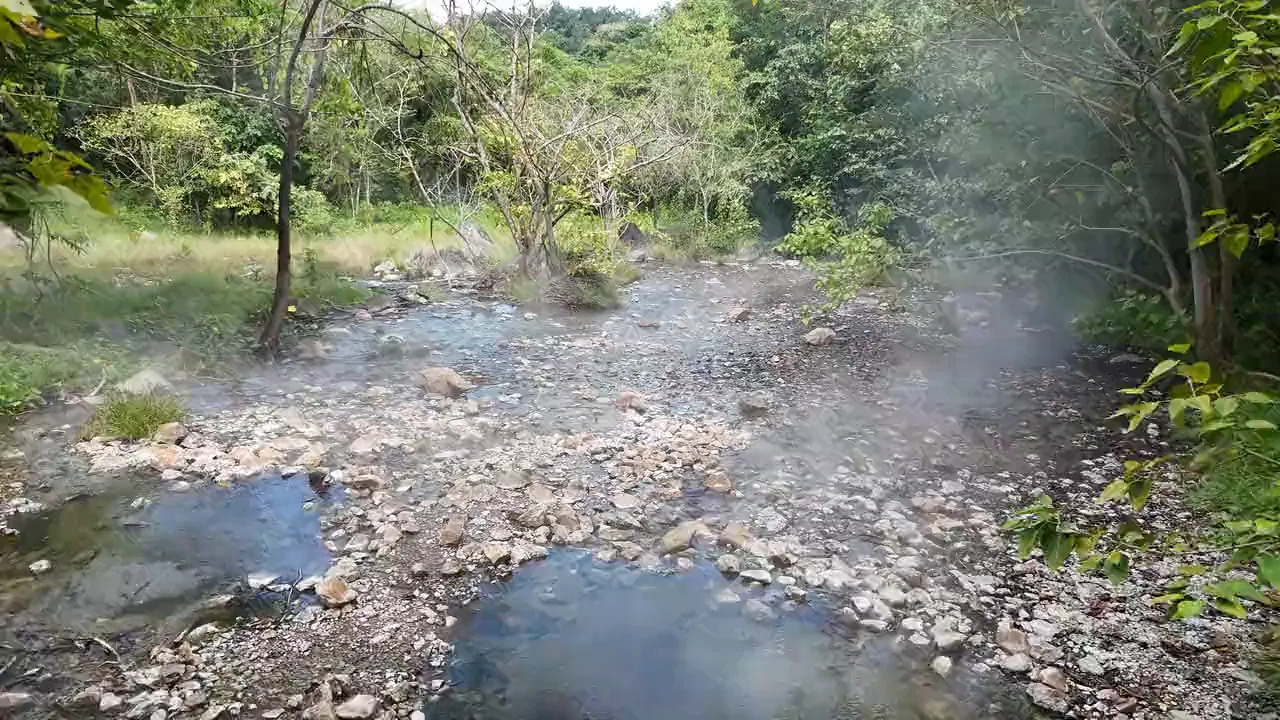
Tha Pai Hot Spring is an outdoor place to soak in naturally heated water, about 8 kilometres south of Pai. You can walk up to the steaming source, where the water is far too hot to enter, then head downhill to the cooler pools where visitors can bathe.
Also known as: Tha Pai Hot Springs · Pai Hot Springs · Pong Nam Ron Tha Pai · โป่งน้ำร้อนท่าปาย
At a glance
- Where
- Mae Hi, about 8 km south of Pai, off Highway 1095
- From Nolo Hub
- 8.8 km
- What you can do
- Soak in the bathing pools, visit the hot source and, when available, cook eggs in the designated area
- Admission
- 300 baht for foreign adults, plus 20 baht for a motorcycle — as of September 2026
- Hours
- Listed as 08:00–18:00; confirm locally if you are going late in the day
- Time to allow
- Around 1–2 hours if you want to look around and have a proper soak
- Bring
- Swimwear, a towel, drinking water and something to carry wet clothes home
- Important
- Bathe only in the designated cooler pools, never at the source
- Map
- Google Maps · Apple Maps
It is a managed site within Huai Nam Dang National Park rather than a secluded spring in the forest. Come for a warm soak, and leave a little time to see where the water comes from.
From the source to the soaking pools
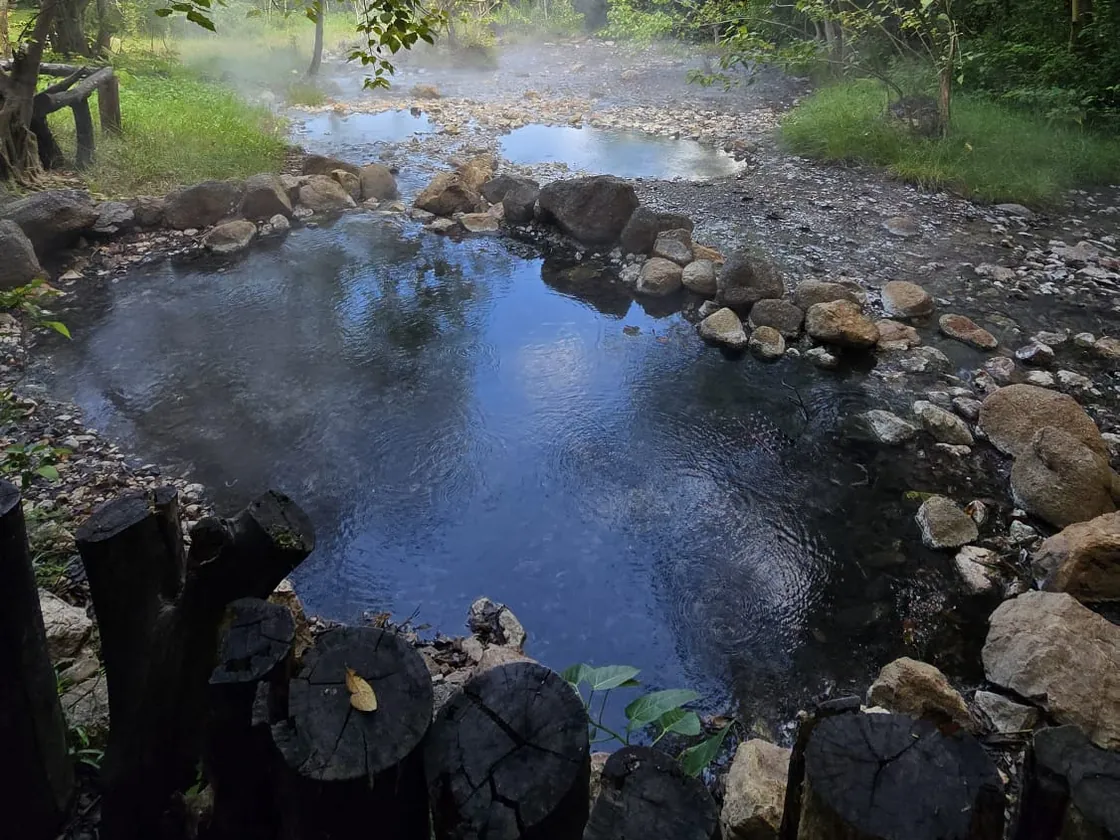
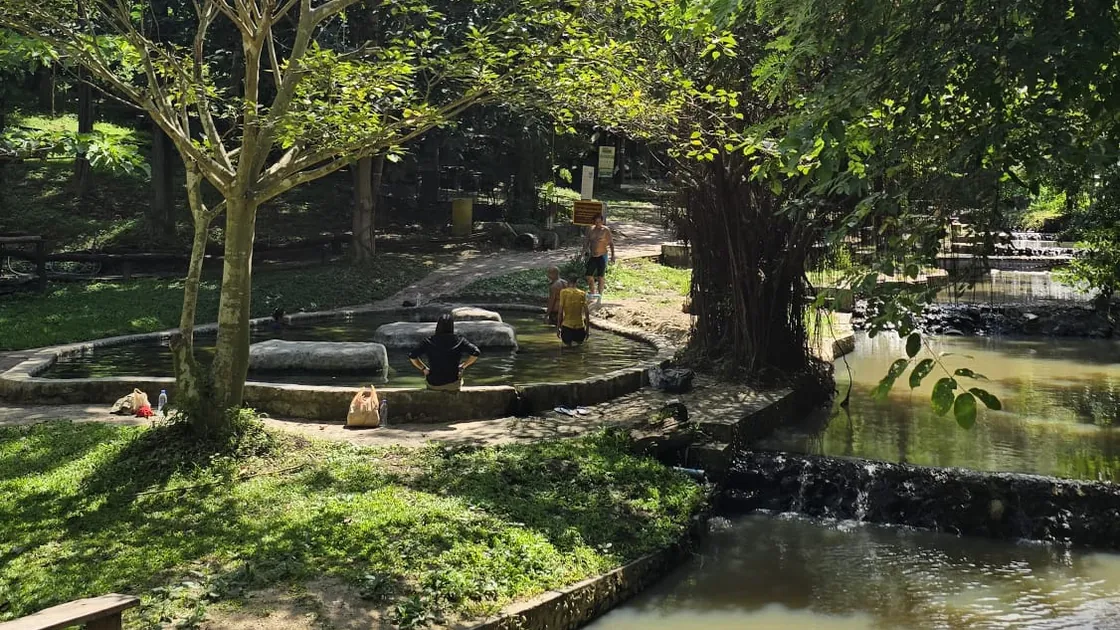
Start by walking towards the steam. The park’s own map counts two main springs, and notes that new ones keep appearing, some of them very hot. The spring water emerges at roughly 75–80°C—hot enough for the egg-cooking area, but much too hot for bathing. As it flows downhill and mixes with cooler water, its temperature drops. Farther down are the pools where you can sit and soak.
That change is what makes Tha Pai more interesting than a single tub of hot water. You can see the source and then choose a bathing spot that feels comfortable. Pools closer to the hot water may feel quite different from those farther downstream, and temperatures can change with the flow and weather. Check the signs and test the water before getting in.
The water smells of sulphur. Take silver jewellery off before you get in: sulphur tarnishes it quickly, and barely touches gold.
The spring is outdoors, so the air makes a difference too. On a cool morning, the steam is easier to see and a warm pool can feel particularly good. In the heat of the afternoon, you may prefer the cooler end of the bathing area.
Cooking eggs
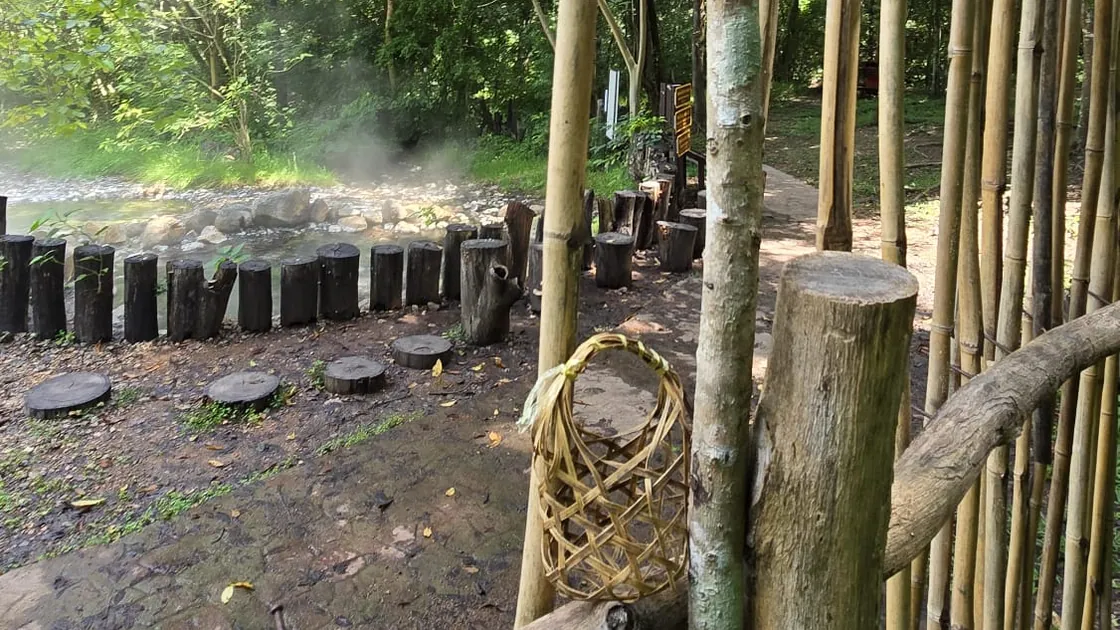
Egg cooking is one of Tha Pai’s familiar little rituals. When the activity is operating, eggs are placed in baskets at a designated hot-water spot while you wander around or soak. It is a fun way to appreciate just how much heat is coming out of the ground.
The baskets are woven bamboo, hung by the fence, and a board beside the spring shows what five and fifteen minutes will get you. The park asks that you do not cook eggs in plastic bags.
They come out unlike a boiled egg. At around 80°C the yolk sets but the white stays soft and almost jelly-like, so an egg can look underdone when it is cooked through. Crack the top and peel it gently; the white is fragile.
Use the marked egg-cooking area rather than trying to put anything into the source yourself. Availability may depend on the facilities operating when you visit.
Why is the water hot?
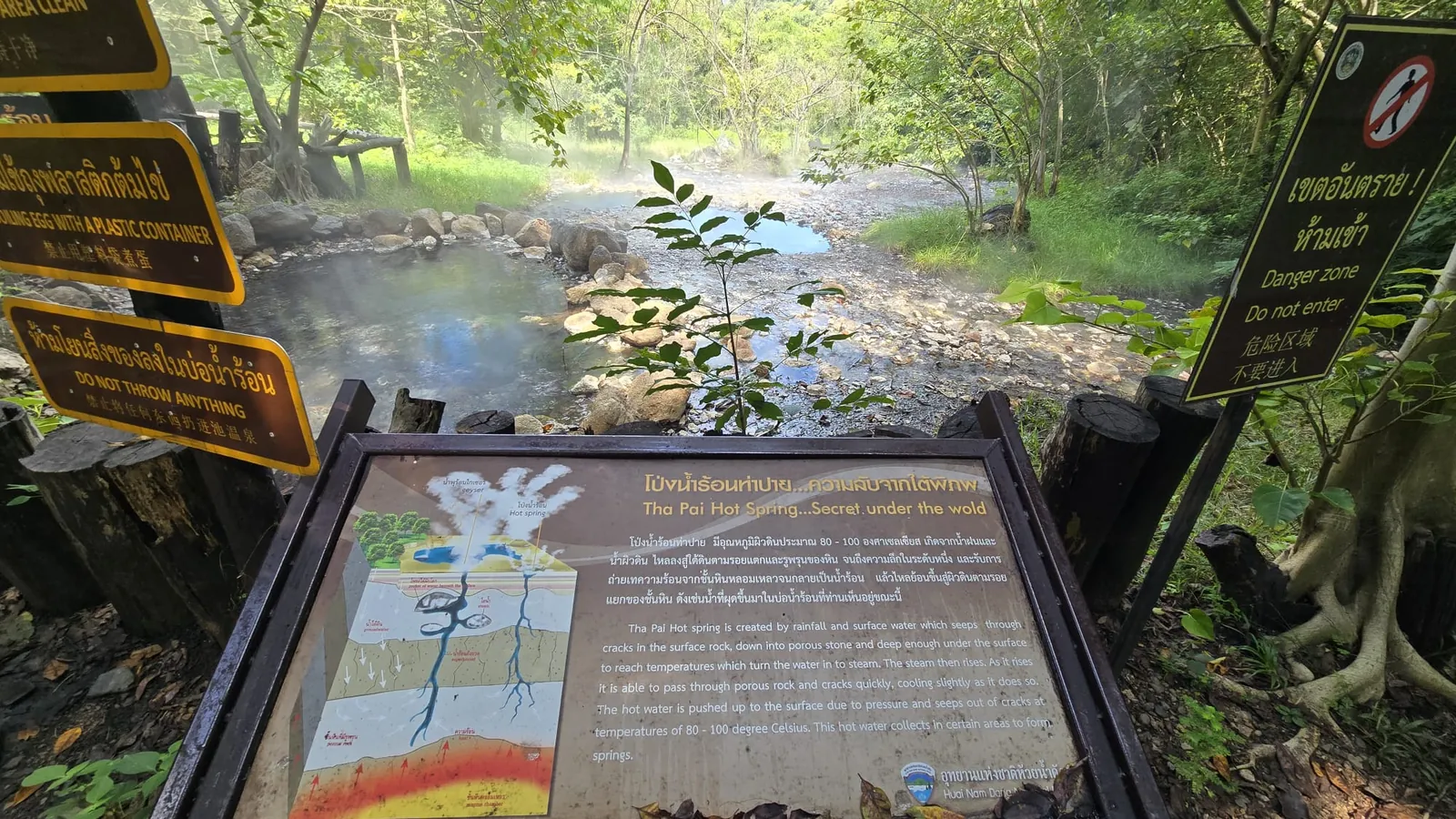
Groundwater travels below the surface, warms deep underground and rises again through openings in the rock. At Tha Pai, it reaches the surface in an area of granite. The water you see steaming near the source is part of that natural flow, not a pool heated for visitors.
It is not volcanic, whatever some write-ups say; there are no volcanoes in northern Thailand.
You do not need the underground temperature estimates to enjoy the place. The striking part is visible above ground: water emerges too hot to touch, then travels a short distance before becoming somewhere you can sit.
The Thai name describes it. โป่งน้ำร้อนท่าปาย, Pong Nam Ron Tha Pai, is the hot seep at Tha Pai: pong is a mineral seep, and tha a ford or landing, as in Ban Tha Pai by the Memorial Bridge.
Getting there and making the most of your visit
Tha Pai is south of town, reached from Highway 1095 by a turn-off near the Pai Memorial Bridge. Follow the signs to the national-park entrance. There are changing facilities at the site, but bring your own towel and swimwear.
Use the bathing areas as you find them on the day. Keep soap and shampoo out of the pools, and do not treat spring water as drinking water. After substantial rain, conditions around an outdoor spring can change, so check that the site is open before making the trip.
Tha Pai is in Huai Nam Dang National Park, and Sai Ngam and Pam Bok are in the Lum Nam Pai Wildlife Sanctuary. The two tickets are separate: this one does not cover Sai Ngam or Pam Bok, and a sanctuary ticket from either does not cover Tha Pai.
The admission fee is worth knowing in advance, especially if you are travelling on a backpacker budget. Tha Pai works best when you have time to settle into the water rather than squeezing it into a rushed stop. See the steaming source, find a pool that suits you, and stay a while.