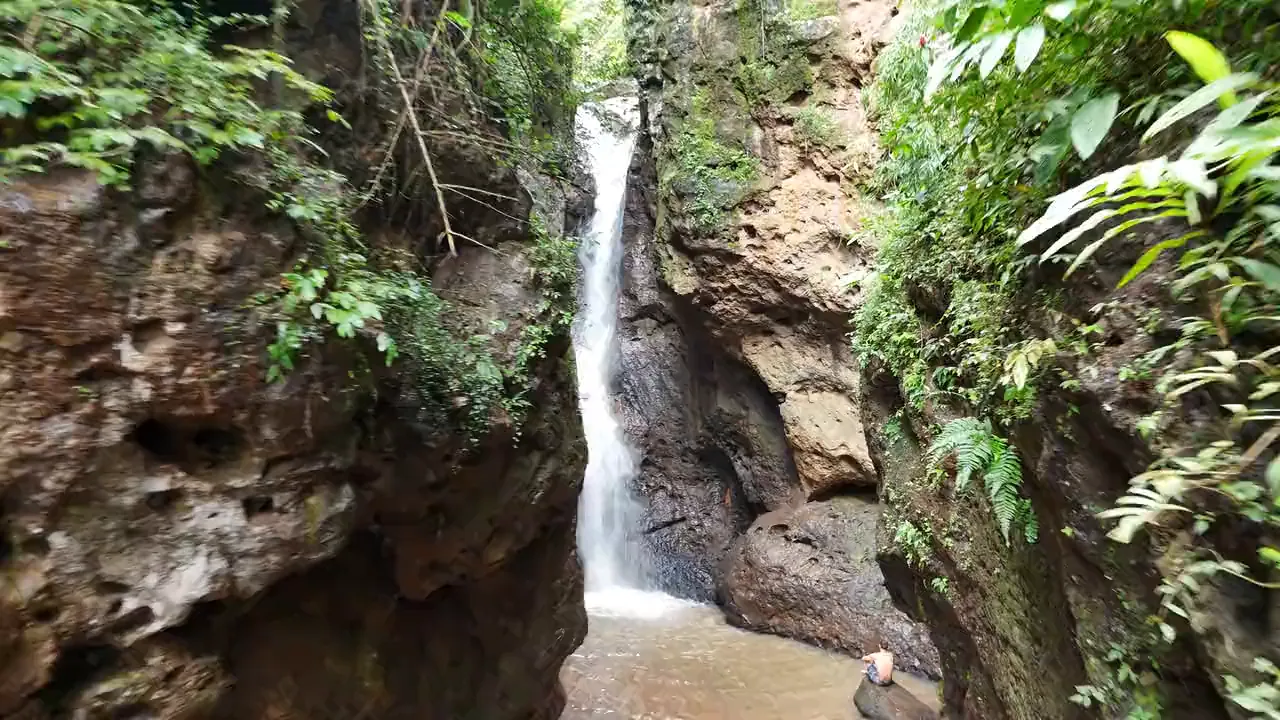
A seasonal gorge south of Pai
Written by Nolo Hub Pai, Pai’s top social and experience-based hostel
Last checked September 2026
tl;dr
Pam Bok Waterfall sits in the hills south of Pai, near Ban Pam Bok.
Also known as: Pham Bok Waterfall · Pambok Waterfall · น้ำตกแพมบก
Pam Bok at a glance
- Location
- Ban Pam Bok, south of Pai, within the Lum Nam Pai Wildlife Sanctuary
- From Nolo Hub
- 8.2 km; around 15–20 minutes by scooter or car
- Walk from parking
- around 100–150 metres
- Entry
- 200 THB, or 30 THB for Thai visitors — wildlife-sanctuary admission, with no vehicle fee at Pam Bok — as of September 2026
- Best for
- a short gorge walk, a swim when conditions allow, and a stop on a southern Pai day out
- Best flow
- usually during and after the rainy season
- Footwear
- sandals or shoes with grip are useful on wet rock
- Your things
- there are not many places to put them in the wet season, so leave what you can in your bike seat
- Map
- Google Maps · Apple Maps
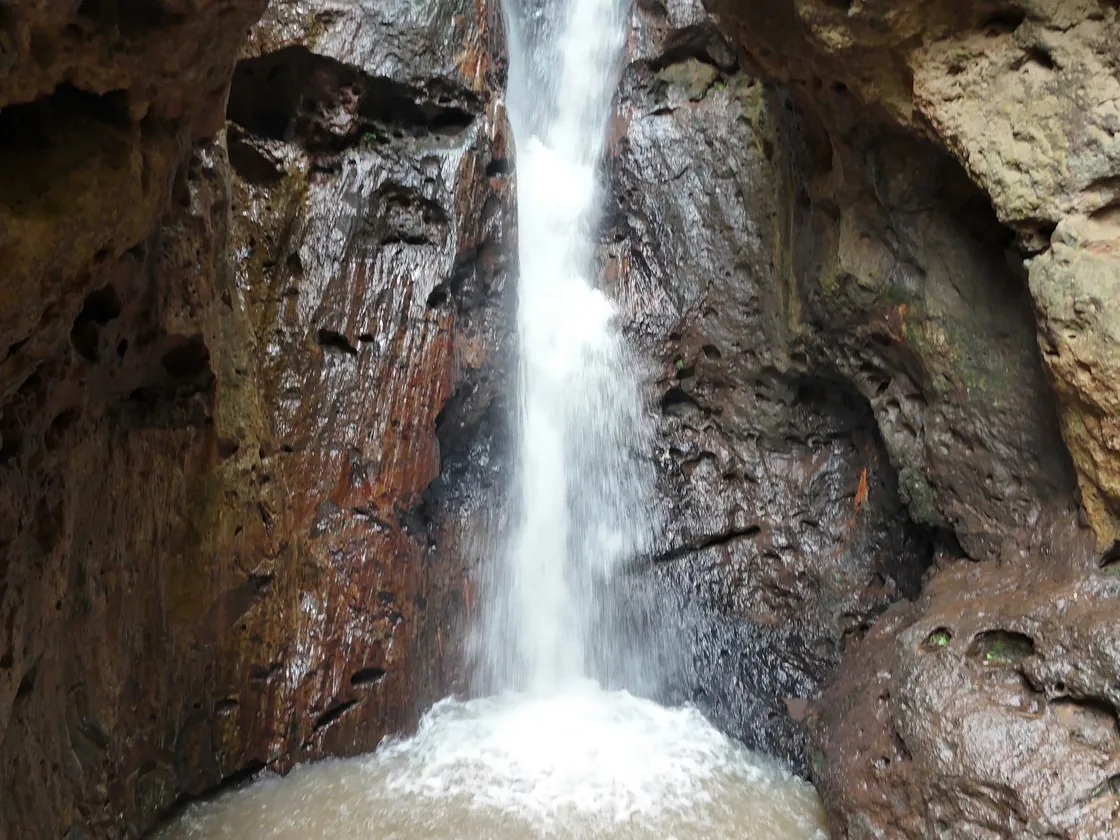
A short path from the car park leads into a narrow rocky gorge, where water drops between steep walls of rock and thick vegetation. Once you are inside, the road and open countryside disappear. The air is cooler, the space is darker, and the sound of the waterfall fills the gorge.
Pam Bok has two very different versions.
In the dry, hotter months, the flow can slow to a trickle. If you arrive expecting a full waterfall, it may feel underwhelming. After sustained rain, though, the gorge changes completely: the waterfall becomes powerful, the rock walls echo with water, and the whole place feels dramatic.
Neither version is a mistake. It is simply a seasonal waterfall, and knowing that before you go makes the visit much better.
Keep your ticket
Pam Bok is inside the Lum Nam Pai Wildlife Sanctuary, so your entry ticket is more useful than it first appears.
Keep it dry and do not throw it away after leaving the waterfall. It works as a same-day sanctuary pass for other visitor sites within the protected area, including Sai Ngam Hot Spring.
At Sai Ngam the same day, you pay only the vehicle fee at its gate: 30 THB for a scooter.
This can make Pam Bok a useful first stop if you are exploring several sanctuary sites in one day. Just plan the route realistically: Pam Bok is south of Pai, and Sai Ngam is north. The ticket is shared; the roads are not.
Ask our team to help you build a route that suits the time you have.
What the waterfall is like
Pam Bok is shaped by its setting.
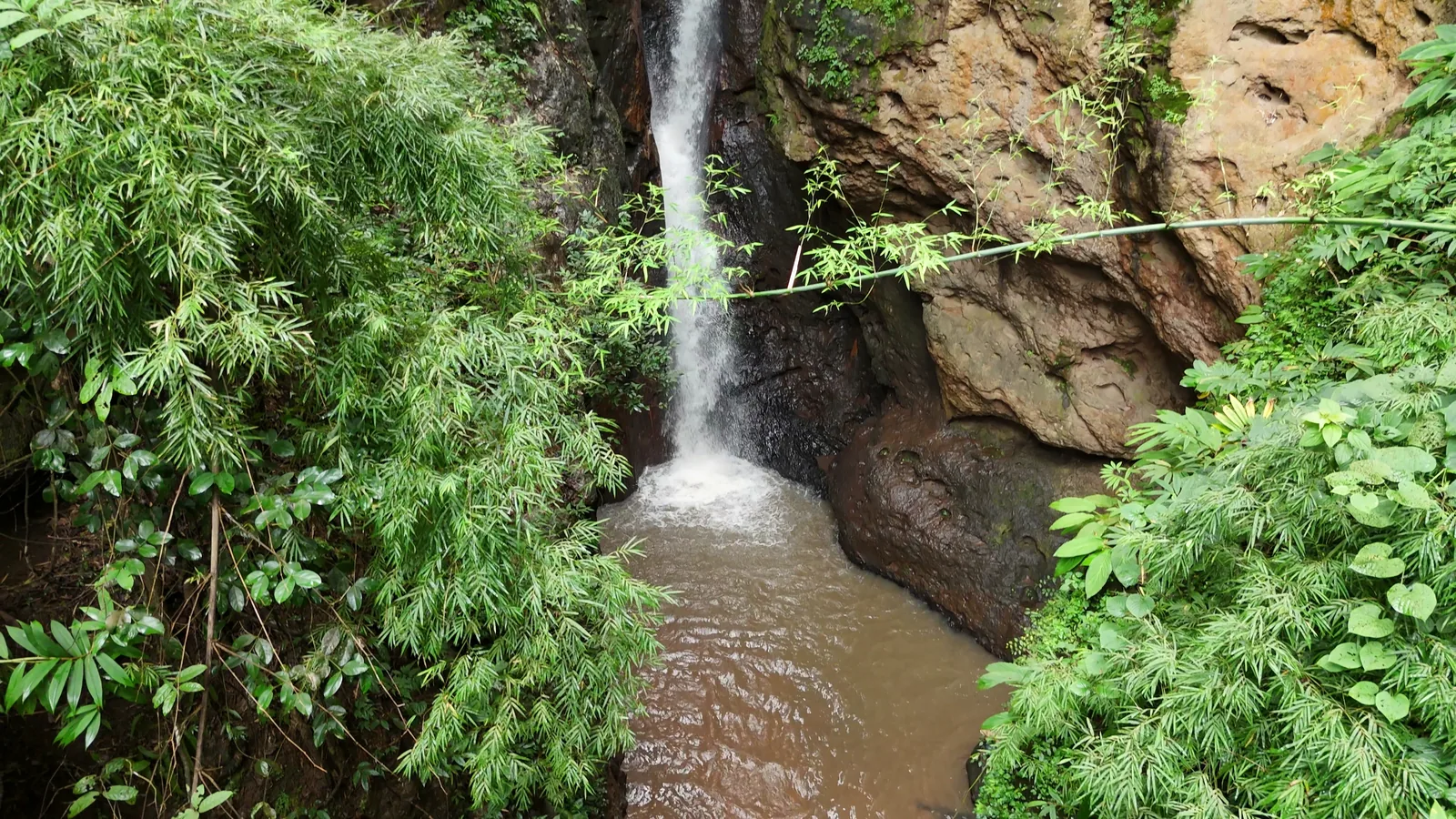
The stream enters a confined section of rock where there is little room for anything except the water, the path, and the forest around them. You do not admire this waterfall from far away. You walk into the gorge and stand close to it.
That is what separates Pam Bok from Mor Pang.
Mor Pang is open, sunny, and spread across several tiers. Pam Bok is enclosed, shaded, and focused on one dramatic drop between the gorge walls.
When the water is running strongly, the setting makes it feel bigger than photographs suggest. The waterfall arrives suddenly at the end of the short path, with the gorge holding in the sound and spray.
When the flow is low, the same setting becomes quieter. You may still enjoy the cool shade, the rock walls, and the walk into the gorge—but it is worth setting your expectations properly.
Swimming, rocks, and rain
When conditions are calm, visitors may swim in the pool beneath the waterfall. Check the water carefully before getting in.
Depth changes with rainfall, and rocks, branches, or debris can sit below the surface. Wet stone around the gorge can also be slippery. Do not assume that a spot is safe to jump because someone else has done it before you.
Heavy rain deserves extra caution.
Pam Bok is a narrow gorge, and water can arrive from higher in the catchment even when rain is not falling directly above you. If there has been significant rain, check whether the sanctuary is open and reconsider entering the gorge. Stronger flow can be spectacular, but it can also make the waterfall unsafe.
Past the steel walkway, the gorge narrows to under four metres and the walls are vertical, so there is no way out to the side. If the water starts rising or gets muddier while you are inside, leave straight away.
The best approach is simple: enjoy the water when it is calm, and leave it alone when the conditions are unclear.
Avoiding the busy moments
Pam Bok can be peaceful, but it can fill up quickly.
The gorge is compact. When tour trucks or several groups arrive together, there is limited room around the pool and the atmosphere changes fast. That does not mean you should avoid the waterfall; it just means timing matters more here than at a wide, open site.
For a quieter visit, go earlier in the morning or later in the afternoon. If you arrive just after a group has entered, give it a little time. People often move through the gorge quickly, and the place can feel completely different 20 or 30 minutes later.
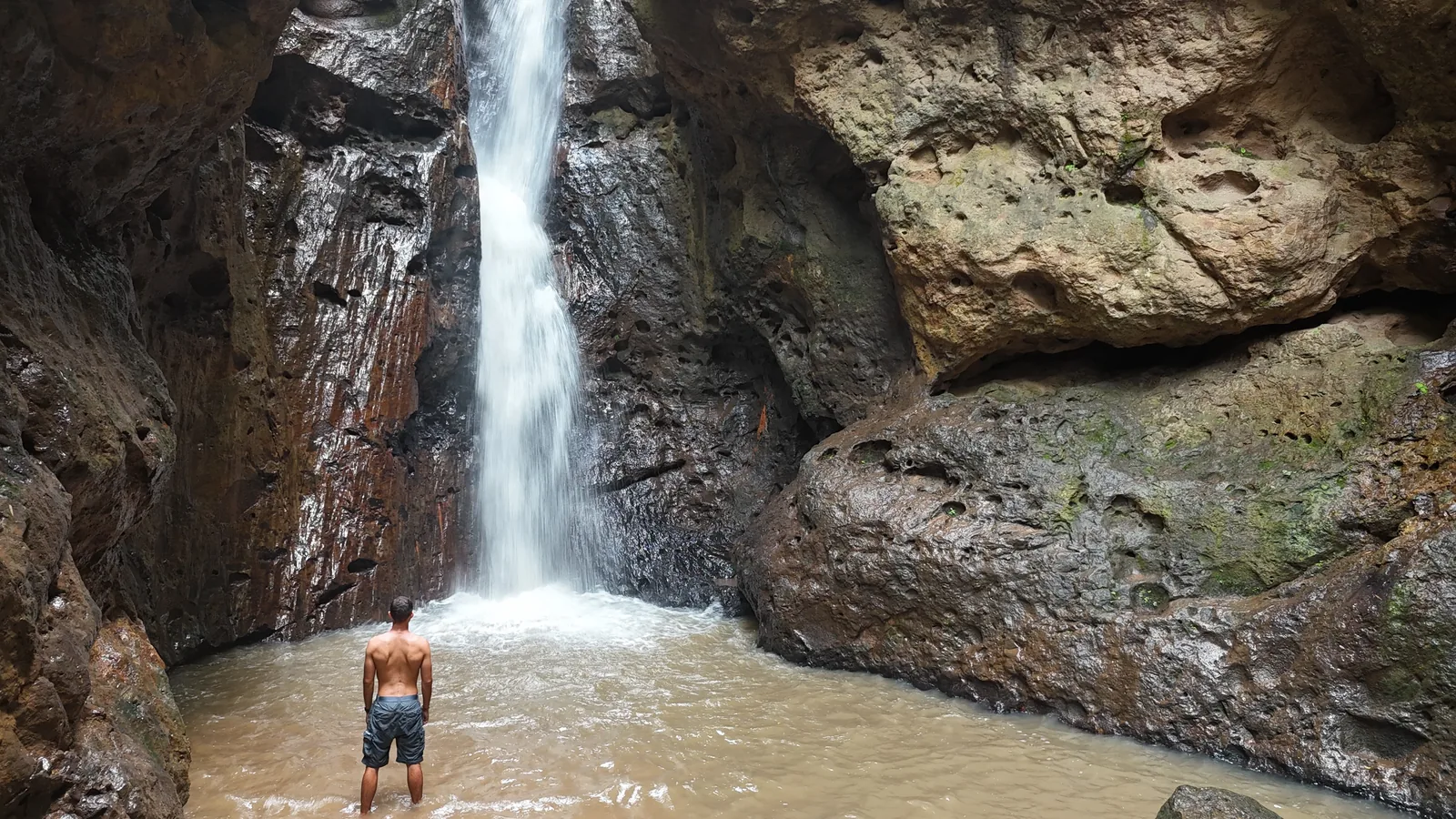
The Pam Bok landscape
Pam Bok is not an isolated waterfall outside the village. It is part of a wider landscape of forest, streams, farmland, and community life.
Ban Pam Bok is a Tai Yai community with long-standing agricultural, religious, food, and craft traditions. Nearby, the Kho Ku So Bamboo Bridge crosses rice fields towards a forest monastery. The village, the fields, and the waterfall all belong to the same southern Pai landscape.
You do not need to squeeze every nearby stop into one afternoon. But seeing the connections makes each place more interesting.
Make a day of it
Pam Bok pairs naturally with other places south of Pai:
- Kho Ku So Bamboo Bridge for a slower walk through rice fields
- Pai Canyon later in the day for sunset
Pam Bok is a short walk, but it is not always a short experience.
Go after rain if you want to see the waterfall at its most powerful. Go in the dry season for a quiet gorge walk, knowing the flow may be low. Keep your sanctuary ticket, watch the weather, and give yourself enough time to let the place feel like more than a photograph.