Pai Memorial Bridge
Written by Nolo Hub Pai, Pai’s top social and experience-based hostel
Last checked September 2026
tl;dr
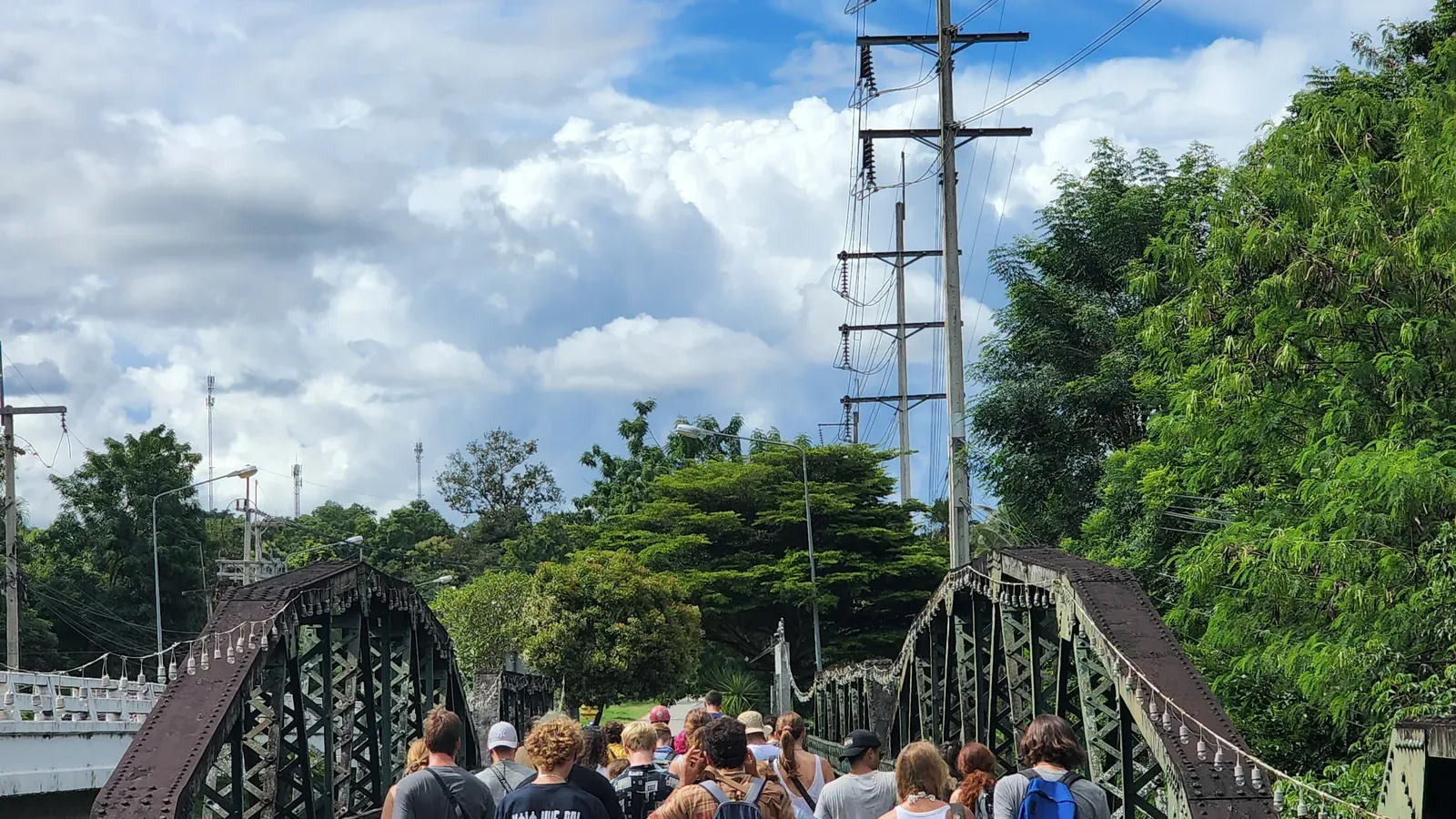
Pai Memorial Bridge stands beside Highway 1095 at Ban Tha Pai, around 10 km south of Pai town. The old steel and wooden bridge crosses the Pai River alongside the concrete bridge used by traffic today. Entry is free, and you can walk across and look out over the river.
Also known as: Memorial Bridge · World War II Memorial Bridge · Tha Pai Bridge · สะพานประวัติศาสตร์ท่าปาย — the last is its Thai name since 1976, the Tha Pai Historic Bridge
- Where
- Beside Highway 1095 at Ban Tha Pai, kilometre 88 — around 10 km south of Pai town
- From Nolo Hub
- 9.1 km
- Entry
- Free
- Time
- 15–20 minutes
- What it is
- An old steel footbridge over the Pai River, beside the concrete highway bridge
- Watch your step
- There are gaps between some of the deck planks
- Map
- Google Maps · Apple Maps
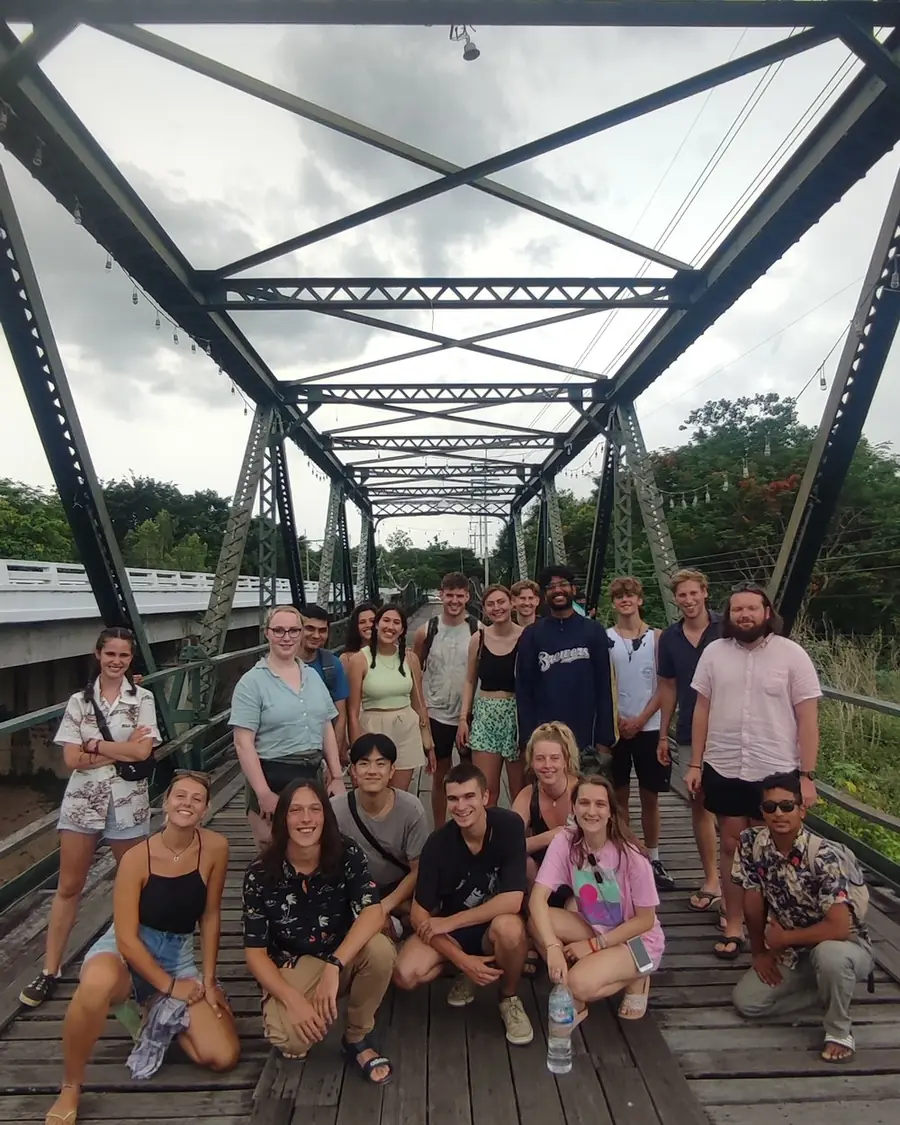
It makes an easy stop on the road south of Pai. Give it 15–20 minutes if you want to cross, read about its history, and take in the setting.
The first thing to know is that the steel bridge standing here was assembled decades after the Second World War. The crossing has a wartime history, but the structure you walk on today is a later chapter.
Before there was a bridge
People needed to cross the Pai River at Ban Tha Pai long before Highway 1095 or the memorial bridge existed.
The village is named for that crossing. Tha (ท่า) means a ford or a landing — a shallow stretch where a river can be waded, or a place to come ashore — so Ban Tha Pai is the village at the Pai crossing. The bridge carries the name of the crossing it replaced.
Caravans of pack oxen and mules came through here, run by Shan, Northern Thai and Yunnanese Muslim traders known as the Haw, carrying salt, iron, cloth and forest goods. The Haw are a different people from the Yunnanese Nationalist soldiers whose village is Santichon, west of Pai: the same province and the same road, and nothing else in common.
Local histories describe travellers bringing animals to the river and crossing by dugout boat. The water level made a difference: a journey that was manageable in the dry season could become much harder after rain.
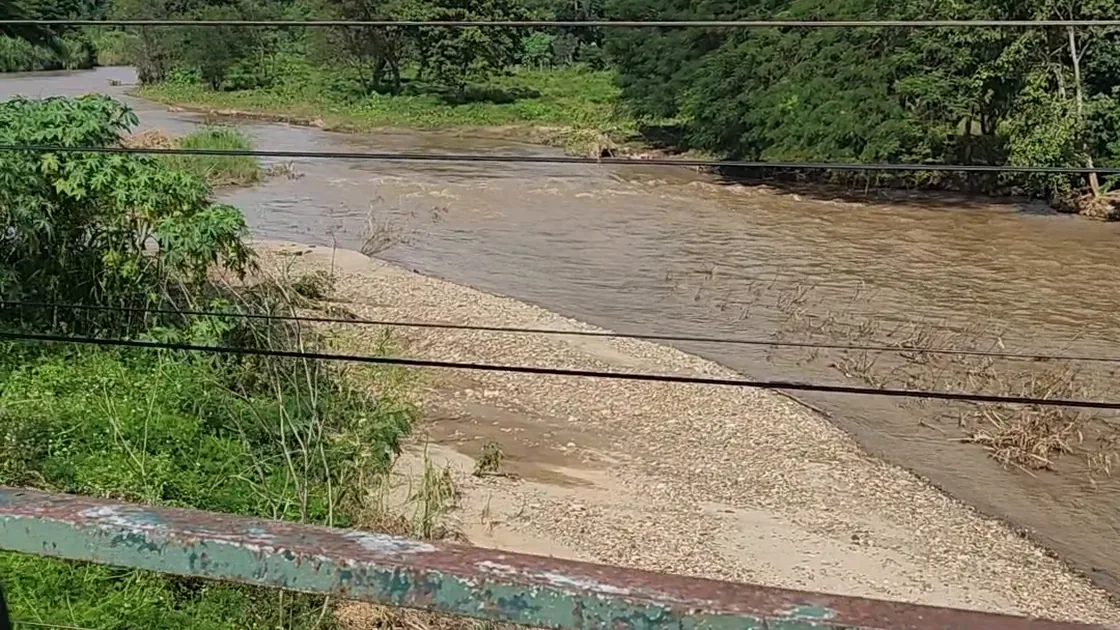
In the dry season the river spread into shallow channels over gravel bars, and people and animals waded across. In the monsoon it could not be waded, and the east bank was cut off from the markets, temples and offices on the west. People crossed on rope-guided bamboo rafts as well as in dugouts, and cattle were swum across the deep pools. Bamboo footbridges went up at low water every year, and the first flood of the rains took them away.
That older crossing helps explain why the site mattered. A bridge here connected people and settlements on either side of a river that could otherwise interrupt travel through the valley.
The wartime crossing
During the Second World War, the Japanese military developed a transport route through Pai and Mae Hong Son towards Burma. At Ban Tha Pai, that route had to cross the river, and in 1942 the Japanese army bridged it here.
Local accounts describe a timber bridge built using trees brought from the surrounding forest, with local people involved in the work. Domestic timber elephants hauled hardwood logs, some more than thirty inches thick, out of the forest, and the logs were driven into the riverbed as piers.
The work was done by local Thai and Shan villagers under Japanese supervision. Accounts differ on whether they were hired or conscripted, but the wage is recorded: between 50 satang and 1.50 baht a day.
It was part of a much larger road project that affected communities along the route. The bridge was useful to the military, but it also stood at a crossing local people depended on.
The original wooden structure did not survive the war. Accounts of how it was lost differ, and they describe different events. One places the burning in the dry season of 1944–45, during the Japanese retreat. Thai accounts place it in 1946, as the troops withdrew after the surrender.
Afterwards, local people rebuilt a wooden bridge to keep the crossing open, and rebuilt it again every time the river took it. The wartime bridge was built for an army; everything after it was built by the people who lived there.
Flood and rebuilding
In August 1973, a severe flood damaged farmland around Pai and destroyed the replacement wooden bridge.
Pai needed another way across the river. The steel bridge that stands here today was assembled in the mid-1970s and completed in 1976.
That timeline matters. Despite its common description as a “Japanese bridge,” the steel structure is not a preserved wartime bridge. It marks a place shaped by the war, but it also belongs to Pai’s later history of flood recovery and rebuilding.
Where did the steel bridge come from?
The origins of the present steelwork are still debated.
The Mae Hong Son E-Archive gives the established local account: after the 1973 flood, Pai obtained the former Nawarat Bridge from Chiang Mai, transported its steel components to Ban Tha Pai in 1975, and completed the new crossing the following year.
The Chiang Mai end of the story agrees. The Thai history of the Nawarat Bridge, written from the Chiang Mai side, says that once its steel had been taken down, Pai District asked for the whole structure, to replace a wooden bridge badly damaged by flooding.
Bridge researcher Hak Hakanson examined photographs and the designs of the individual spans. He found that they do not match the old Nawarat Bridge and questioned whether any of the visible spans came from it.
The careful answer is that Pai asked for the Nawarat steel and assembled a bridge here after the flood, while the precise origin of the spans standing today remains unresolved. The Chiang Mai story is an important part of the bridge’s local history, but it should not be presented as a proven identification of the structure standing today.
The Nawarat Bridge in Chiang Mai
If the Chiang Mai account is right, the steel had a whole life before Pai.
The Nawarat Bridge was a riveted steel truss over the Ping River in Chiang Mai, built in 1921–23 to carry heavier traffic after the railway reached the city. It was named for Chao Kaeo Nawarat, the last ruler of Chiang Mai.
In the 1960s it was taken down — in 1965 by one Chiang Mai history, in 1967 by another — and a four-lane concrete bridge opened in its place on 26 December 1967. The steel went into storage, and stayed there for eight or ten years until Pai asked for it.
It was not a transfer but a salvage. Pai asked for something nobody else wanted, and it is still standing fifty years later.
What the road changed
The road through Ban Tha Pai changed how far away Pai was.
From Chiang Mai, the journey took days to a week by pack caravan, roughly two days once the Japanese road was through, and a few hours after the highway.
Today’s route has 762 curves between Chiang Mai and Pai, and 1,864 all the way to Mae Hong Son. The road people take motion-sickness tablets for is what ended Pai’s isolation, within a generation.
Visiting the bridge today
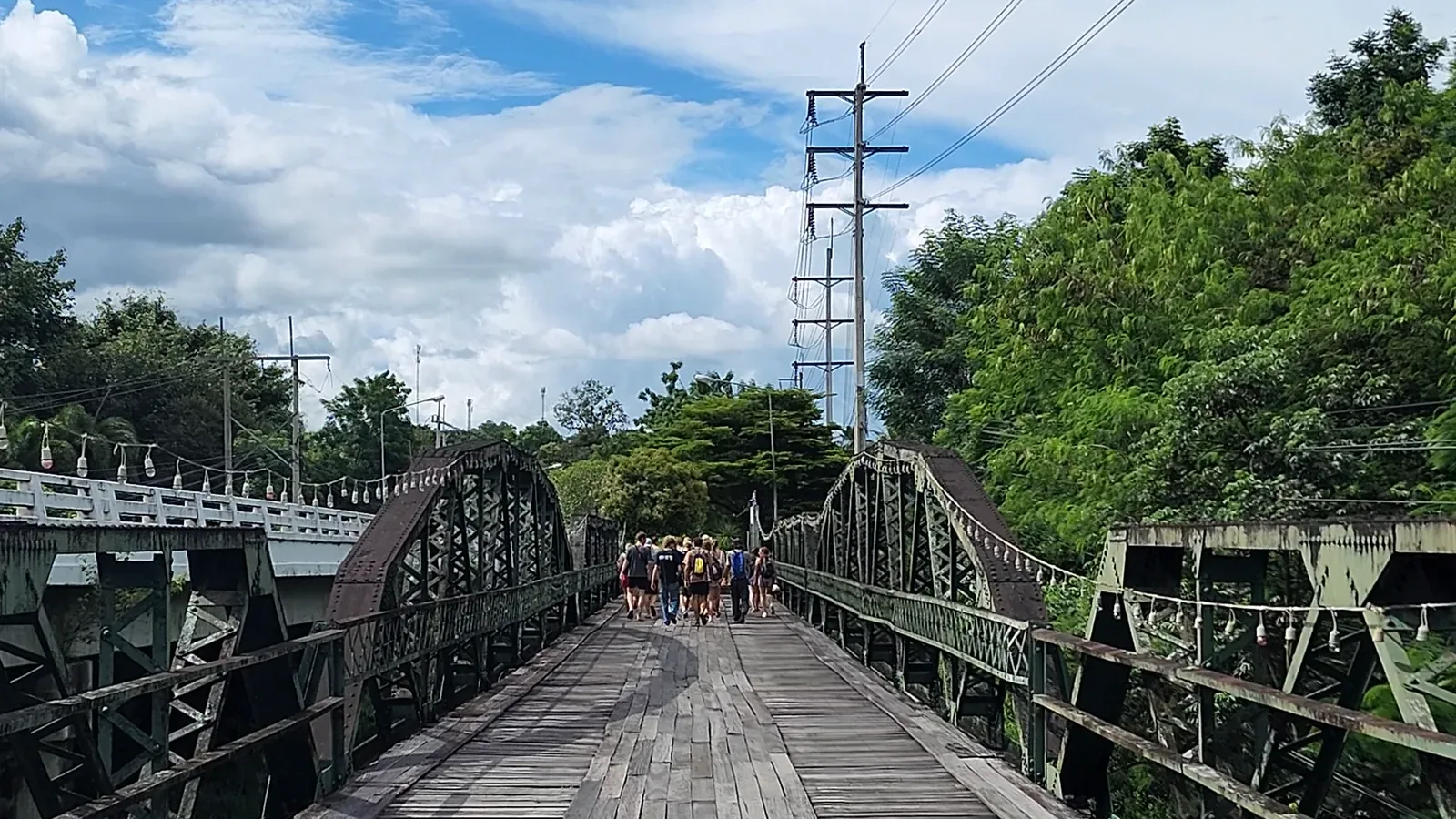
The old bridge no longer carries Highway 1095. You can walk its wooden deck while vehicles use the concrete crossing beside it. Watch your step: there are gaps between some of the deck planks.
It stands at kilometre 88 on the 1095, with car parks on both banks and souvenir stalls.
From the middle, look down at the river and back towards the road. It is easier to understand the bridge when you see the obstacle it was built to overcome. This stretch of water has been crossed by boat, timber bridge, and steel bridge, while the route through the valley has changed around it.
It is a fifteen-minute stop that everybody photographs and nobody understands.
You do not need a long visit to appreciate Pai Memorial Bridge. Stop on your way south, walk across, and take a moment to separate the structure in front of you from the wartime story attached to the site.
The bridge has been rebuilt and reinterpreted more than once. The reason for a crossing here has remained the same: people need to get across the Pai River.