Written by Nolo Hub Pai, Pai’s top social and experience-based hostel
Last checked September 2026
tl;dr
A few kilometres west of Pai, the road climbs into Santichon, a Yunnanese Chinese village set among cultivated hills. Visitors come for its restaurants, tea shops and earthen-built cultural area, but the village’s story runs deeper than the part designed for tourists. It grew through migration, settlement and generations of life in northern Thailand.
Also known as: Yun Lai · Hyun Lai · หยุนไหล · 雲來 · Ban Santichon · Santichon Village · หมู่บ้านสันติชล · Chinese Yunnan Cultural Village
At a glance
- Santichon
- A Yunnanese Chinese village about 5 km west of Pai, with a cultural visitor area, food and tea
- Yun Lai
- A viewpoint roughly 1.6 km uphill from the village, overlooking Santichon and the wider valley
- From Nolo Hub
- 5 km to Ban Santichon
- When to visit
- Daytime works well for both. Sunrise is an option if you want to try for morning mist
- Cost
- Santichon has no general entrance ticket; food and activities cost extra. Yun Lai’s published entry fee is 20 baht per person — as of September 2026
- Yun Lai hours
- 5am to 5pm
- Tea at Yun Lai
- Sold separately
- The road
- Paved to Santichon, then narrow and steep up to Yun Lai. A paid local transfer is available from the village
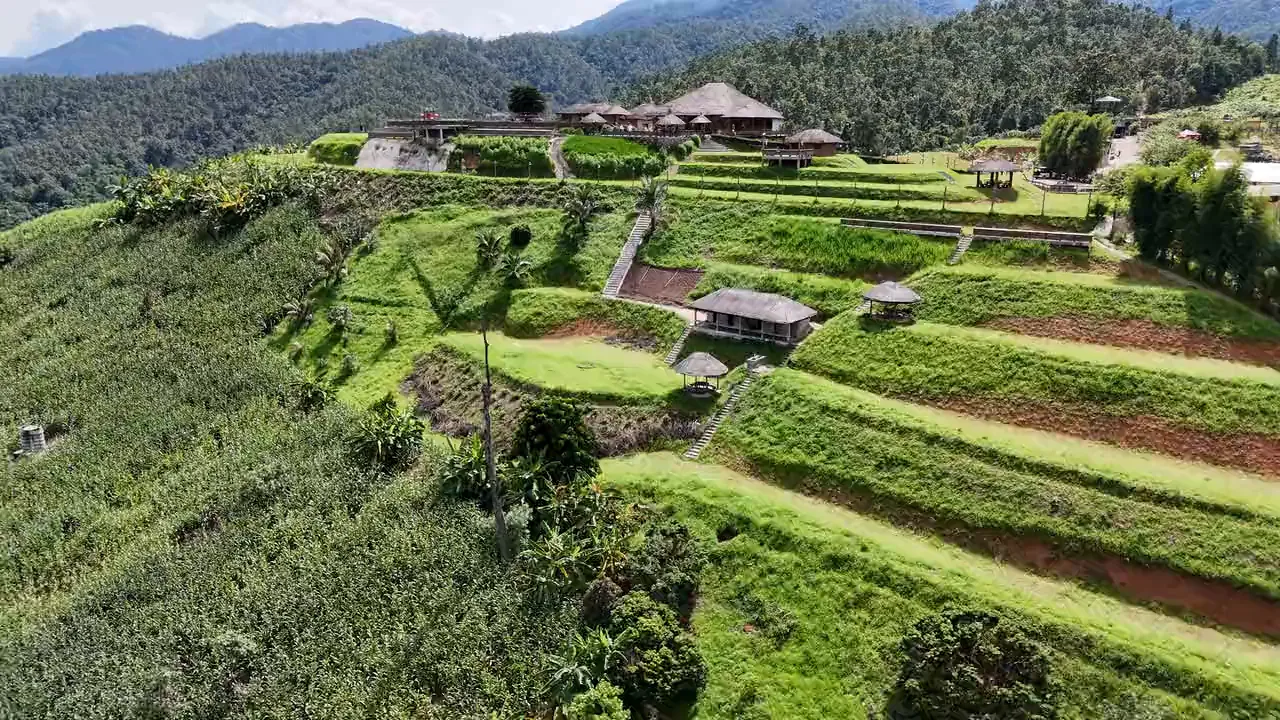
Continue uphill and you reach Yun Lai Viewpoint, looking back over Santichon and out across the Pai valley. The two places make sense together: spend time in the village, then see how it sits among the fields and mountains around it. Yun Lai is popular at sunrise, especially when mist gathers below, but you do not need an early alarm to enjoy the view.
Spending time in Santichon
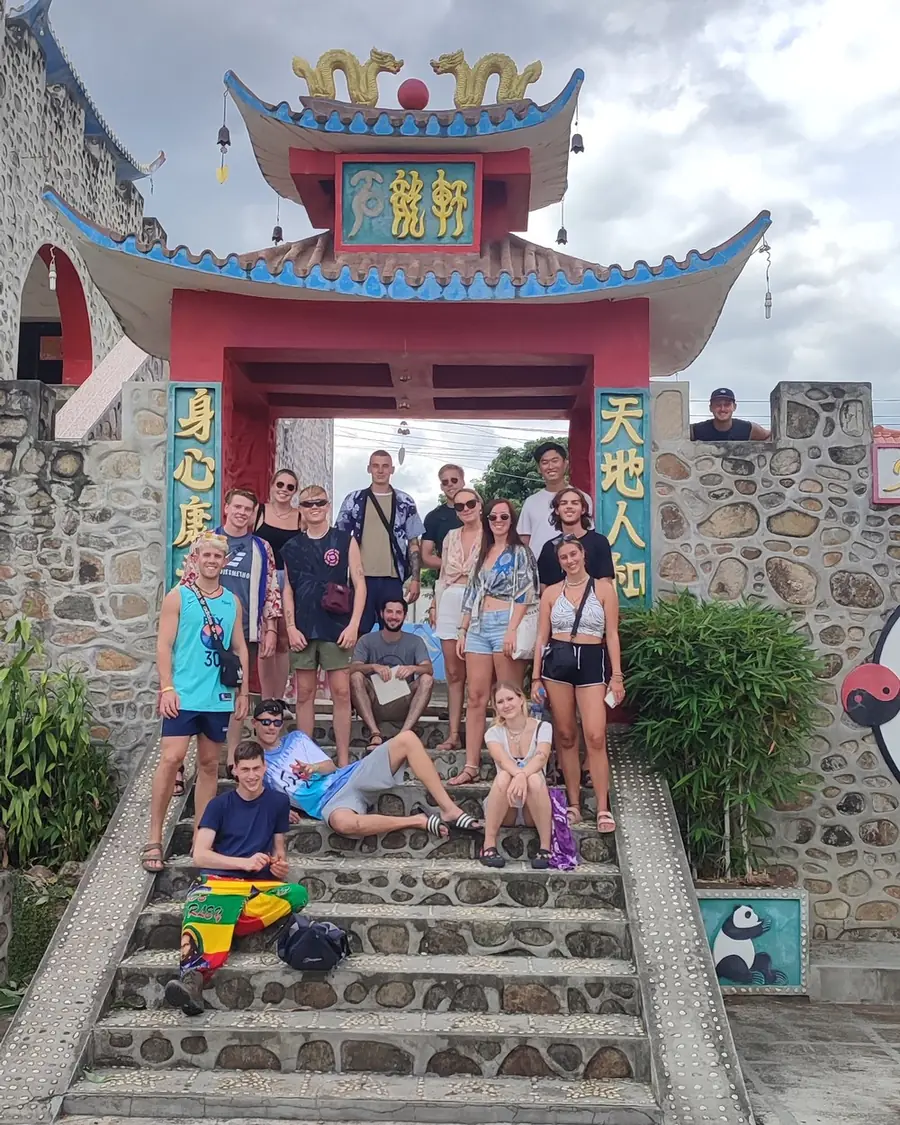
Santichon’s visitor area is an easy place to wander, stop for tea and try Yunnanese food. Depending on which restaurants are open, you may find noodles, braised pork with mantou, or black-bone chicken dishes. There are also earthen buildings, Chinese-style details, courtyards and places set up for photographs.
Look for the lotus ponds, the cobbled paths, a replica stretch of the Great Wall with steps to climb, and the big wooden swing that turns in the square. The earth walls are 30–40 cm thick, which is why the houses stay cool on hot afternoons.
Those features are part of how the community welcomes visitors today. They do not mean that every building has stood unchanged since the first families arrived. Some were created or adapted as Santichon developed its tourism area. Beyond it is a village where people live, work and have raised families for generations.
The settlement is about sixty years old; the tourist village is about twenty. Its Cultural Centre opened on 9 February 2005, started by the village’s own headman and development committee rather than by a provincial tourism scheme — the opposite of how it looks.
Food is a good way to give Santichon more than a quick look from the road. Sit down for a meal, try the tea and take your time before carrying on uphill.
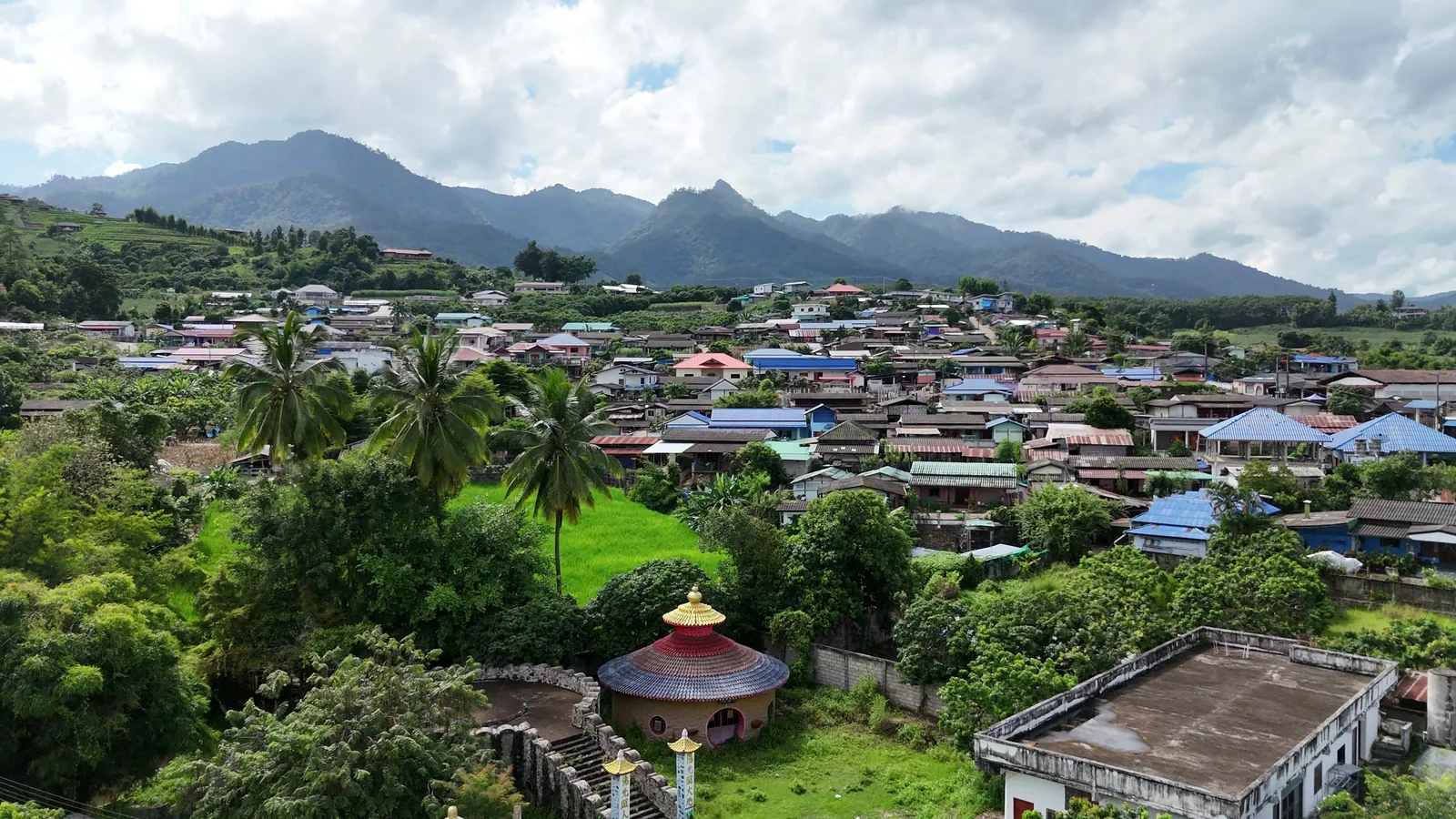
The story behind the village
Santichon’s roots are tied to Yunnanese Chinese migration into northern Thailand in the middle of the twentieth century. Political upheaval and war in China led people through the borderlands of Yunnan, Burma and Thailand. Families arrived by different routes and at different times, so there is no single arrival story that explains the whole community.
The short version starts in 1949. When the Chinese Civil War ended, Nationalist army units in Yunnan retreated into Burma rather than surrender, and lived in the jungle there for more than a decade.
In 1961 Burma made them leave. Most were flown to Taiwan, but some refused to go: mountain people from Yunnan with no ties to a tropical island, who still hoped to get home. They crossed into Thailand instead, and Thailand let them stay, in return for helping hold the northern border against communist insurgents.
Santichon’s families came later, and by choice. Through the 1960s and 70s, former soldiers and their families moved south from the army’s base at Tham Ngop, near Fang, looking for land they could farm — people choosing where to live, not a unit being placed. The village today is their grandchildren and great-grandchildren, moving between Northern Thai, Central Thai and Yunnanese.
The name fits the story. Santichon, สันติชล, means “stream of peace”, and former Nationalist villages across the north were given Thai names about peace and loyalty: Doi Mae Salong became Santikhiri, “mountain of peace”. Ban Rak Thai, near Mae Hong Son, is another, and often mixed up with Santichon; the two are about 110 km apart.
People settled around Pai and built lives here. Later generations grew up in Thailand, while Yunnanese food, language and other cultural practices remained part of village life. Santichon’s identity has continued to change as the community has changed; it is not a piece of the past held still for visitors.
Agriculture is part of the surrounding landscape, and tourism became another source of work much later. The cultural area reflects that newer chapter. It draws on Yunnanese heritage while meeting the practical needs of a village in present-day Pai.
Going up to Yun Lai
From Santichon, the road climbs another 1.6 kilometres to Yun Lai. That sounds short, but the final section is noticeably steeper and narrower than the road from Pai.
If you are comfortable riding it, you can go up by scooter. Otherwise, ask in Santichon about the paid local transfer and leave your scooter below. That is especially worth considering if you are heading up before sunrise, when the road will still be dark.
It is one of the steepest paved climbs around Pai. A 125 is fine with one rider, but with two adults on it, it often stalls on the final pitch, and the passenger may need to walk. Check your brakes before you come back down.
There is no required order for the two stops. On an ordinary daytime visit, explore Santichon first and then head up for the view. If sunrise is your reason for going, do Yun Lai first and return to the village later, when more restaurants and shops are open.
The view from Yun Lai
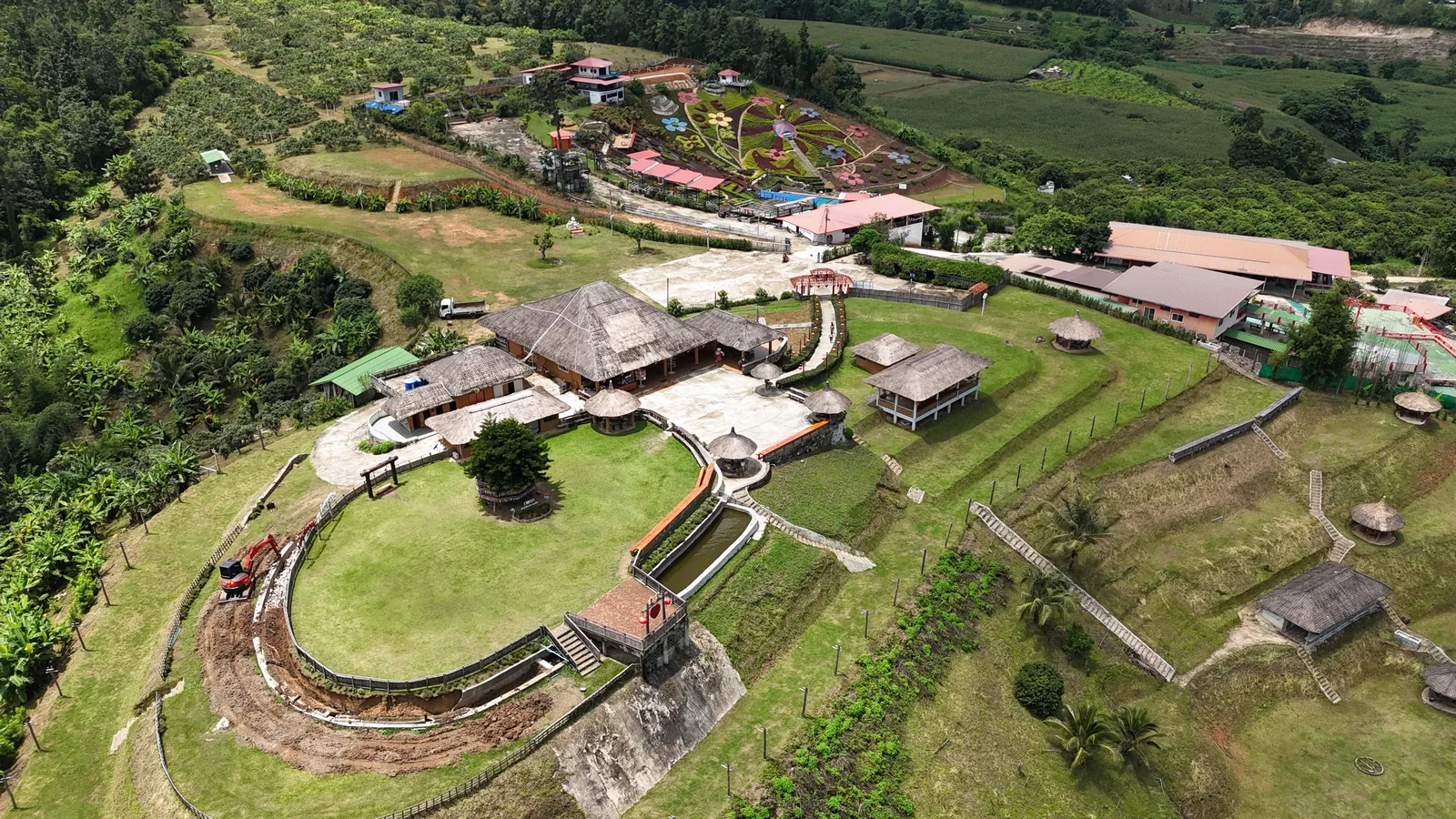
From the top, Santichon is part of a much wider scene. Fields, houses and roads spread across the lower ground, with mountain ridges around the Pai valley. It is a good viewpoint in clear daylight, when you can pick out the details below—not only in the few minutes around sunrise.
On the slopes nearer the village, most of what you see is lychee and rubber, with the odd field of pineapple.
The name Yun Lai is commonly understood as clouds gathering or flowing in. In Chinese it is 雲來, “clouds come”, the name on the sign the settlers put up. On the right morning, mist fills parts of the valley beneath the viewpoint, giving the place its best-known view. It depends on the weather, though. A clear morning is just a different look at the same landscape.
The mist season runs from late October to February, and December and January are the likeliest months, though not every morning. It burns off by midday. In burning season the smoke can hide the view altogether.
There are places to sit at Yun Lai, and hot tea is available if you want to linger. The published entrance fee does not include the tea: they are listed as separate charges. Bring some small cash for the viewpoint, a drink or the transfer up from Santichon.
Santichon and Yun Lai do not need to be squeezed into a sunrise mission. Come during the day for food, the village and a broad view over Pai, or come early if the chance of mist appeals to you. Either way, seeing the valley from above after spending time in Santichon makes the two stops feel connected.