Best time to visit Pai
Written by Nolo Hub Pai
Updated by the Nolo team, October 2026
tl;dr
Every month in Pai has a reason to be here. November to February brings misty mornings, sunny afternoons, and genuinely cold nights. March and April are hot and hazy—the burning season—when underground caves, shaded hot springs, river floats, and Songkran take over. From mid-May to October, the monsoon washes the air clean, turns the valley electric green, and fills the waterfalls.
The short answer
- Cool and dry
- November to February
- Hot and hazy
- March to early May (burning season)
- Rainy
- Mid-May to mid-October
- Morning mist
- Late October to February, peaking in December and January
- Waterfalls
- Strongest flow in August and September
- Festivals
- Loy Krathong and Yi Peng on the November full moon, Christmas, and Songkran from 13 to 15 April
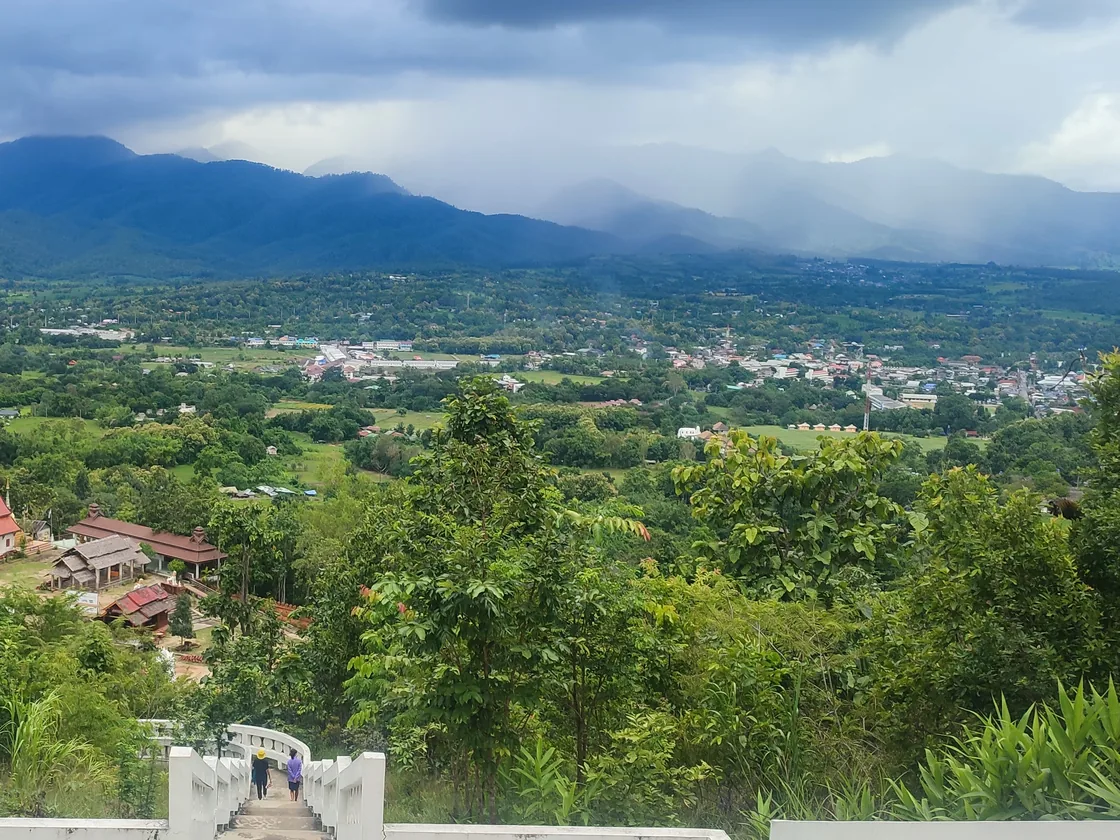
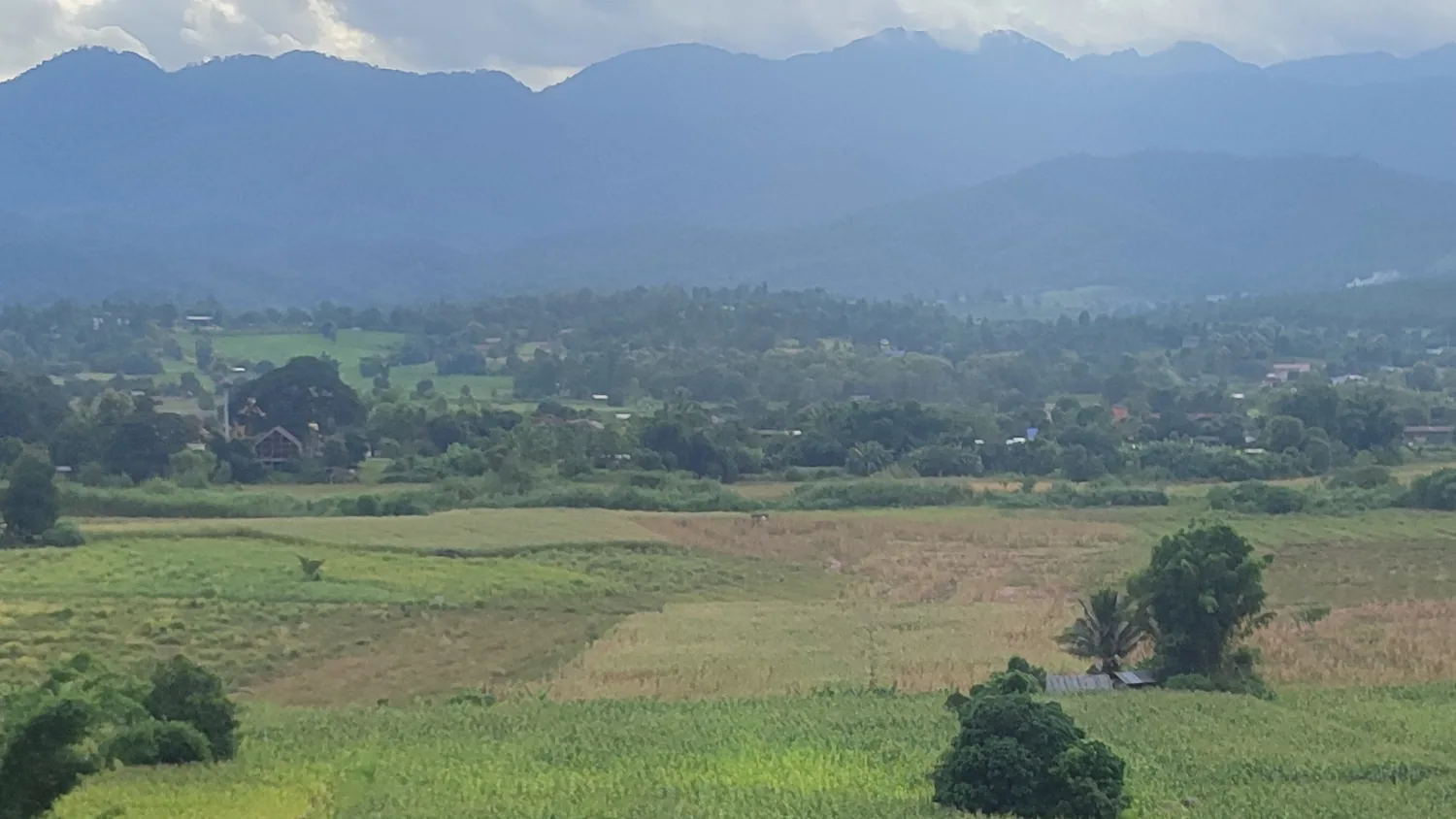
The easiest way to picture Pai in any given month is to look at what the fields are doing. The valley floor changes outfits four times a year: tall, bright-green rice through the rains; gold for the November harvest; low, dense rows of garlic through the cool season; and bare, dusty earth by March before the paddies flood again for the next crop. Up on the hillsides, the maize keeps its own clock—tall and green through the late rains, then cut back by autumn.
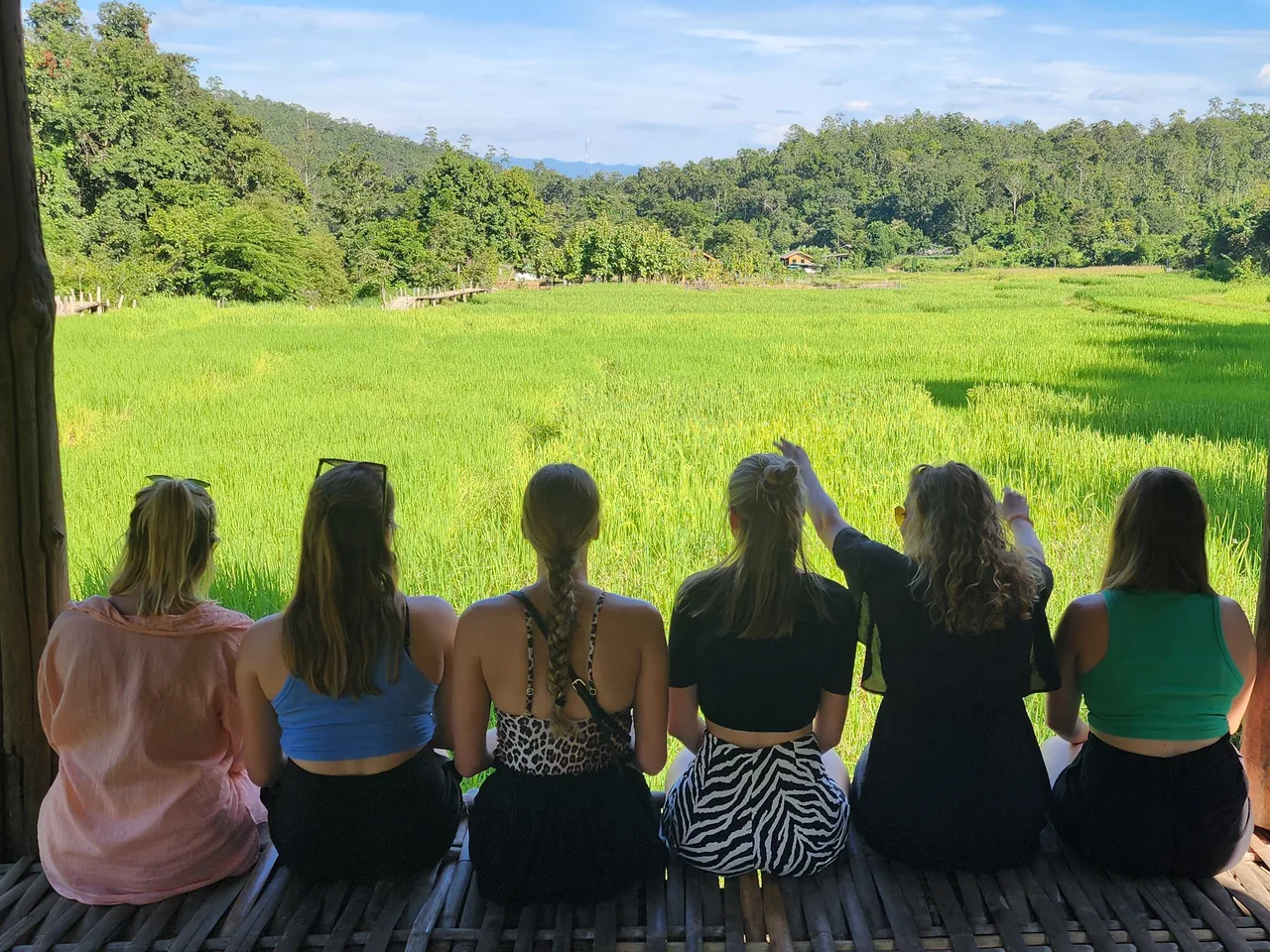
October: the rice by the Bamboo Bridge, still green
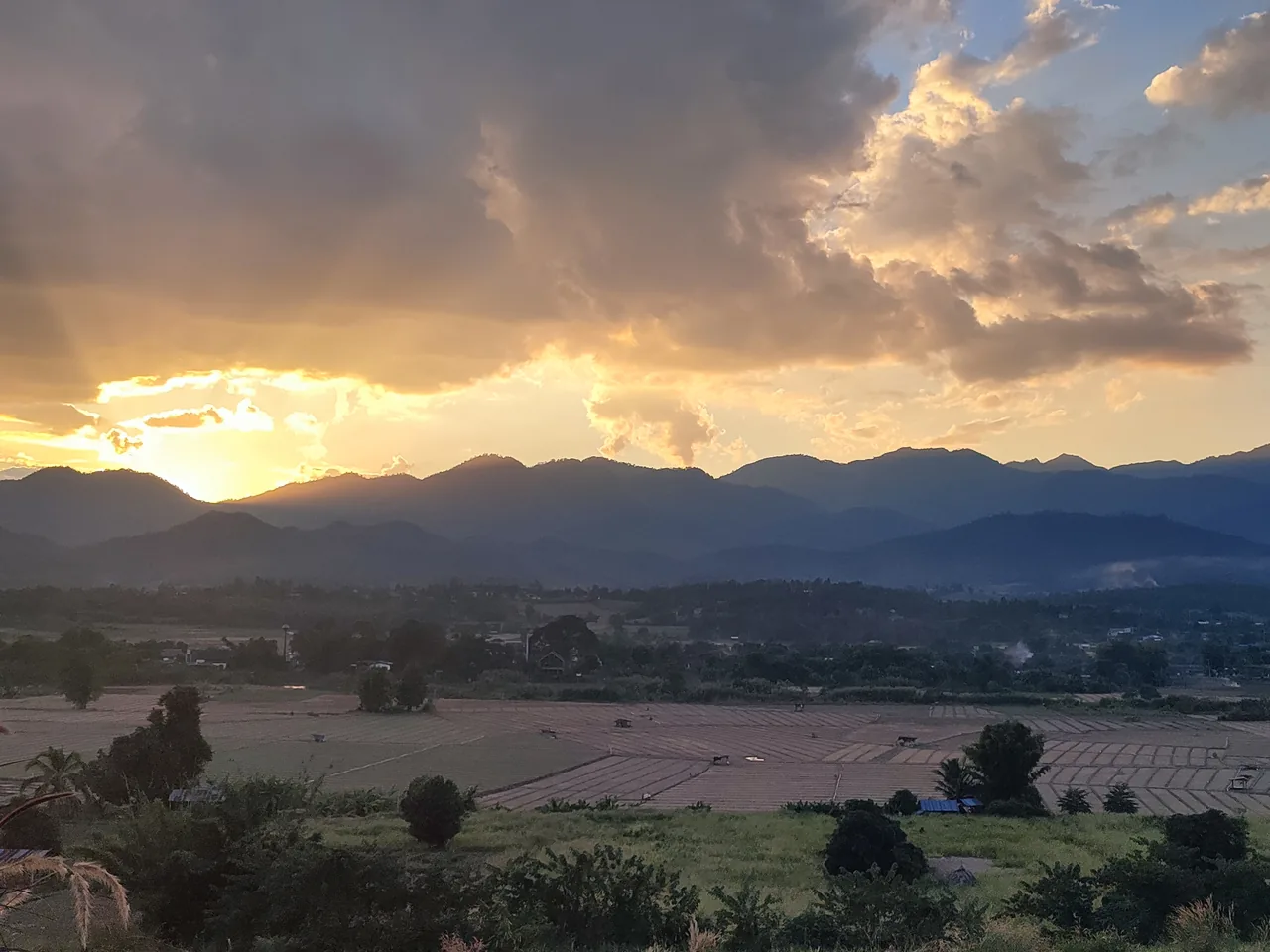
November: the fields below Two Huts at sunset
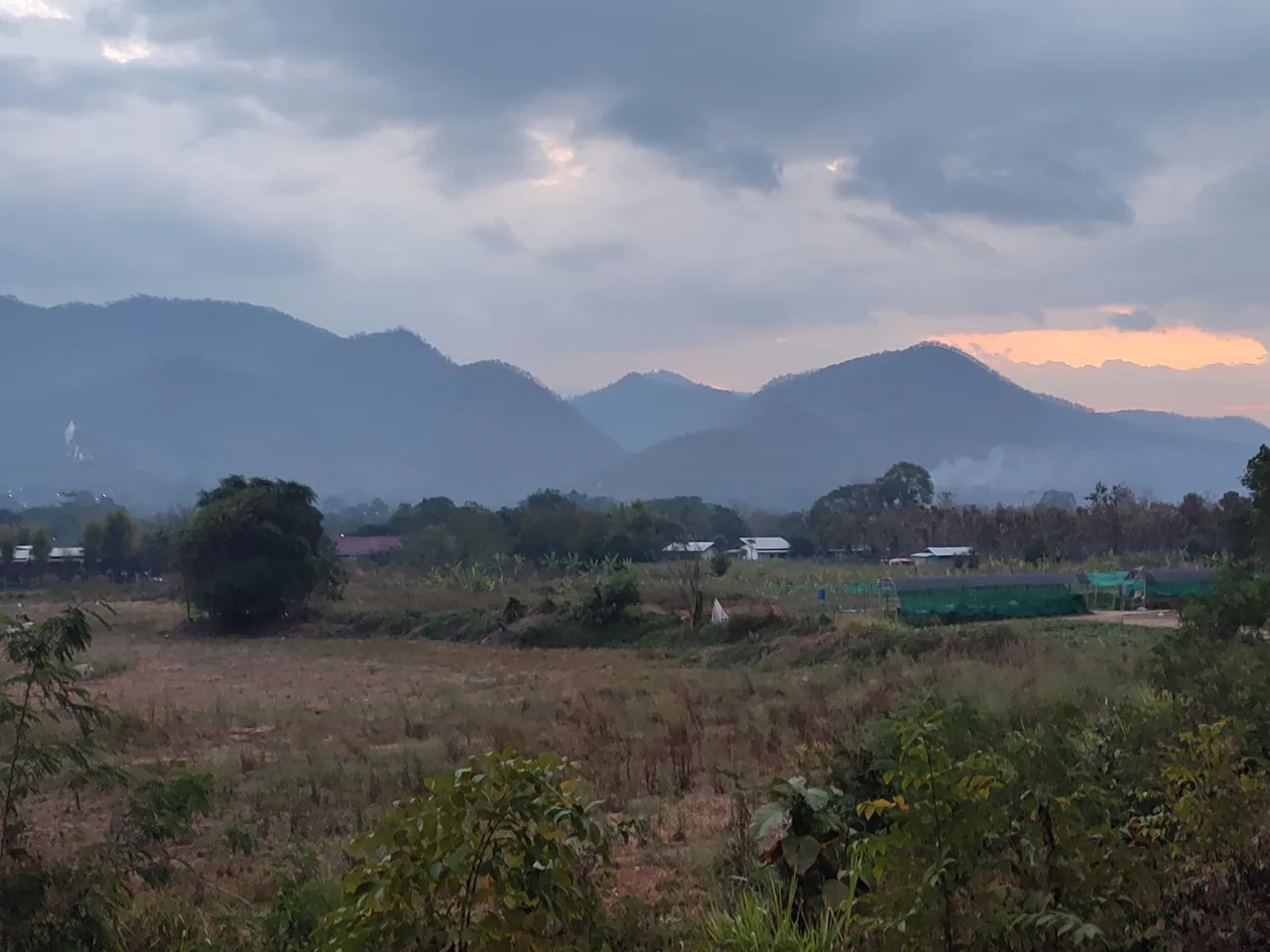
February: dry fields, and the first smoke off the hills
Why weather apps get Pai wrong
Almost every weather app pulls Pai’s climate figures from Mae Hong Son town—about 100 kilometres away and more than 200 metres lower down—simply because Pai’s own weather station hasn’t kept a 30-year record.
Pai sits higher up in a tighter basin ringed by mountains, so it consistently runs cooler than the forecast on your phone. On cool-season nights, Pai is often 2 to 4°C colder than the official numbers suggest, because cold mountain air drains off the surrounding ridges after dark and pools on the valley floor.
November to February: misty mornings and cold nights
This is Pai’s cool, dry season. Clear night skies let the day’s heat escape, cold air slides down from the hills, and on most mornings it settles across the basin as thick white fog. The mist season stretches from late October to February, with December and January giving you the best odds. It isn’t guaranteed every single morning, and the sun always burns it off by midday, leaving warm, blue-sky afternoons. Yun Lai is the classic spot to watch the sea of mist from above.
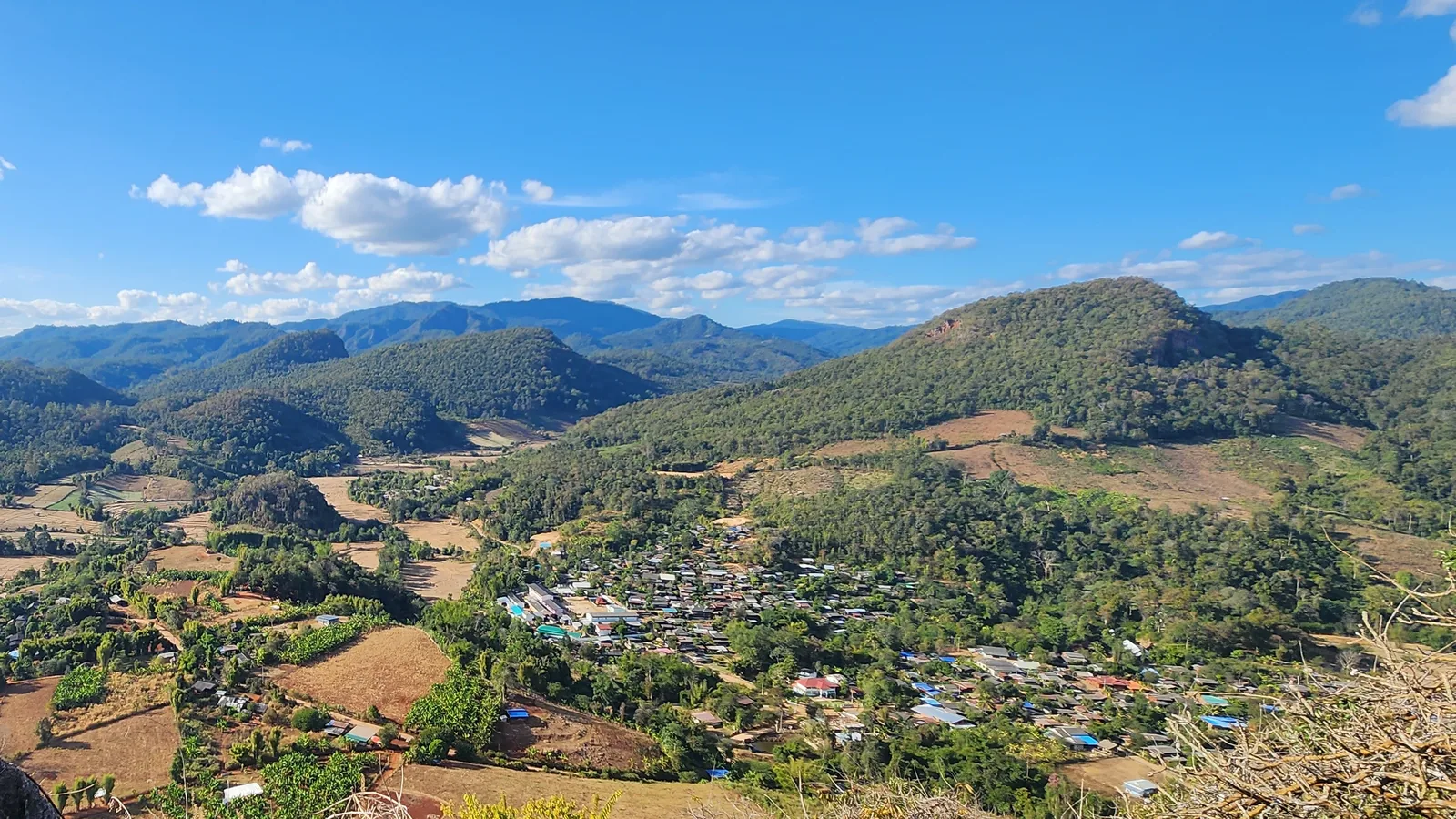
Nights in December and January get properly cold, only for the afternoon to warm right back up once the fog clears. If you’re visiting then, pack a warm layer, long trousers, and closed shoes—especially for riding a scooter after dark.
One heads-up for early risers: between November and January, pre-dawn fog on the mountain passes can cut visibility to under 50 metres. Never ride Highway 1095 in the dark just to catch a sunrise view.
Down in the valley, the rice turns gold in November and gets harvested through late November and December. Farmers plant garlic straight into the drained paddies while the soil is still damp, so for most of the cool season the valley floor is carpeted in neat, blue-green rows of garlic. When the breeze catches it, you can smell a sweet, earthy drift of garlic in the air—and it’s strangely pleasant. Out around the Bamboo Bridge, the harvested paddies are left fallow instead, giving the local water buffalo room to roam and graze from December through June.
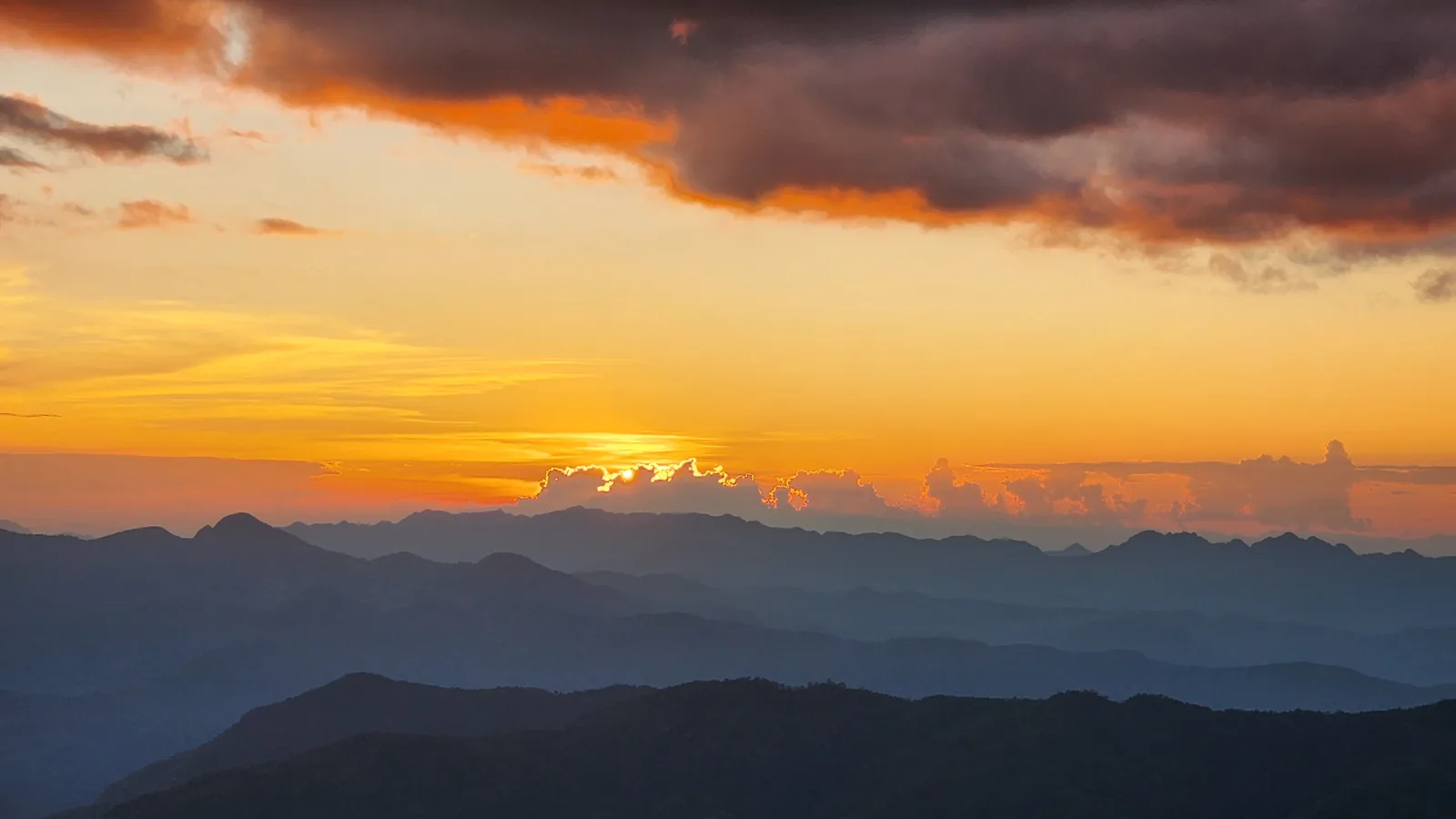
With the trails dry and the temperatures mild, this is the easiest window for longer waterfall hikes like Hua Chang and Mae Yen, and November to January is the best time for a clear, refreshing dip at Mor Pang. It is also prime festival season: Loy Krathong and Yi Peng fall on the November full moon, followed by Christmas a month later. On the river, Tipsy Tubing kicks off its new season on Friday 30 October.
March to early May: the hot, hazy months
By March, the garlic has been pulled up to cure in the sun, leaving the fields bare and dusty. Afternoons are the hottest of the year.
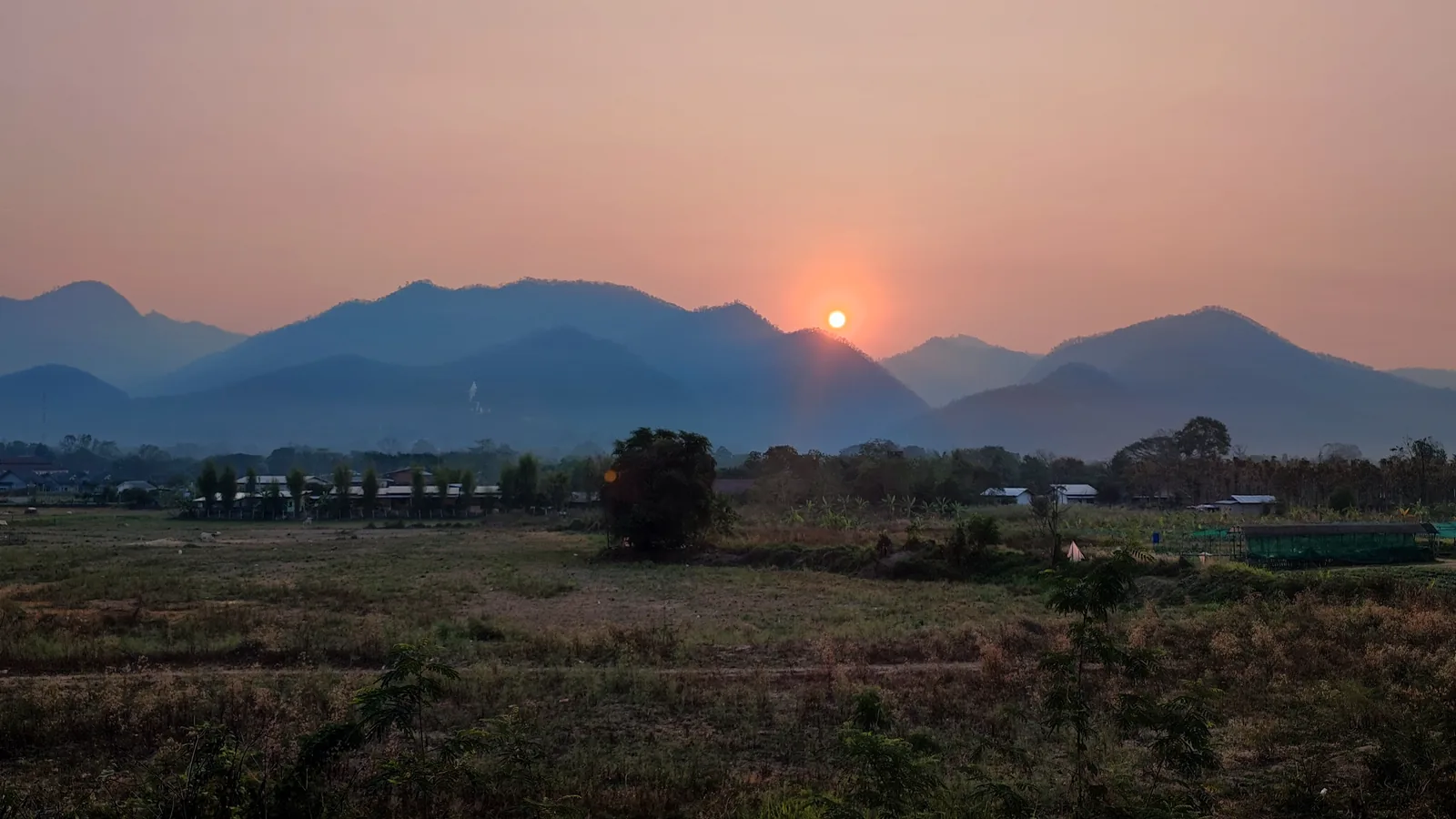
This is also Northern Thailand’s burning season. Haze starts creeping in during late January, hits its peak between late March and mid-April, and finally breaks when the first pre-monsoon storms roll through between late April and the second week of May (though a late monsoon can leave early May smoky). Because Pai sits in a narrow, enclosed valley that traps smoke, its readings in March and April can climb higher than Chiang Mai’s. For live readings at any time, check Air4Thai’s Wiang Tai station or the DustBoy monitor at Pai Hospital.
Long-distance views take the biggest hit. Smoke can hide the ridge at Yun Lai and the other viewpoints completely, park rangers usually close the Hua Chang trail from mid-February to April, and Mae Yen can close at times too.
The trick to enjoying these months is picking spots that don’t care about a view. Shaded forest hot springs need trees rather than a horizon, and Tham Lod—where a cool river runs straight through a dark mountain cavern—is a welcome escape from the afternoon heat. (Water levels dictate how much of the cave is passable, so check the route when you arrive.) Mor Pang waterfall runs lighter late in the dry season, while Tipsy Tubing runs right through the heat, when floating down the river feels best.
Then comes Songkran from 13 to 15 April, with the northern New Year celebrations carrying on until the 17th. For half a week, the entire town turns into one giant water fight, and you have zero chance of staying dry anywhere near Walking Street.
Mid-May to October: the green season
The monsoon usually arrives in the second or third week of May and packs up around mid-October, give or take a couple of weeks either side—meaning the first half of October is still properly wet.
If you’re riding a scooter in May, watch the first rains carefully. Months of dry-season dust, rubber, and oil built up on Highway 1095 turn slick when they first get wet, until a few days of steady downpours wash the tarmac clean. Take corners gently during those first few storms.
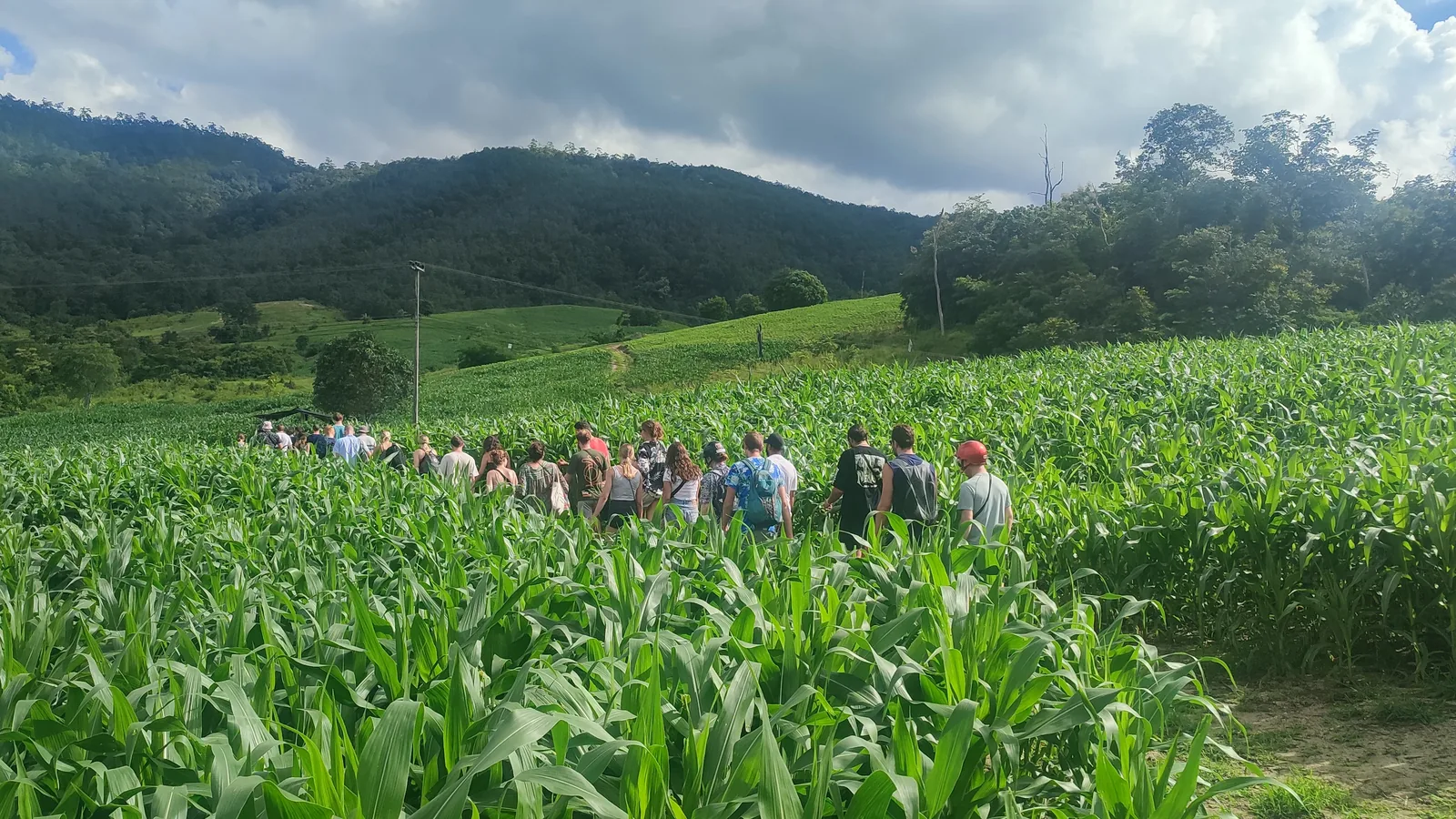
In return for afternoon showers, you get the cleanest, sharpest air of the year from June through September. Farmers flood the paddies as the new rice goes in—anywhere between June and August depending on the rain and the family working the land—and from July onward the valley floor is a sea of tall, vivid green rice. Up on the slopes behind Two Huts and out around Muang Paeng, upland maize turns the hillsides green through the late rains before being cut back in autumn.
Waterfalls lag about a month to six weeks behind the start of the rains as the mountain soil soaks up the water, peaking in August and September when the cascades are at their loudest, brownest, and fastest. Pam Bok is at its best during and just after the rains. Because of high water and fast currents, Tipsy Tubing takes its annual break from August to late October. One road to leave off your list in the wet months: we wouldn’t ride the steep road up to Doi Miang and Doi Thong in the rainy season, when mud can wash across it and landslides can close it.
Month by month
- January: Tied with December for the mistiest mornings and the coldest nights. Light haze begins to show late in the month. Prime weather for sunrise at Yun Lai, longer waterfall hikes, and a swim at Mor Pang.
- February: The driest month of the year. Morning mist thins out, haze builds steadily, and rangers usually close the Hua Chang trail from mid-February. The garlic harvest begins, with farm trucks hauling bulbs along the back lanes.
- March: The hottest, haziest stretch of the year, with the valley fields bare and dry. Tailor-made for caving at Tham Lod, soaking in the hot springs, lounging by the pool, and floating on Tipsy Tubing.
- April: Hot and hazy until the first storms break the air in late April or early May. Songkran takes over town from 13 to 15 April, stretching to the 17th here in the north.
- May: The monsoon arrives around mid-month, knocking the smoke out of the sky. Take the roads slowly during the first slick downpours. Up on the hills, the new maize goes in.
- June: Washed-clean air and dramatic skies as the paddies begin flooding for the new rice crop, moving at each farm’s own pace with the rain.
- July: Young rice turns the valley green and the waterfalls build volume. Your last chance to catch Tipsy Tubing before its rainy-season break.
- August: Usually the wettest month of the year. The rice around the Bamboo Bridge stands tall and electric green, and the waterfalls hit full roar. Tubing is on pause, and the steep road up to Doi Miang and Doi Thong is one to skip.
- September: Still lush and wet, with the valley rice at its tallest and the waterfalls running strong. Farmers harvest the maize off the upper slopes, bringing harvest trucks onto the hill roads.
- October: The monsoon tapers off around mid-month, the first morning mist returns by late October, and early garlic goes into the soil. Tipsy Tubing reopens on Friday 30 October, kicking off the high-season week at Nolo Hub Pai.
- November: Mostly dry, with a handful of lingering rain days. The paddies turn bright gold for the harvest, morning mist builds, and Loy Krathong and Yi Peng light up the full moon. A great month for swimming at Mor Pang.
- December: Peak season for morning mist and crisp, cold nights, as the last of the rice comes in and the garlic takes over the fields. Christmas at Nolo Hub Pai runs across the 24th and 25th.
Nolo Hub Pai through the year
Whatever month you roll into town, Nolo Hub Pai runs daytime activities every day, social events every night, and day trips out into the valley all year round. Our high-season week kicks off the day Tipsy Tubing opens for the season.
Quick answers
What is the best month to visit Pai?
It comes down to what you want to see. Come in December or January for thick morning mist; August or September for bright-green rice fields, crystal-clear air, and roaring waterfalls; November for the golden harvest and the Loy Krathong and Yi Peng lantern festivals; or mid-April for the water fights of Songkran.
When is burning season in Pai?
Haze begins building in late January and is thickest from late March to mid-April. It clears out once the first pre-monsoon storms hit, usually between late April and the second week of May.
When is the rainy season in Pai?
From mid-May to mid-October, with August typically seeing the most rain.
How cold does Pai get?
Cold enough on December and January nights that you will want a proper warm layer, long trousers, and closed shoes after sunset. Because cold air settles on the valley floor, Pai gets noticeably colder at night than the Mae Hong Son figures shown on most weather apps.