Written by Nolo Hub Pai, Pai’s top social and experience-based hostel
Last checked September 2026
tl;dr
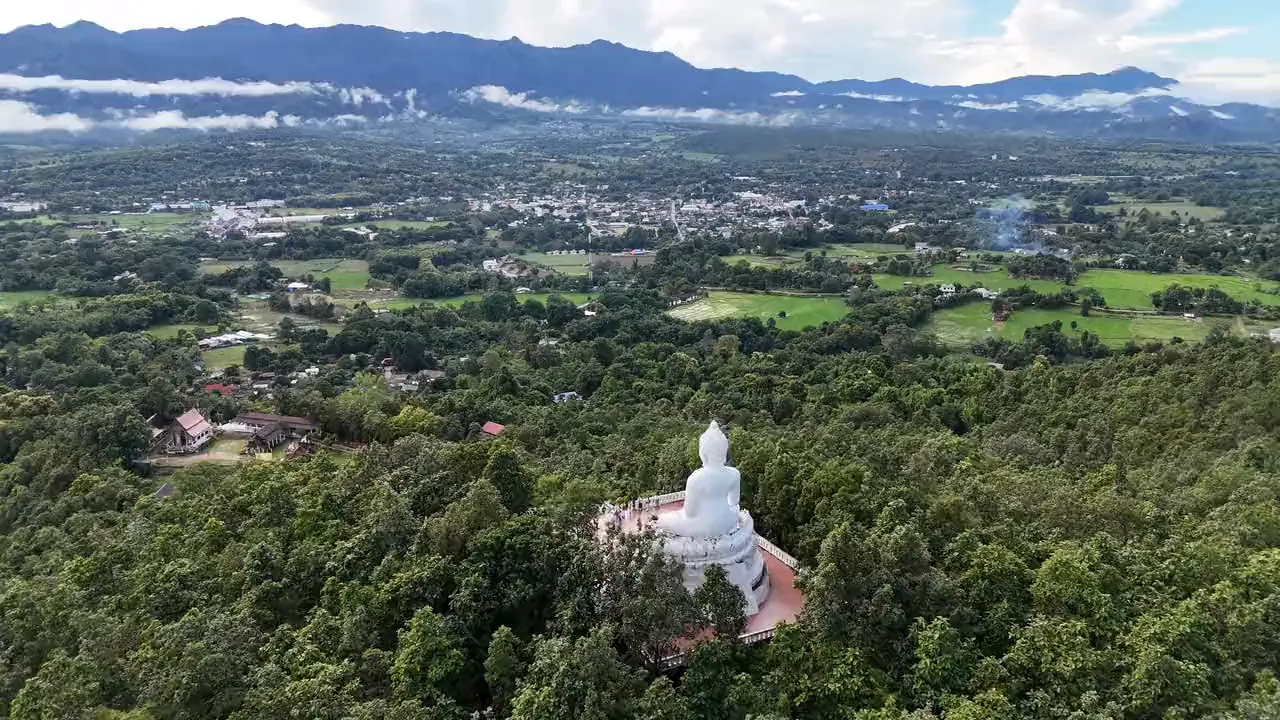
You can spot Pai’s White Buddha long before you reach it. High on the hillside east of town, the statue looks out over the valley and has become one of Pai’s most recognisable landmarks. Climb the staircase to see it up close and you’ll get a wide view back across the town, fields and surrounding mountains.
Also known as: The White Buddha · White Buddha Pai · Big Buddha Pai · วัดพระธาตุแม่เย็น
At a glance
- Where
- Ban Mae Yen, about 2 km east of central Pai
- From Nolo Hub
- 2.8 km
- Entry
- Free; donations are welcome
- The climb
- 353 steps from the car park — 53 to the lower temple, then 300 to the Buddha
- Open
- 6am to 6pm
- Wear
- Clothing that covers your shoulders and knees; sarongs for hire at the bottom of the stairs, 20 baht
- When to go
- Morning for a cooler climb, or late afternoon for softer light
- Map
- Google Maps · Apple Maps
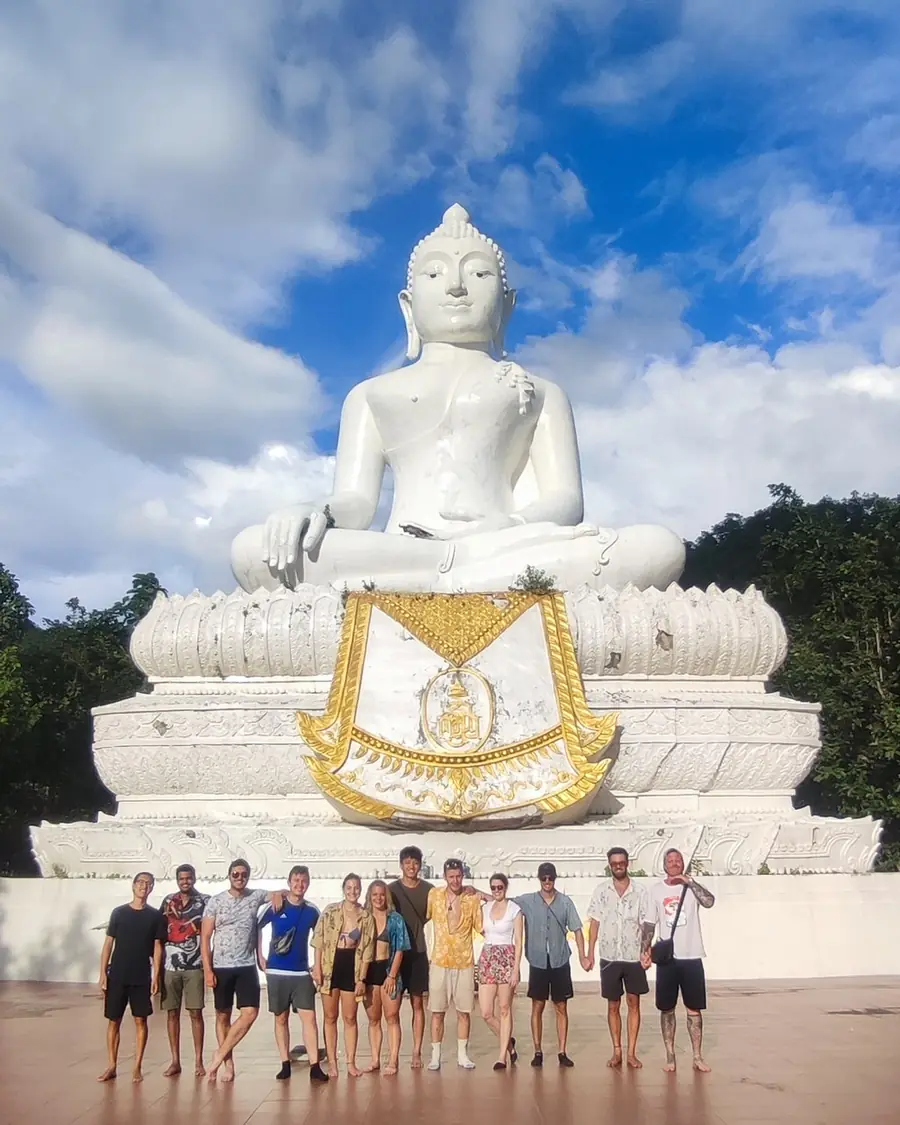
The Buddha is part of Wat Phra That Mae Yen, an active temple with an older chedi and religious buildings below the statue. Most visitors come for the White Buddha and the view, but it’s worth taking a little time in the lower temple grounds before heading up.
Start at the temple
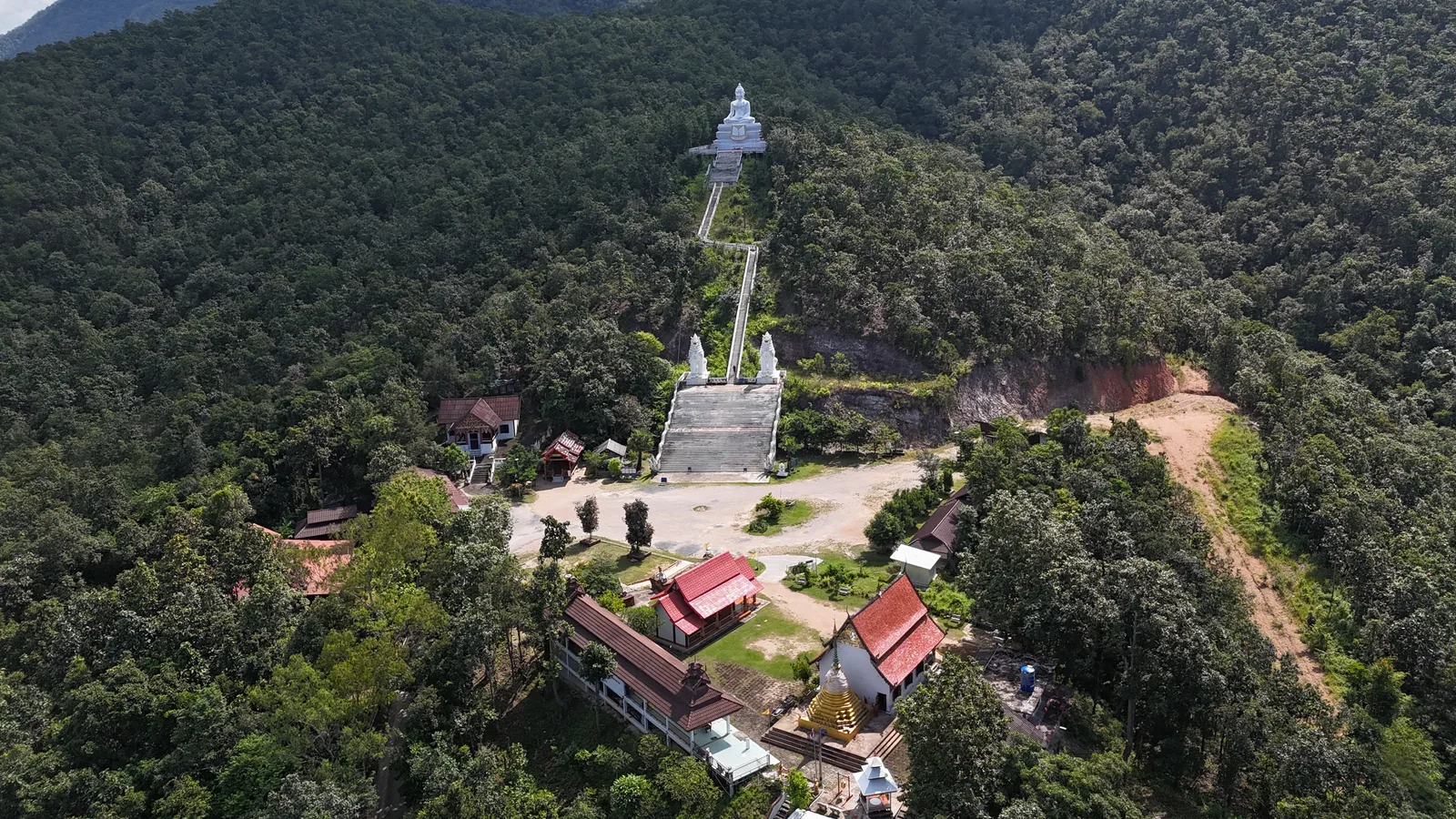
It’s tempting to arrive, look up at the Buddha and head straight for the stairs. Before you do, have a look around the temple below. Its buildings and the old reliquary chedi behind the assembly hall belong to an older part of Wat Phra That Mae Yen’s story.
The temple’s exact founding date isn’t firmly documented. The important distinction is simpler than a date: the enormous White Buddha is a later addition to an existing place of worship. It may be the part you recognise from photographs, but it isn’t the whole temple.
The temple takes its name from the stream below it. Mae Yen means “cool river” — แม่ in front of a stream’s name is short for แม่น้ำ, river, and เย็น is cool — the same stream that names the village of Ban Mae Yen and Mae Yen Waterfall.
The climb to the White Buddha
From the lower grounds, a long staircase lined with naga figures leads up the hillside. There are 353 steps from the car park: 53 up to the lower temple, then one flight of 300 to the Buddha. It’s a straightforward climb if you take your time, though the stairs face west with no shade. The ridge shades them in the morning; from about 4:30 to 5:30pm they are in full sun, which is when most people climb. Bring water, especially in the hot season.
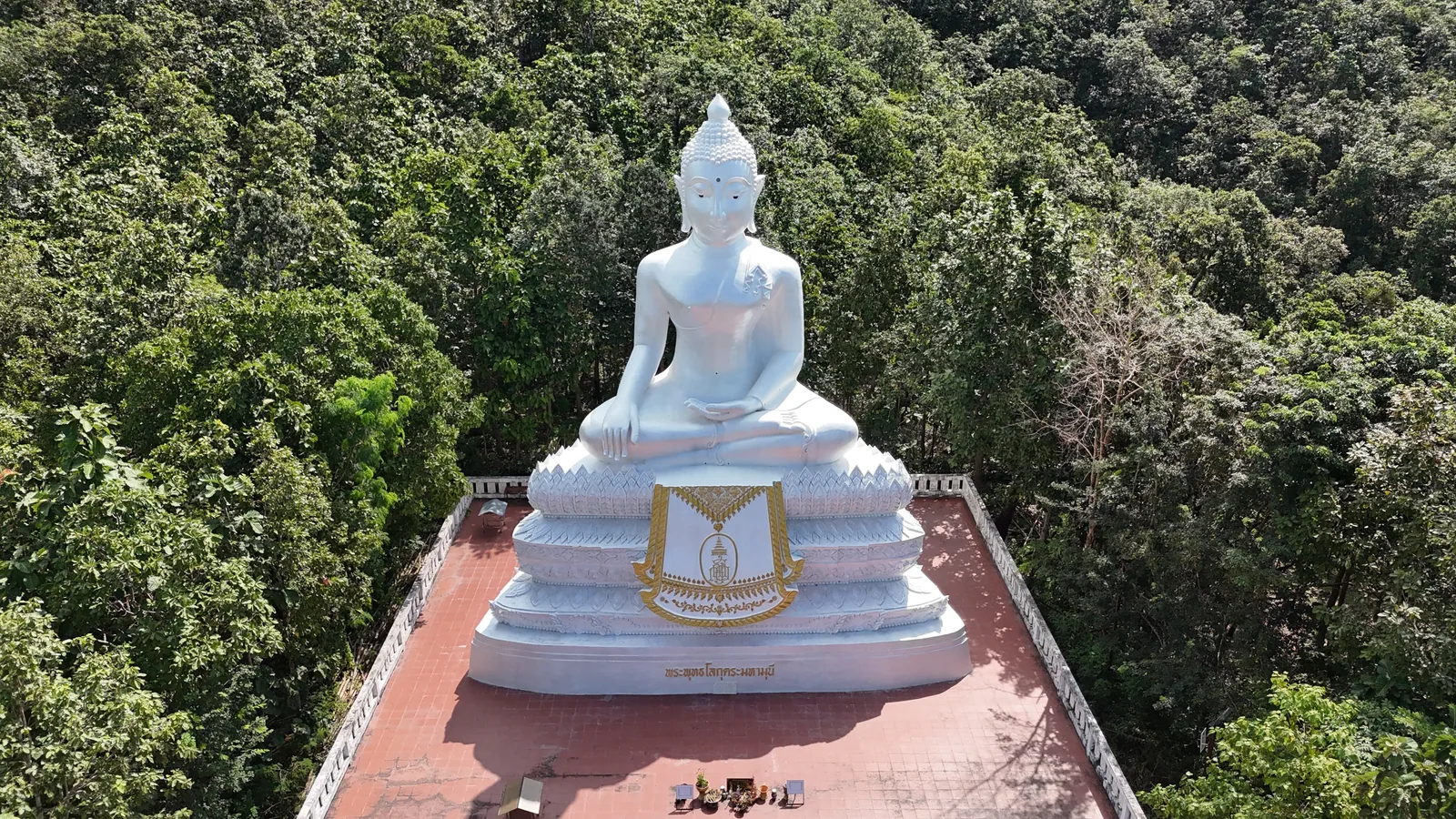
At the top sits the large white Buddha known as Phra Phuttha Lokuttara Maha Muni. In Thai it is พระพุทธโลกุตระมหามุนี: the Buddha, the great sage beyond the world. Up close, you can appreciate its scale in a way you can’t from town. The terrace around it is also a place where people come to pray and make offerings, so leave space for worshippers while you explore.
Then turn around. From this height, Pai spreads out below you: the town among the flatter land, fields extending across the valley and mountains rising beyond them. It’s a lovely view at any time of day, and during the cooler months you might catch morning mist lying across parts of the valley. Mist isn’t guaranteed, but it’s a bonus when it appears. Some mornings you are above it; some mornings you are in it.
When to visit
Morning is the most comfortable time to tackle the stairs, particularly in hotter months. Late afternoon brings gentler light across the valley and is a popular time to visit.
You can’t watch sunrise from the terrace: the sun comes up behind the Buddha, over the ridge. Morning is the quiet visit, with the valley below still in shade.
The temple closes at 18:00, so don’t assume you’ll be able to stay for sunset. Depending on the season, the sun may set after closing. If you’re going later in the day, give yourself enough time to climb, enjoy the view and come back down before the temple shuts.
Getting there and visiting respectfully
Wat Phra That Mae Yen is a short ride from central Pai. Leave your scooter at the lower temple area, then take the staircase up to the White Buddha. You can also make the trip from town on foot if you’re happy to add the walk to the climb.
This is a working Buddhist temple as well as a much-loved Pai landmark. Monks and novices live here, walk their alms round through Ban Mae Yen in the mornings, and chant morning and evening.
Cover your shoulders and knees, follow any signs about removing shoes, and be considerate of people praying or making offerings. If you are in shorts, sarongs are for hire at the bottom of the stairs for 20 baht. Shoes and hats come off on the tiled platform around the Buddha.
You don’t need to know the temple’s full history to enjoy the visit—just give yourself a moment to notice both parts of it: the older temple below and the White Buddha watching over Pai from above.