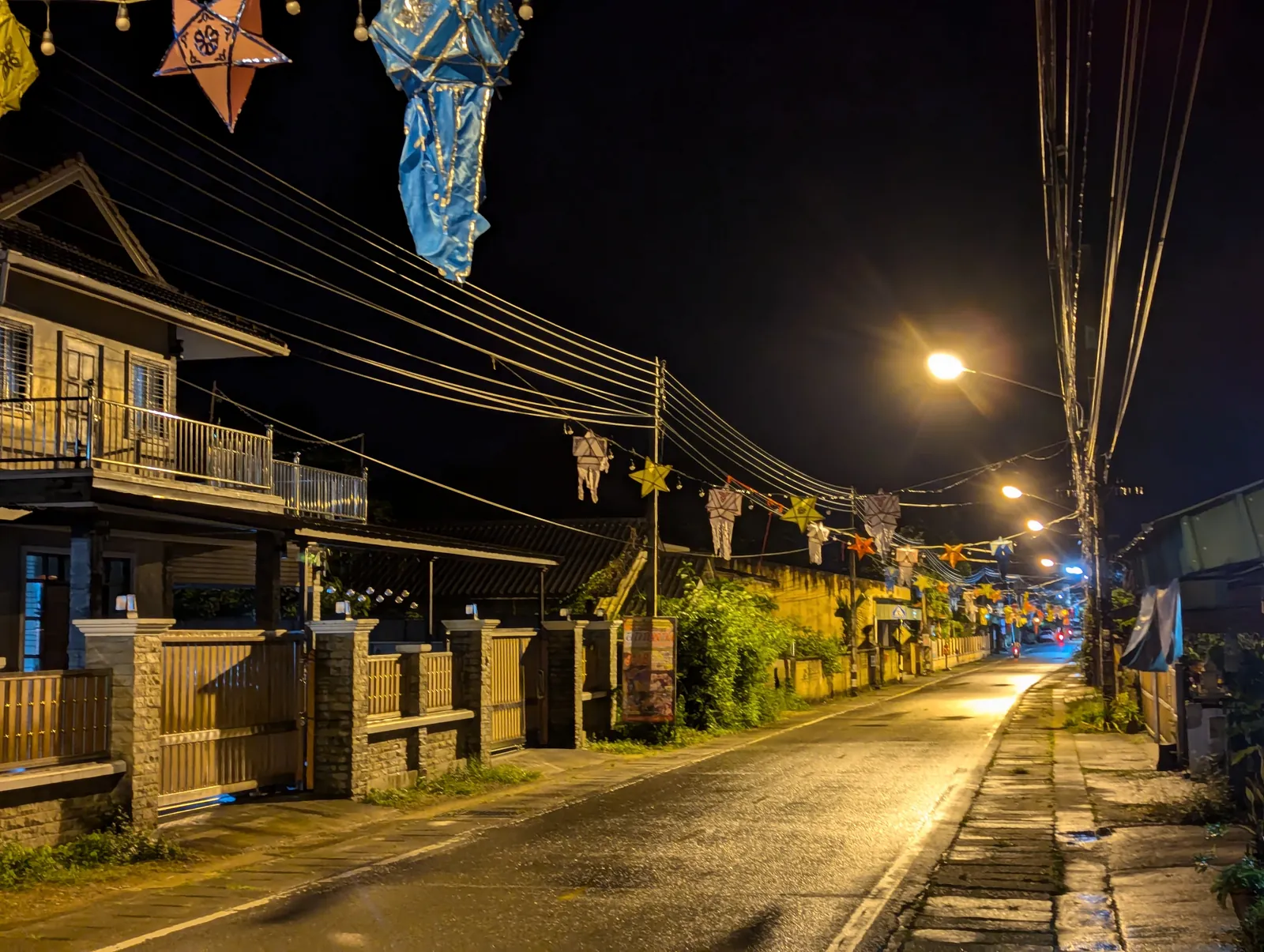
Yi Peng in Pai
Written by Nolo Hub Pai, Pai’s top social and experience-based hostel
Last checked October 2026
tl;dr
Yi Peng is the Lanna festival of light, on the full moon of the second Lanna month — usually in November, and the same night as Loy Krathong. In Pai, lanterns go up on homes, shops and temples in the days before, and on the night sky lanterns are released over town. It is free to join.
Also known as: ยี่เป็ง · Yee Peng
At a glance
- When
- The full moon of the second Lanna month (typically in November)
- How long
- One night
- Main celebration
- The primary festivities take place on the full moon night, though decorative lanterns line the town in the days prior
- Also celebrated as
- Loy Krathong, the nationwide tradition of floating candlelit offerings on water
- In Pai
- Sky lanterns are sold throughout town and released during the evening. Public celebrations are free to join
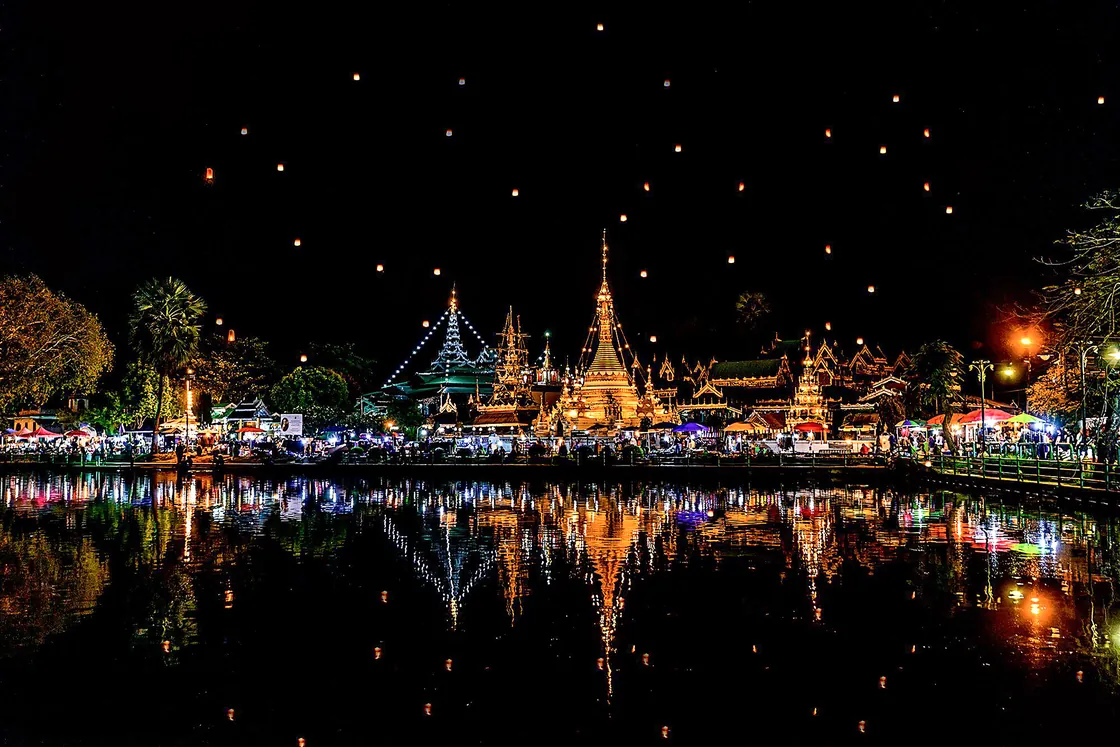
In the days leading up to the full moon, paper lanterns begin to illuminate homes, local shops, and temples across Pai. On the night of the festival, sky lanterns drift upward into the night while candlelit krathongs float gently down the Pai River. You’ll often hear locals call this evening both Yi Peng and Loy Krathong—two distinct traditions uniting beneath the same northern sky.
The meaning behind the light
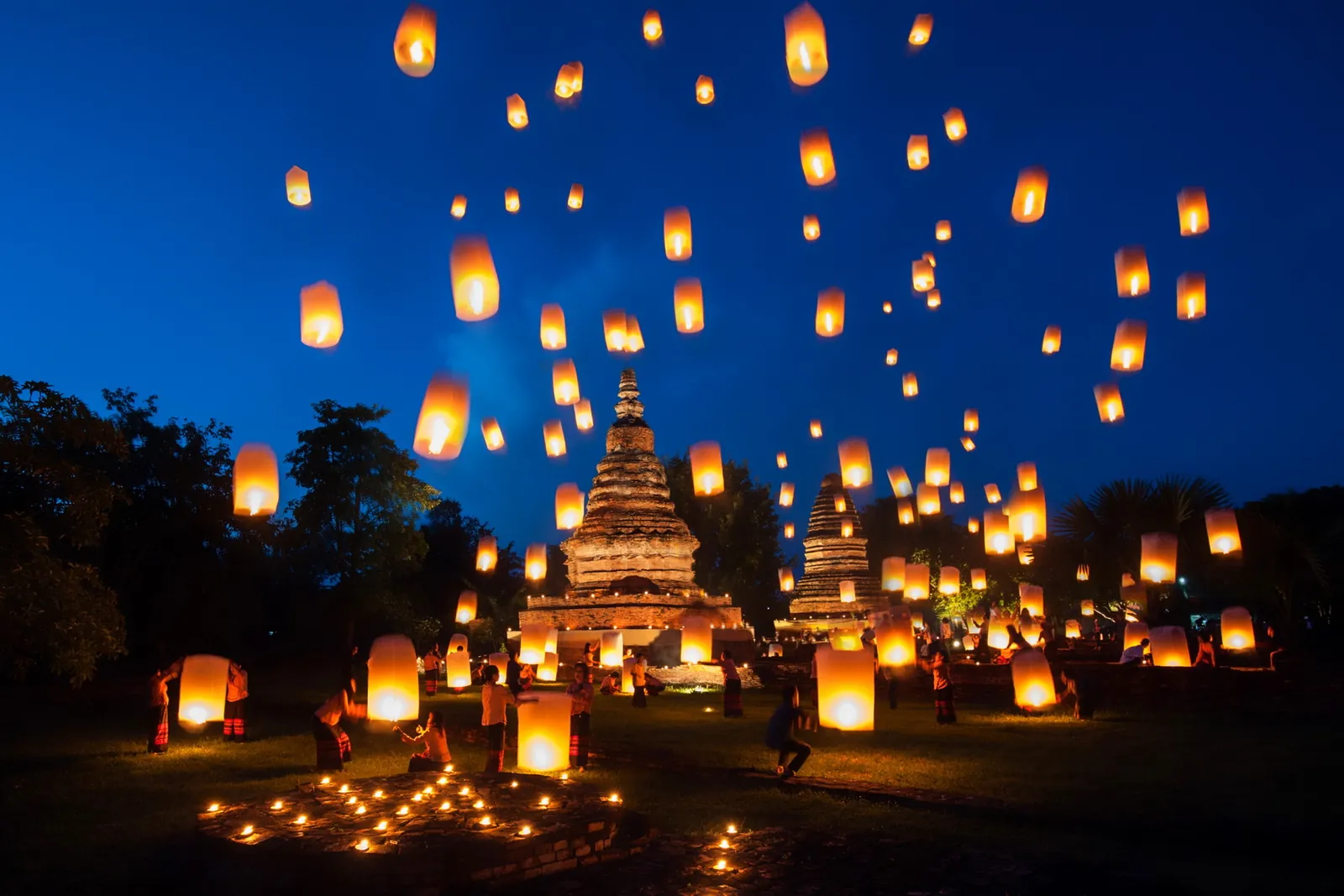
In Lanna culture, releasing a khom loi (sky lantern) is often an offering to Phra That Chulamani—a heavenly stupa said to house a sacred relic of the Buddha. For many, watching a lantern rise is also a symbolic way to let go of bad fortune and welcome new beginnings.
But sky lanterns are only one facet of Yi Peng. The hanging lamps decorating local homes and temples carry their own significance. Whether suspended from bamboo poles or placed along pathways, these lights serve as sacred offerings, festive decorations, and warm signs of welcome as the full moon arrives.
A heritage rooted in history
Long before Yi Peng became famous for its glowing night skies, it was a deeply rooted regional tradition. Some northern accounts trace its origins back to Hariphunchai, the ancient Mon kingdom centred in modern-day Lamphun, well before the establishment of the Lanna kingdom. In 1518, a Lanna king made Yi Peng one of the region’s great festivals. While the exact historical origin of launching sky lanterns remains fluid, the tradition of using light to mark the full moon has continuously evolved over centuries.
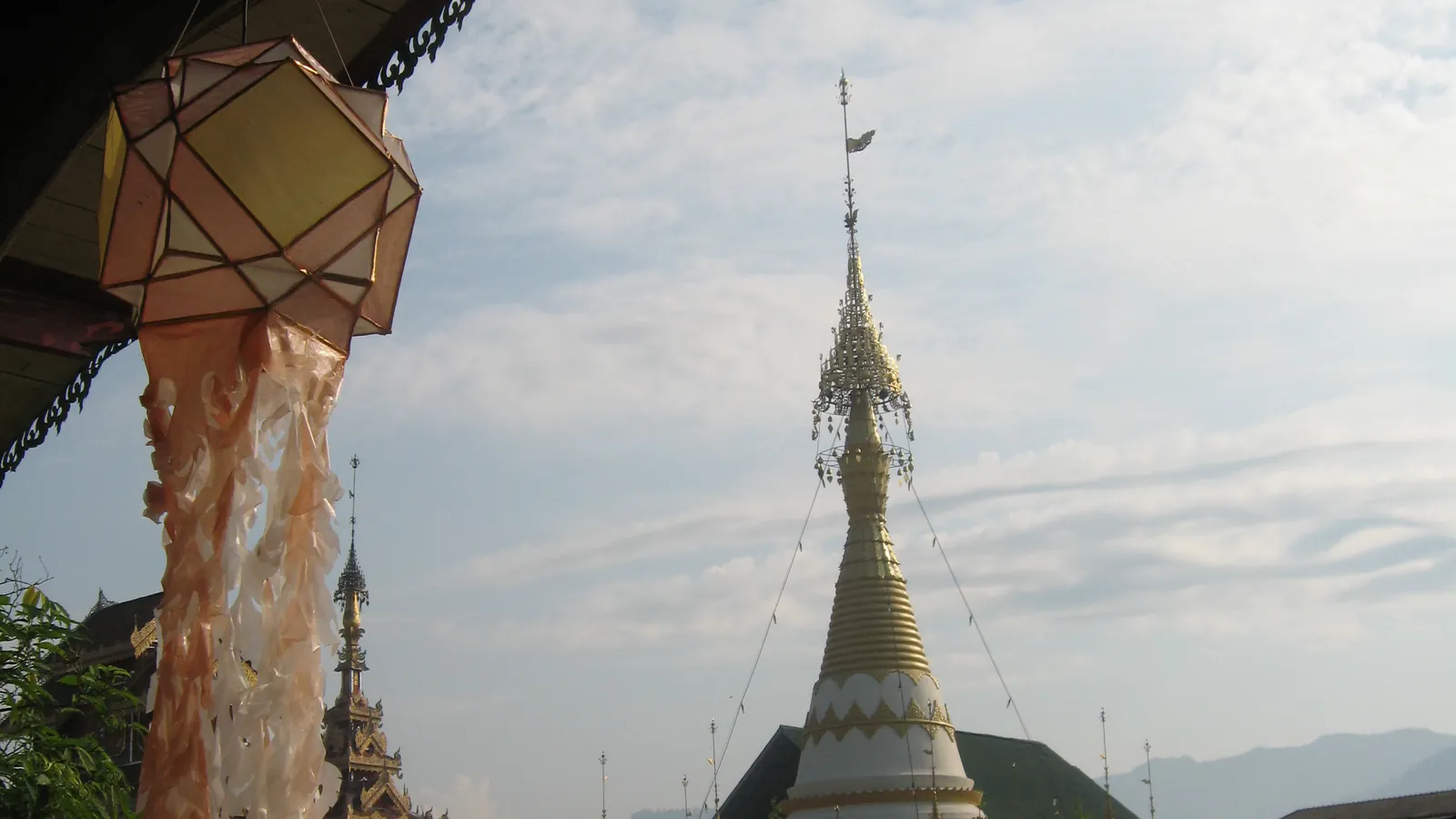
That history is still visible in the craft itself. Lanterns are designed to be carried, hung, or released.
The four types of Lanna lanterns
- Khom Thue (โคมถือ): Handheld lanterns carried during evening processions, often shaped like lotus petals or rabbit ears.
- Khom Loi (โคมลอย): The iconic sky lanterns that float into the night air.
- Khom Khwaen (โคมแขวน): Hanging lanterns displayed at temples and homes, crafted in intricate geometric and star shapes.
- Khom Phat (โคมผัด): Remarkable rotating lanterns that use the heat of a candle flame to turn an inner shade, casting moving shadows of zodiac symbols.
You may also see phang prathip (ผางประทีป)—small oil lamps set out as offerings that bathe temple steps and courtyards in warm light.
Why do Yi Peng & Loy Krathong happen together?
Northern Thailand’s traditional Lanna calendar counts months differently than the central Thai lunar calendar. The full moon of the second Lanna month (Yi Peng) naturally coincides with the full moon of the twelfth central Thai month (Loy Krathong).
While they share the same evening, each festival holds its own unique identity. Loy Krathong is a tradition centred on water, giving thanks to Phra Mae Khongkha (the water goddess) and river spirits while floating away bad fortune. Yi Peng is Lanna’s festival of light, bringing warmth to the air and land. In Pai, you get to experience both traditions in a single night.
Experiencing Yi Peng at Nolo Hub
We recommend exploring Pai during the week leading up to the festival to watch the town transform with colour and light. On the night of the full moon, join locals along the riverbanks to launch sky lanterns and watch candlelight drift down the water.
Staying with us at Nolo Hub? Be sure to ask our team about our plans for the evening. Check out our Loy Krathong in Pai guide to see how we celebrate together, make traditional offerings, and gather along the river.