Loy Krathong in Pai — Everything You Need to Know
Written by Nolo Hub Pai, Pai’s top social and experience-based hostel
Last checked October 2026
tl;dr
Loy Krathong falls on the full moon of the twelfth Thai lunar month, usually in November — the same night as Yi Peng. In Pai, krathongs go onto the water all along the Pai River, every temple holds its own ceremonies, and each tambon runs its own procession. It is free to attend.
Also known as: ลอยกระทง · Loi Krathong · Loy Kratong
At a glance
- When
- The full moon of the twelfth Thai lunar month, usually in November. The calendar date changes each year
- How long
- One night
- Same night as
- Yi Peng — the same full moon
- Where
- Celebrations take place around Pai, with krathongs floated all along the Pai River. The town’s gathering points and programme can change from year to year
- Krathongs
- Sold at the riverbank on the night
- Cost
- Public celebrations are free to attend. If you want to float a krathong, allow a little money to buy one or materials to make your own
- Weather
- Usually good for it
- With Nolo Hub
- We get a group together at the hostel and head into town to celebrate. Ask our team for that evening’s meeting time and where you can make or buy a krathong
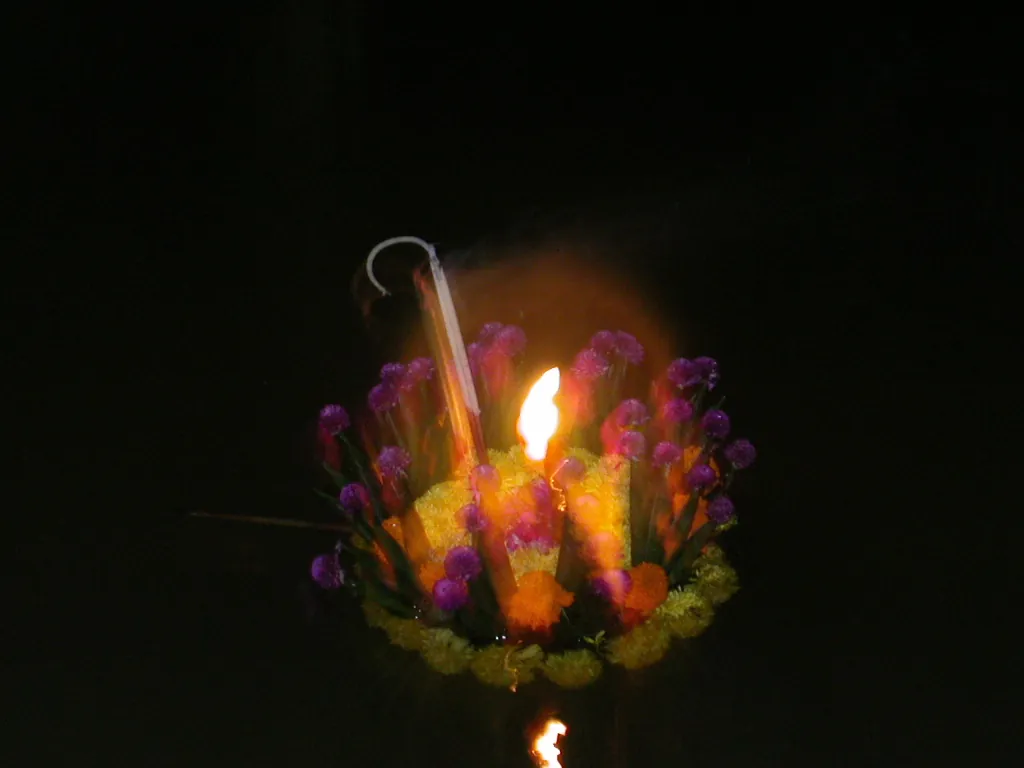
On the full moon of the twelfth Thai lunar month, communities across Thailand gather at local rivers, lakes and canals to float candlelit krathongs (small decorated floats, traditionally made from banana stem and leaves). Related water and light traditions are celebrated elsewhere in Southeast Asia too, although their names and customs differ.
For many people, floating a krathong is a way to thank Phra Mae Khongkha, the goddess of water, and ask forgiveness for harm done to waterways. It can also be a moment to make a wish or let something from the past go. In Pai, locals and travellers come together all along the Pai River to take part.
Here’s what the tradition means, how to join respectfully, and what to expect if you’re staying with us.
What does Loy Krathong mean?
Loy means “to float”; a krathong is the small decorated offering set on the water. But the meaning of floating one is more personal than a translation can capture.
Many people use the occasion to show gratitude to Phra Mae Khongkha (พระแม่คงคา), the goddess associated with water — in Hindu tradition, the river goddess Ganga. Water sustains homes, farms and communities, and the offering can be a way of thanking her while asking forgiveness for waste or pollution. Others make a wish, honour the Buddha, remember someone, or use the moment to let go of misfortune. People may hold several of these meanings at once, and beliefs vary between people and places.
You don’t need to follow a particular belief to take part. Give the people around you space for what may be a quiet, meaningful moment for them.
Where did the tradition come from?
One famous story credits a woman named Nang Nopphamat (นางนพมาศ) at the Sukhothai court with creating the first krathong. It is a much-loved part of the festival’s folklore, but it should be read as a legend, rather than a settled account of how Loy Krathong began. The text that tells her story is believed to come from the later Bangkok period, and the exact beginnings of floating offerings remain uncertain.
What we can say is that water offerings have a long history across the region. Over time, local beliefs, Hindu and Buddhist traditions, and personal ways of marking the full moon have shaped the festival people celebrate today. That is why there is no single explanation for what every krathong represents.
What is a krathong made from?
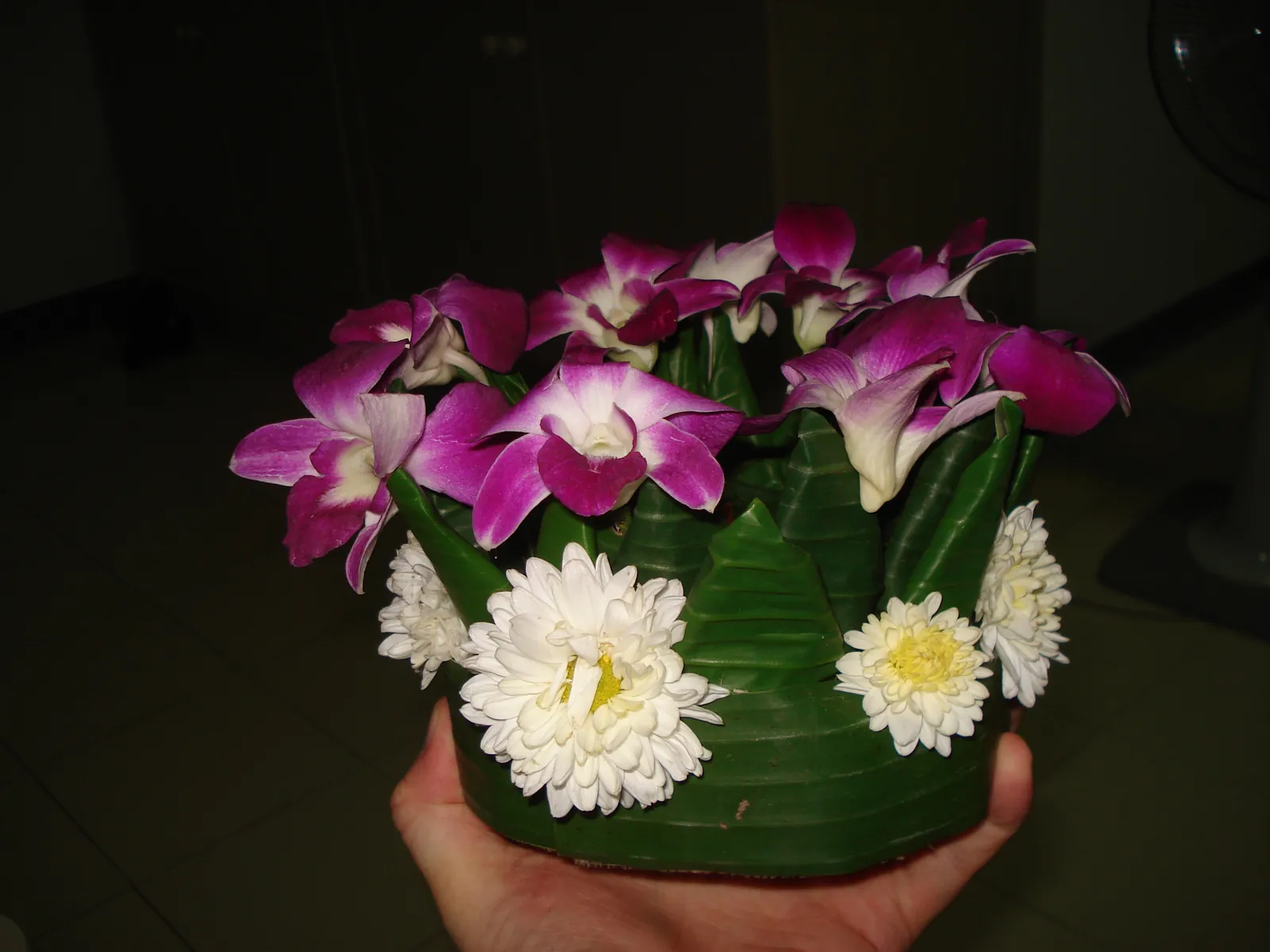
A familiar traditional krathong has a base cut from a banana stem, folded banana leaves around its edge, flowers on top, and a candle. You may also see incense. Designs vary, from simple handmade offerings to much more elaborate ones. In Pai, banana is by far the most common base, and you’ll see some made from bread too.
Choose a small krathong made without foam or plastic. Natural materials still have to be collected or broken down after the festival, so sharing one krathong with a friend or group is another thoughtful option. Thailand’s Pollution Control Department recommends reducing the number floated as well as choosing suitable materials.
You can buy one at the riverbank on the night. If you would rather make one than buy one, ask the Nolo team what is available locally during your stay.
How do you float a krathong?
At the water’s edge, people commonly light the candle, hold the krathong in both hands and pause before setting it afloat. Some raise it towards their forehead while making a wish or offering a private prayer. Others simply take a moment to give thanks.
When you’re ready, place it gently on the water. There is no need to step into the river or reach for a stronger current. Follow any directions from the local organisers, especially if the riverbank is crowded.
You may see people add a coin or a small clipping of hair as a personal symbol of giving or letting go. These are customs you might encounter, not requirements for taking part.
What happens in Pai?
The Pai River gives the town a natural place to gather, but Loy Krathong is more than the few seconds it takes to release a candle onto the water. People come out together, meet friends and family, and spend the evening around town. Krathongs go onto the water all along the river, not at one spot.
Every temple holds its own ceremonies on the night, and visitors are welcome to go and see what each one is doing, with the same manners as any temple visit. There are several processions and parades too, because each tambon (subdistrict) runs its own, and the district puts on a procession of large krathongs.
The exact route, performances and gathering points are decided locally and can change each year. We’ll confirm the practical details with guests once that year’s plans are announced. If you’re visiting independently, check the current local information before heading out rather than relying on an older festival schedule.
Bars and restaurants stay open, so the night carries on after the river.
Is Loy Krathong the same as Yi Peng?
They fall on the same full moon in Northern Thailand, but the names describe different traditions. Loy Krathong centres on offerings floated on water. Yi Peng is a Lanna festival of light, marked in its own lunar calendar: the north counts its months two ahead of central Thailand, so the twelfth Thai month is the north’s second, and Yi Peng means the full moon of the second month. Its traditions include lamps and lanterns hung at homes and temples, as well as sky lanterns. In Pai, people use both names for the night.
A sky full of lanterns makes a memorable photograph, and in Pai it is part of the night: sky lanterns are sold at the riverbank and go up over town. We cover the history and the different kinds of lanterns in our separate Yi Peng guide.
Celebrating with Nolo Hub
If you’re staying at Nolo Hub, you can come down with us as a group. Some years we make krathongs at the hostel, with our team showing you how; either way, we’ll show you where to buy one.
We do our own lantern release together at the hostel, only ever once permission has been given, then head into town by truck to join the local celebrations. The truck isn’t about distance: it keeps everyone together and carries the lanterns. After the lanterns, we go on to the bars.
We’ll let guests know when we’re meeting once the local plans are clear.
Loy Krathong is easy to admire from the riverbank. It means more once you know why everyone is there.