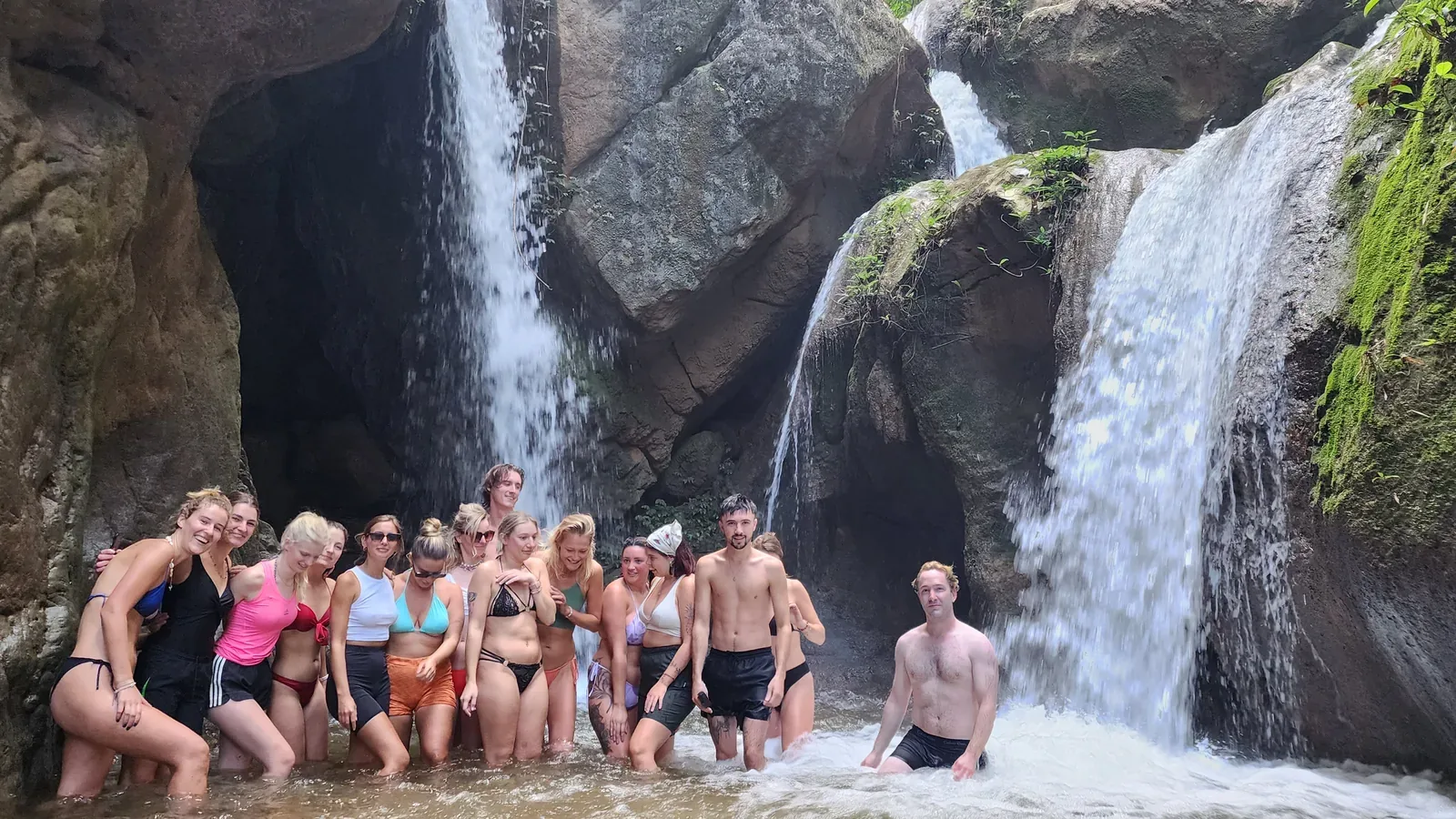
Hua Chang Waterfall Trek, Pai
A proper jungle walk without the full-day commitment
Written by Nolo Hub Pai, Pai’s top social and experience-based hostel
Last checked September 2026
tl;dr
Hua Chang Waterfall is one of Pai’s best half-day treks if you want a real stretch of jungle rather than a quick roadside waterfall stop.
Also known as: Elephant Head Waterfall · Hua Chang Falls · น้ำตกหัวช้าง
Hua Chang at a glance
- From Nolo Hub
- around 11.6 km to the trailhead
- Trail distance
- roughly 9–12 km return, depending on the route and conditions
- Walking time
- allow 3–4 hours, plus time at the waterfall
- Entry
- free; there is no ticket booth or ranger station
- Best for
- jungle walking, river crossings, swimming, and getting away from Pai’s busier attractions
- Trail conditions
- mostly flat, but wet; expect a rope-assisted descent at the end
- Trailhead
- near the weir at 19.40291, 98.482309, in Wiang Nuea
- Map
- Google Maps · Apple Maps
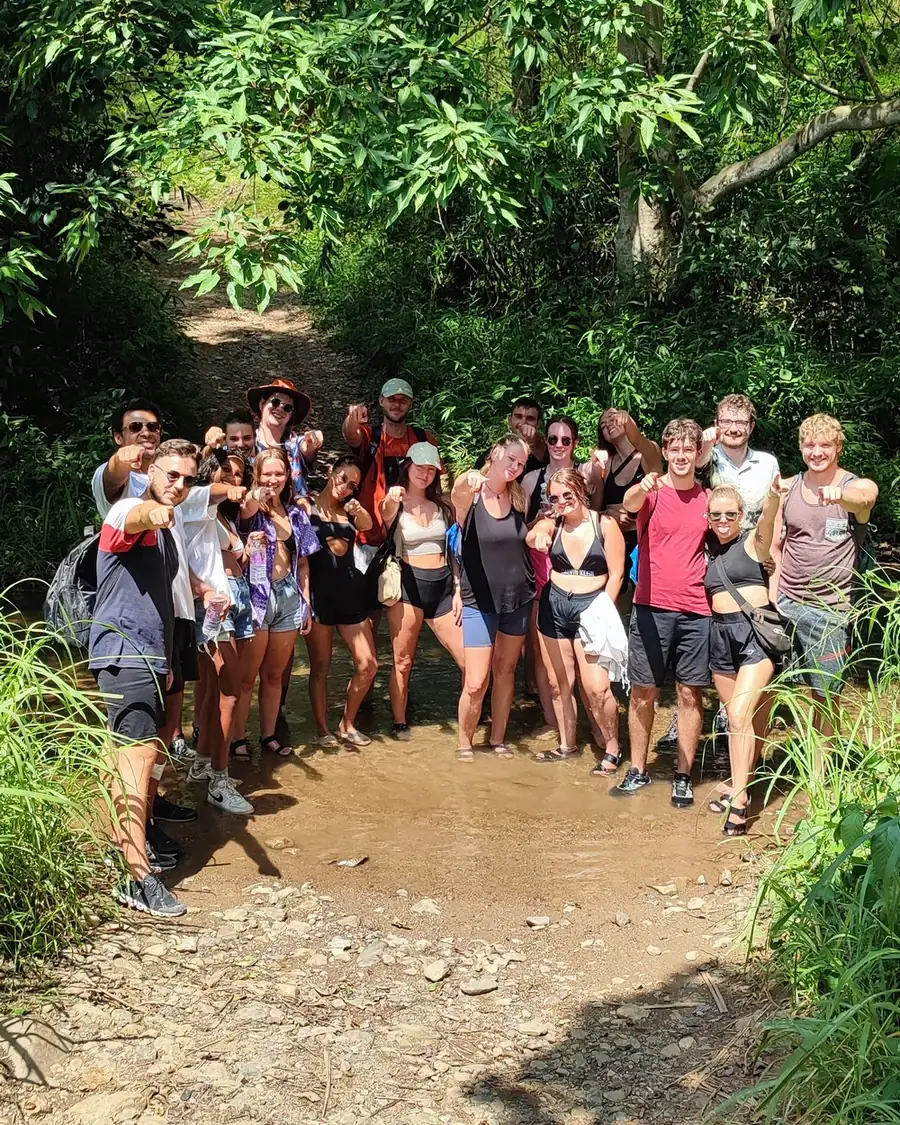
The route follows the Mueang Luang River upstream through dense forest, crossing the water again and again before reaching a waterfall beneath a huge granite headwall. It is quiet, shaded, and properly wild. There are no food stalls, paved walkways, or staff at the trailhead.
You will get wet. You will need to navigate for yourself. And you should not start late.
For hikers who want something less demanding than Mae Yen Waterfall but still want that remote, river-and-jungle feeling, Hua Chang is an excellent choice.
Hua Chang is also sometimes called Elephant Head Waterfall. The name comes from the large granite formation beside the falls.
What the trail is actually like
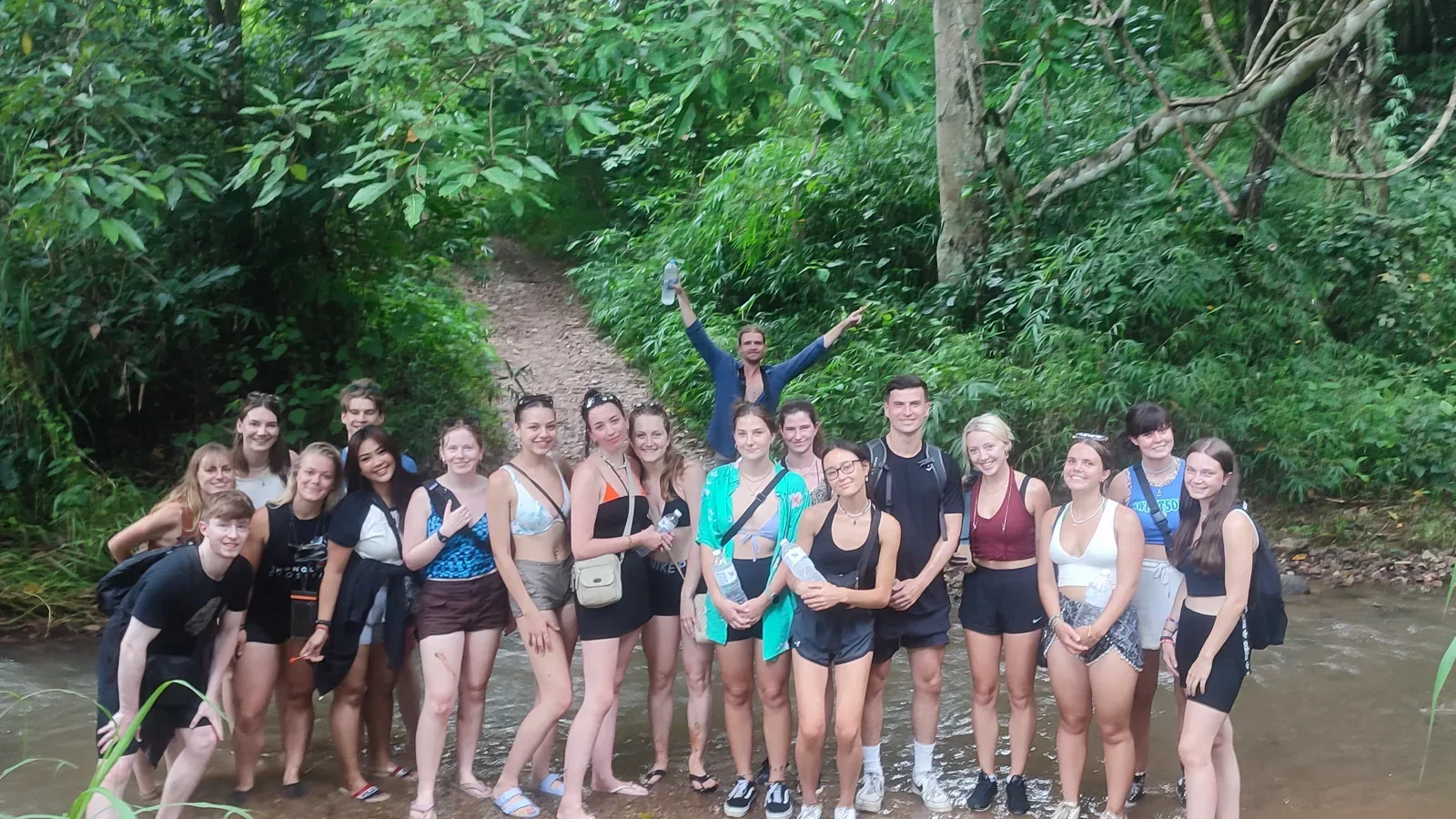
The walk follows the Mueang Luang River upstream through thick forest.
Expect around 16–22 river crossings each way, depending on the season and the route the water has left walkable. In drier conditions, crossings may be ankle-deep. After rain, some can reach knee height or become too strong to cross safely.
Wear proper water footwear: sturdy sandals or water shoes with good grip are ideal. Do not attempt this trek in flip-flops. Heavy hiking boots are not much fun either—you will spend much of the day walking through water.
The route is mostly flat, with one short rise of around 20 metres. Near the end, you will need to use an anchored rope to descend a short rock section to the waterfall and plunge pool. It is not a long climb, but the rock can be slippery, so take your time.
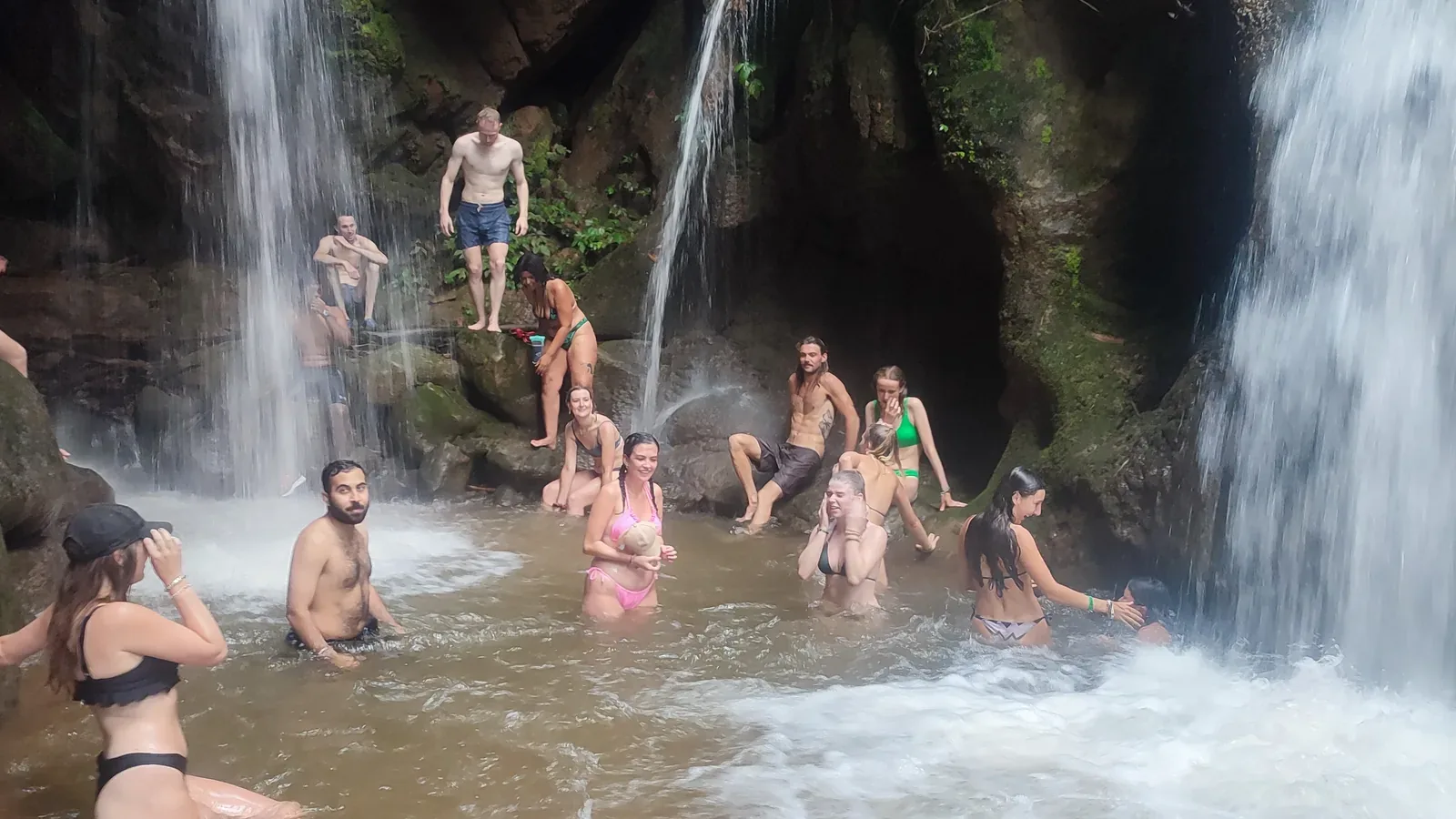
The reward is a proper waterfall in a quiet stretch of forest, with cold water, giant rocks, and none of the usual Pai crowds.
Navigation
There is little or no reliable phone signal once you are beyond the trailhead.
The route does not appear clearly on standard offline maps, so do not rely on an offline Google Maps download to guide you through the forest. Before leaving Pai, save a recorded Hua Chang trail track in an outdoor navigation app that includes the trail itself.
Once you are walking, the basic rule is simple: follow the Mueang Luang River upstream. If you are regularly crossing the water, you are generally still on the route.
The trail becomes less obvious close to the waterfall, where fallen trees, rocks, and the stream itself can make the final approach feel less clear. If you are uncertain, do not wander uphill looking for a shortcut. Stay close to the river and use your judgement.
When to go
Hua Chang changes with the seasons.
During the dry and cool months, the trail is generally easier to manage, although you will still cross the river repeatedly. During rainy season, the forest is lush and the waterfall is more powerful, but water levels can rise quickly and the trail becomes much more slippery.
Do not start after heavy rain. A storm higher in the mountains can send water through the valley even if the sky above you looks fine. If the river starts rising, turns muddy, or becomes difficult to cross, turn back.
During burning season, forest access may be restricted or closed. Check locally before leaving Pai, obey all closure signs or checkpoints, and do not enter if access has been prohibited.
Getting to the trailhead
From Pai, head northeast towards Wiang Nuea, passing the airport area.
The paved road eventually becomes a rough dirt track. Follow it towards the weir, where scooter access ends and the walking trail begins. The final track is uneven and can be muddy or washed out, particularly after rain.
This is a scooter approach, not a drive-up attraction. Park at the weir and continue on foot. If you are not comfortable riding a scooter on rough dirt roads, this may not be the right waterfall for you.
Before leaving town, make sure you have:
- Enough drinking water
- Snacks or lunch
- A saved trail track
- Fully charged phone and power bank
- Water footwear with grip
- Towel and swimwear
- Basic first-aid supplies
Tell hostel reception where you are going and when you expect to be back. This is not because the trek is extreme; it is because there is no reception, no ranger station, and no reason for anyone to know you are overdue unless you tell them.
A few sensible safety rules
Hua Chang is manageable for prepared hikers, but it is not the place to improvise.
Do not go alone if you are unsure of your route-finding or river-crossing ability. Do not trek with fresh road rash or open cuts: you will be wading through natural stream water many times. Do not push on after the light starts fading.
Set a turnaround time that gets you back to the trailhead well before dark. As a rule, start walking back from the waterfall by 4:00 PM at the latest. The return includes the same river crossings, the same uneven trail, and the same rough scooter road back to Pai.
Hua Chang or Mae Yen?
Hua Chang is often compared with Mae Yen Waterfall because both offer a more remote jungle experience than Pai’s easy-access waterfalls.
Mae Yen is the bigger commitment: six to seven hours of walking. Hua Chang gives you a similar sense of being out in the forest, but in a more manageable half-day.
Choose Hua Chang if you want a wild walk, cold water, and a proper adventure without making the entire day about one trek.
Choose Pam Bok or Mor Pang if you want easy access, food nearby, and a waterfall visit that does not involve wet feet and multiple river crossings.
Hua Chang is not polished, signposted, or designed to make things easy.
That is exactly why it is worth doing.