A Traveller’s Guide to Songkran in Pai
Written by Nolo Hub Pai, Pai’s top social and experience-based hostel
Last checked October 2026
tl;dr
Songkran is the Thai New Year, running from April 13th to 15th. In Northern Thailand, the local New Year (Pi Mai Mueang) stretches across five days until April 17th. In Pai, the entire town transforms into a massive water fight: locals set up buckets and paddling pools along the roads, and you're guaranteed a complete soaking around Walking Street. Joining the fun on the street is 100% free!
Also known as: สงกรานต์ · Thai New Year · Pi Mai Mueang
Songkran at a Glance
- When
- April 13th – 15th (though northern celebrations often start early and spill over!).
- The Northern New Year
- Pi Mai Mueang follows a 5-day cycle running from April 13th to 17th.
- Where
- All across Pai, with Walking Street and Chaisongkram Road serving as the main "splash zones."
- Cost
- Joining in on the streets is free. Budget a couple of hundred baht for a water pistol (depending on how serious you get), plus a waterproof phone pouch and a shirt if you need one.
- Vibe
- Wild street parties by day; chill acoustic music and night markets by evening.
- Essentials
- A dry bag, water gun, eye protection or goggles, and a bright floral shirt!
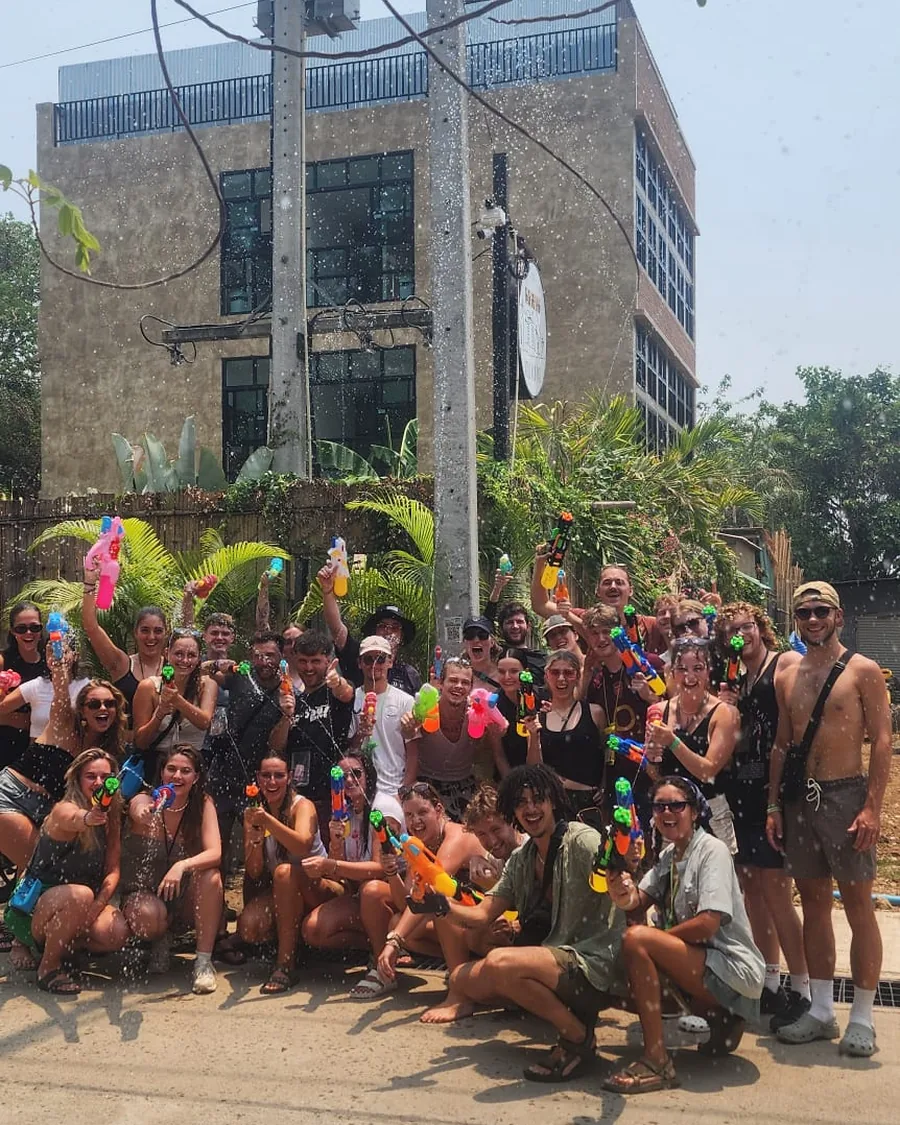
Welcome to Pai—Northern Thailand’s bohemian mountain paradise and easily one of the best places on Earth to experience Songkran!
Every April, this laid-back town turns into a high-energy, valley-wide water war where no one stays dry and every street becomes a giant fiesta. But while it feels like the ultimate water fight today, Songkran didn't start with super soakers and water buckets. The festival has deep spiritual roots grounded in renewal, respect, and tradition—making its history just as fascinating as the street party itself.
Top Things to Know Before You Splash
1. The Official Uniform: Hawaiian & Floral Shirts
During Songkran, bright, colourful floral shirts (Sua Songkran) are the unofficial dress code across Thailand. Grab one at Walking Street for a few hundred baht—not only will you fit right in, but it instantly marks you as ready for action!
Note: The shirt is completely optional, and regular clothes are fine too. Just wear something you’re happy to get soaked in, and save swimwear or going topless for somewhere other than the public street.
2. How to Wish Everyone a Happy New Year
Impress locals and fellow travellers by dropping a few traditional greetings:
- "Sawatdee Pee Mai!" (Sa-wat-dee Pee-Mai) – Happy New Year!
- "Suk San Wan Songkran!" (Sook-sahn Wan Song-kran) – Happy Songkran Day!
- "Sawatdee Pi Mai Mueang!" – The local Northern Thai (Lanna) greeting for a happy New Year.
3. Water Pistol Etiquette (Yes, There Are Rules!)
Even in a town-wide water war, a little courtesy goes a long way:
- Consent matters: If someone clearly doesn’t want to be splashed, leave them dry. A smile and a warm "Sawatdee Pee Mai!" work just as well.
- Mind the eyes: Never blast or splash cold water directly into people's faces, eyes, or ears.
- Show respect: Do not throw water at monks, pregnant women, elderly locals, or people carrying active electronic gear or making deliveries.
- Keep it outdoors: Don't spray water inside restaurants, cafes, or hostel lobbies unless it’s explicitly an active party area.
- Scooter warning: Expect to get soaked if you ride. Scooter riders get splashed constantly, roads stay slippery all day, and plenty of people are drinking. Walk whenever you can!
4. What’s with the White Powder on Your Face?
If someone offers to dab white paste on your cheeks, it’s likely Din Sor Phong—a chalky cooling powder traditionally used during Songkran as a sign of blessing and protection. You can politely decline, and if you want to apply it to someone else, always ask first.
Where to Find the Action
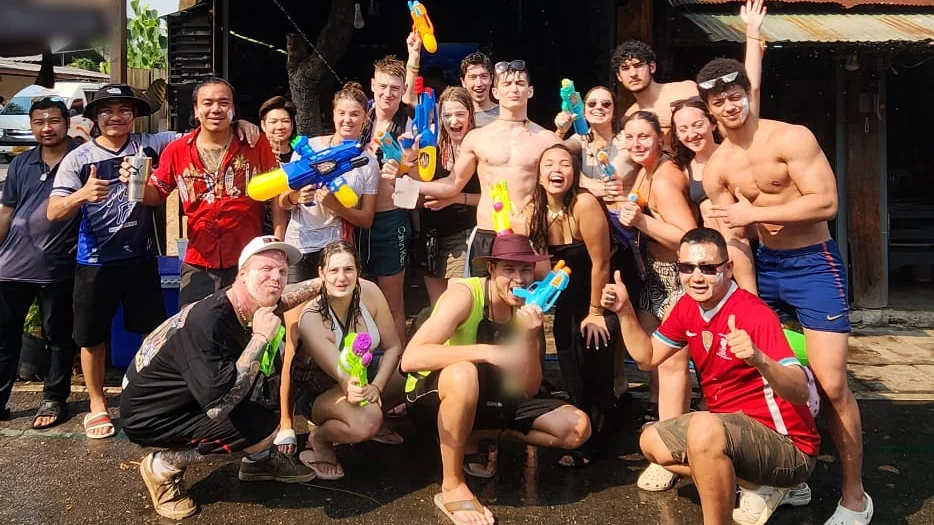
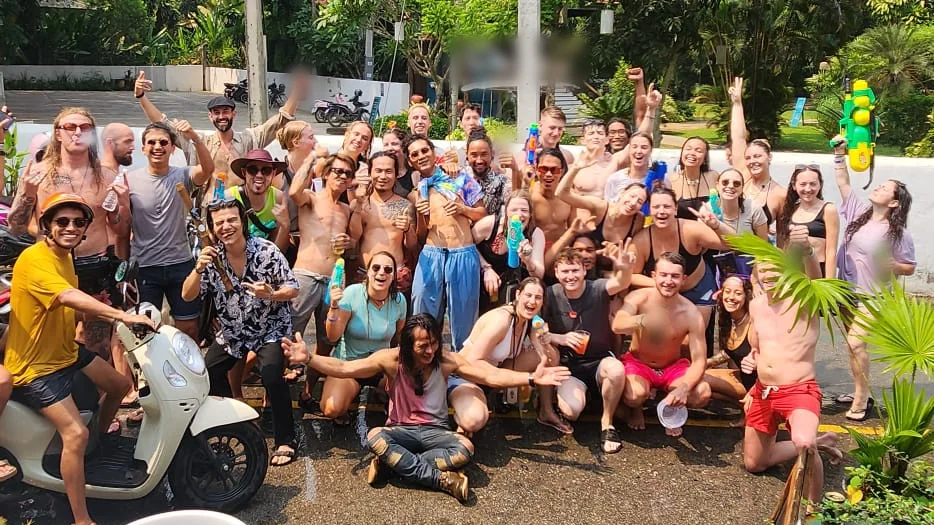
Practically everywhere! Across Pai, local families set up buckets and paddling pools along the roadside to douse anyone passing by. The heaviest and most consistent soaking happens around Walking Street, where local venues set up speakers and blast water out front.
(If you want to observe traditional temple ceremonies, ask our team at reception for the best local spots!)
The History of Songkran: From Sacred Ritual to Global Party
While dodging water buckets is undeniably fun, knowing the meaning behind Songkran makes the experience so much richer.
The word Songkran comes from the Sanskrit term Saṅkrānti, meaning "astrological passage" or "transformation." It marks the sun's movement into the constellation Aries, signalling the traditional Thai Solar New Year.
The Myth Behind the New Year
The folklore behind the festival is inscribed on ancient stone tablets at Wat Pho in Bangkok. A clever boy named Thammabal answered three complex riddles set by the god Kapila Brahma, winning a wager where the god had staked his own head.
Because the god's severed head was so powerful that it would burn the earth or dry up the oceans if set down, his seven daughters take turns carrying it on a platter every single Songkran to prevent catastrophe.
Traditional Customs & Rituals
- Washing Away the Past (Rod Nam Dam Hua): Water wasn't always thrown wildly. Traditionally, younger people gently poured scented water (often infused with Som Poi acacia pods) over the hands and shoulders of elders as a sign of respect and forgiveness. Shan (Tai Yai) families observe a similar rite called Kantor.
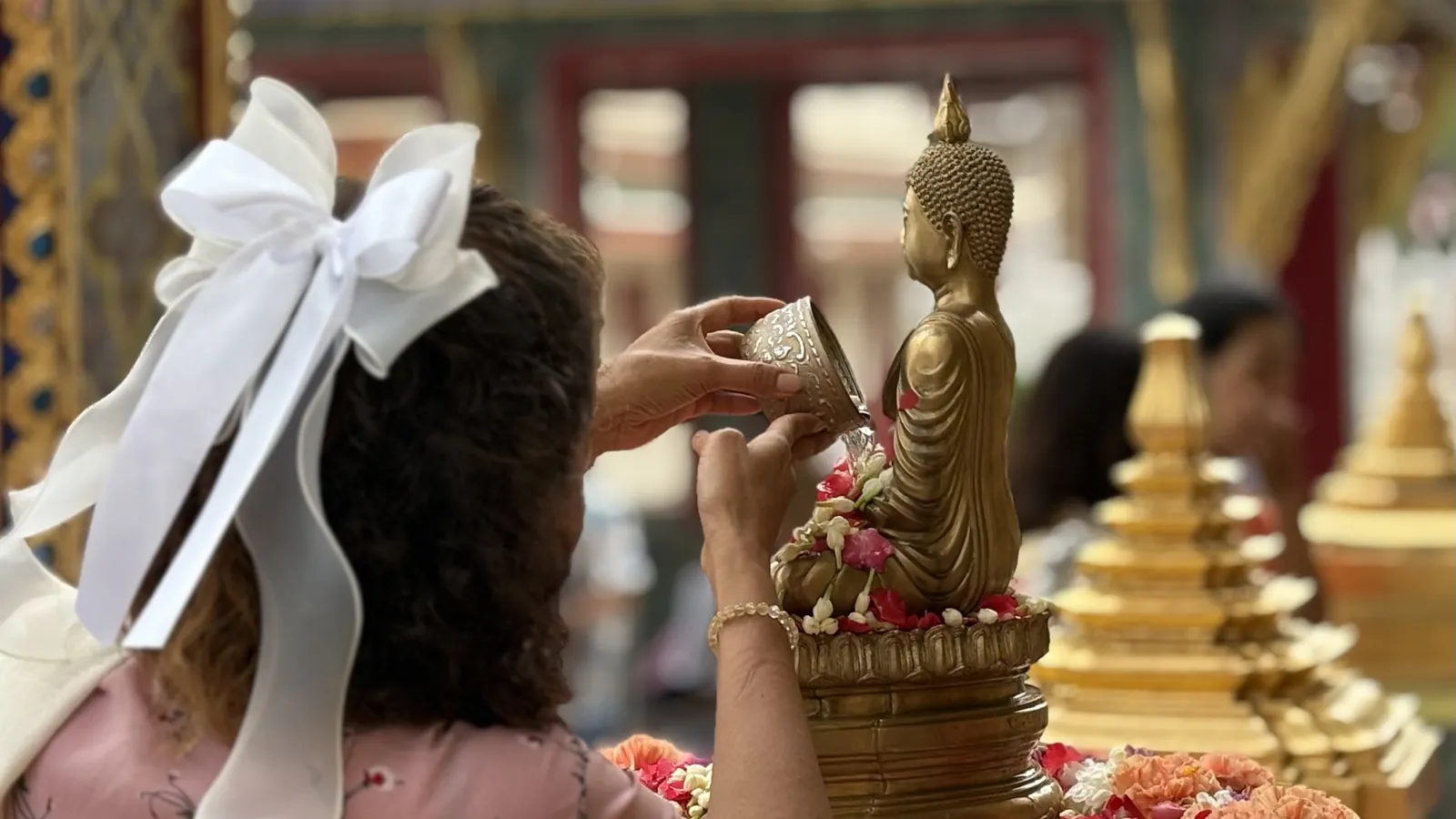
- Making Merit at the Temple: Locals visit temples (Wats) early in the morning to offer food to monks, release captive birds or fish, and pour water over sacred Buddha images (Song Nam Phra).
- Building Sand Pagodas (Chedi Sai): At local temples, people build small stupas out of sand—a symbolic way of returning the sand and earth carried away on visitors’ shoes throughout the past year.
- Spring Cleansing: Deep-cleaning homes, public spaces, and shrines is a core tradition to sweep away bad luck and welcome fresh energy for the new year.
- The North’s 5-Day Cycle: In Northern Thailand, each day has a specific purpose:
- April 13 (Wan Sangkhan Long): Cleansing day.
- April 14 (Wan Nao): Preparation day.
- April 15 (Wan Phraya Wan): The main New Year celebration.
- April 16 (Wan Pak Pi): Honouring elders.
- April 17 (Wan Pak Duean): Final rituals and blessings.
- A Lucky Dish: Across the north, eating Laab during the New Year is a classic tradition because its name sounds like the Thai word for good fortune (lap).
Over time, the gentle sprinkling of water naturally evolved into the nationwide, high-spirited celebration we see today—a welcome way to cool off during Thailand's hottest month of the year! Songkran served as Thailand's official New Year until 1912, when it shifted to April 1st, before moving to January 1st in 1941. In December 2023, UNESCO officially added Songkran to its list of World Intangible Cultural Heritage.
Celebrating Songkran with Nolo Hub
During Songkran, we take our guests up into the surrounding hills to visit mountain village schools outside Pai. We bring water guns for the kids and join them for a fun afternoon water fight! Afterward, we spend the days celebrating around Pai and the valley—it's high energy, deeply immersive, and far away from the overwhelming crowds at Tha Pae Gate in Chiang Mai.
Our plans change each year, so send us a message or stop by reception to see what we have lined up for this year's festival!